

What Temperature Refrigerator and Freezer for Perfect Pizza
When it comes to your pizzeria's refrigeration, there are a few magic numbers you need to live by. The gold standard is keeping your walk-in and reach-in refrigerators at or below 40°F (4°C) and your freezers holding steady at a rock-solid 0°F (-18°C).
But for the real heart of your operation—the pizza prep table—the ingredient rail needs to stay within that critical 33–40°F (0.5–4°C) window. This ensures every topping, from pepperoni to peppers, is fresh, safe, and ready for action.
The Foundation of Pizzeria Food Safety
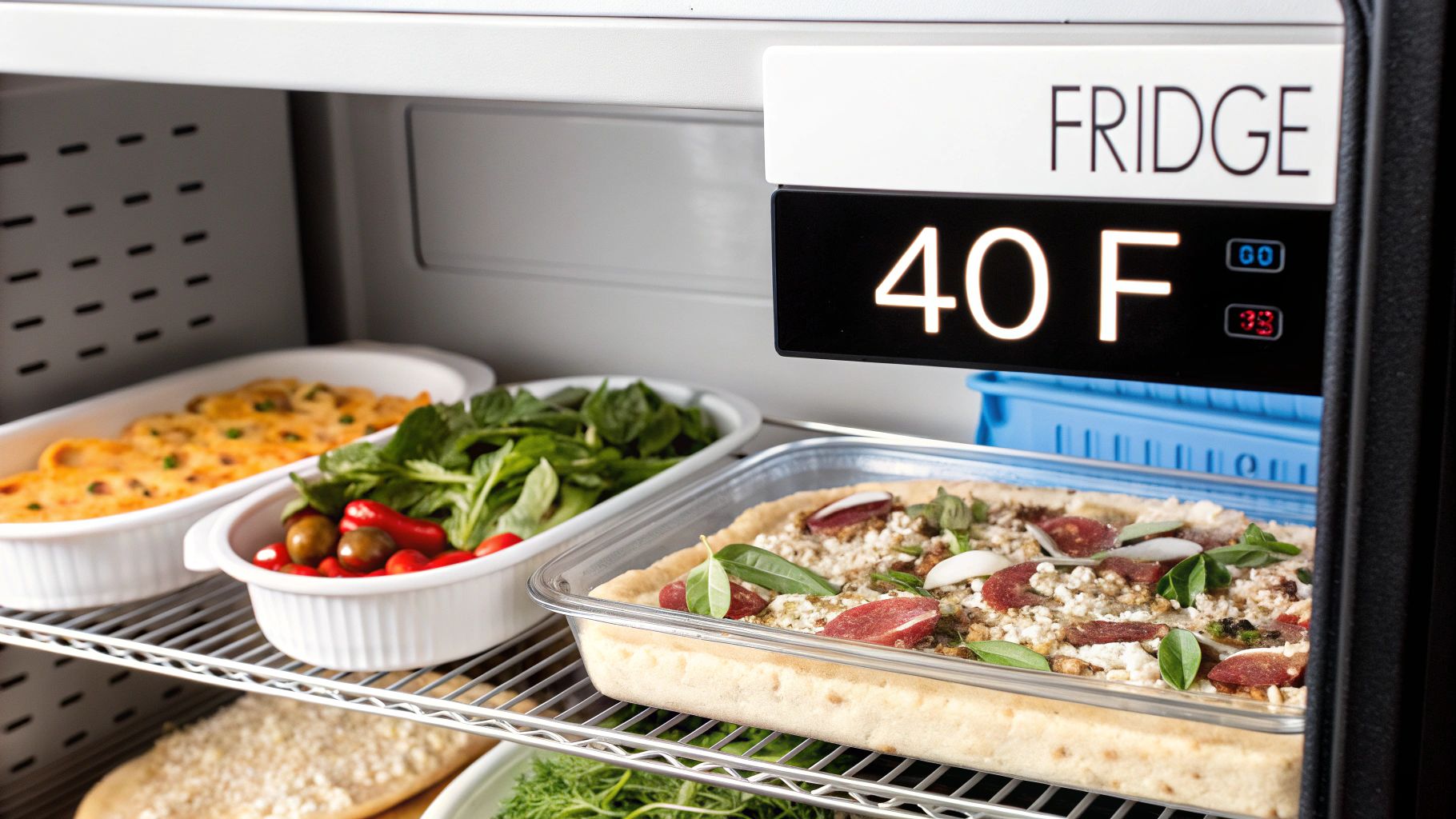
It's tempting to think of these numbers as just guidelines, but in a professional pizzeria, they're non-negotiable. This is the foundation of both food safety and the quality of every pizza that leaves your oven. Every single degree matters.
The difference between a perfectly chilled pizza prep table and one that’s just a few degrees too warm can impact everything from the texture of your cheese to the safety of your customers.
These benchmarks aren't just arbitrary rules; they're rooted in proven food safety science. The U.S. FDA is crystal clear: any refrigerator holding perishable food must be kept at 40°F or below, with freezers locked in at 0°F (-18°C). That’s why modern pizza prep tables are engineered to maintain that tight 33–40°F (0.5–4°C) range, with digital thermostats that work overtime to compensate for constantly being opened during a busy service.
Before we dive into the nitty-gritty, here's a quick cheat sheet to keep your pizzeria on track.
At-a-Glance Temperature Guide for Pizzerias
This table is your quick reference for the ideal temperatures for the different refrigeration units you'll find in almost any pizza restaurant.
| Equipment Type | Ideal Temperature Range (°F) | Ideal Temperature Range (°C) | Primary Use in a Pizzeria |
|---|---|---|---|
| Walk-In/Reach-In Refrigerator | 35–40°F | 1.7–4°C | Bulk storage (dough, cheese, sauce) |
| Pizza Prep Table (Base) | 33–40°F | 0.5–4°C | Backup ingredients, dough trays |
| Pizza Prep Table (Ingredient Rail) | 33–40°F | 0.5–4°C | Toppings for immediate use |
| Walk-In/Reach-In Freezer | 0°F | -18°C | Frozen ingredients, par-baked crusts |
Stick to these ranges, and you're already halfway to running a safe and efficient pizza kitchen.
Why Precision Is Key for Pizzerias
Sure, hitting these temperatures keeps the health inspector happy, but it goes way beyond that. It directly impacts the quality of every single pizza you serve. Proper refrigeration slams the brakes on harmful bacterial growth, which is absolutely critical when you’re dealing with the fresh ingredients that make a pizza great.
The "safe zone" of 33–40°F is where your cheese, vegetables, and meats stay at their absolute peak on the pizza prep line. It's the simple secret to preventing spoilage and ensuring the last pizza of the night is just as delicious and safe as the first.
This obsession with precise control is what separates the pros from the amateurs. For any pizzeria owner, mastering temperature is the first step toward building a reputation for excellence. It all starts with investing in a reliable pizza prep table and quality refrigerators, because you need dependable equipment to hold these standards day in and day out.
Technology Behind the Numbers
Hitting these ideal temperatures consistently isn't magic; it's a team effort between the components inside your pizzeria's refrigeration units. Compressors, coils, and thermostats all work together to create a stable, cold environment for your pizza ingredients.
To keep everything running smoothly, it helps to have a basic grasp of the technology that’s monitoring it all. Understanding the different temperature sensor types can give you a real edge when it's time to troubleshoot a problem with your pizza prep table. This knowledge helps you spot issues before they become disasters, protecting your inventory, your customers, and your bottom line.
Why a Few Degrees Can Make or Break Your Pizza
In the heat of a dinner rush, it’s easy to glance past a temperature display that’s off by just a few degrees. But that tiny number is the unsung hero—or villain—in your pizzeria. It’s the hidden variable that separates a perfect pizza from a food safety nightmare. Mastering your fridge and pizza prep table temps isn't just about passing inspections; it’s your secret weapon for consistency and quality.
The first thing you need to burn into your brain is the Temperature Danger Zone. This is the range between 41°F and 135°F (5°C and 57°C). In this zone, nasty bacteria like Salmonella and E. coli can double in number in as little as 20 minutes. For your pizza prep table, this zone is public enemy number one.
When your toppings—pepperoni, mushrooms, cooked chicken, and cheese—start creeping into this zone, you’re not just risking spoiled product. You’re gambling with your pizzeria's reputation and your customers' health.
More Than Just Food Safety
Beyond the critical health risks, temperature control has a direct impact on the quality of every single pizza ingredient you use. A prep table that's even slightly too warm will turn your shredded mozzarella oily and clumpy, making it impossible to sprinkle evenly. Fresh veggies like bell peppers and onions lose their snap and start to wilt, leading to a soggy, sad-looking pizza.
On the flip side, a unit that’s too cold can freeze delicate ingredients and ruin their texture. Fresh basil leaves turn black, and tomatoes get mealy. It’s all about finding that perfect, consistent sweet spot on your prep line.
A consistent, correct temperature on your pizza prep table ensures that every single ingredient you grab is at its peak—fresh, safe, and ready to contribute its best flavor and texture to the final pizza. This is the foundation of a product customers will return for again and again.
The Role of Your Prep Table in the Cold Chain
Think of your pizza ingredient storage as a "cold chain," an unbroken path from your supplier all the way to the oven. Your pizza prep table is one of the most important links in that chain. As restaurant refrigeration guides will tell you, the sweet spot for a commercial fridge is between 33°F and 40°F (0.5–4°C).
Keeping your toppings and sauces consistently below 4°C (39°F) is a critical safety buffer, slamming the brakes on microbial growth before that pizza ever hits a customer’s plate. You can find more great insights on this over at operandio.com.
This obsession with what temperature your refrigerator and freezer are set to isn't just a best practice; it's a core operational principle for any pizzeria. It prevents your perfectly proofed dough from over-fermenting in the heat and turning into a sticky, unworkable mess. That little digital number on your prep table has a massive impact on your workflow, food cost, and the final taste of your signature pie.
How to Store Your Key Pizza Ingredients
Alright, you’ve got the basics down on those critical temperature zones. Now, let's take that knowledge and apply it right where the magic happens: the pizza prep line. Every single pizza ingredient has its own personality and its own ideal storage needs. Nailing this is what separates a decent pizza from a truly great one and guarantees your customers get the same amazing pie every single time.
Think of your pizza prep table less like a piece of furniture and more like a carefully balanced ecosystem. Knowing the answer to "what temperature should a refrigerator and freezer be" is just step one. Step two is applying that science to each component, starting with the very soul of your pizza—the dough.
Perfecting Your Pizza Dough Storage
When it comes to pizza dough, temperature isn't just about safety; it's a powerful tool you can use to develop incredible flavor through cold fermentation. By storing your dough balls in the walk-in between 36°F and 40°F (2°C and 4°C), you slow the yeast's activity way down. This gives complex, delicious flavors time to develop without the dough over-proofing and becoming a gassy, unmanageable mess.
Trust me, even a degree or two in either direction can throw off your entire workflow. If your fridge is too warm, your dough will blow out. Too cold, and the yeast just goes to sleep, leaving you with a bland, dense crust nobody wants. It's all about finding that perfect sweet spot for your specific pizza recipe.
The real art of pizza dough management is using temperature as a control lever for fermentation. Keep that dough in a stable, chilled environment, and you can predict your proofing times with stunning accuracy, slash your waste, and serve up a consistently flavorful crust that builds a loyal following.
Keeping Cheese and Toppings Fresh on the Prep Table
Your toppings rail is the front line. It's where every ingredient has to look and taste its absolute best, all while being held at a perfectly safe temperature. This is why that 33–40°F (0.5–4°C) range for your pizza prep table is completely non-negotiable.
Here’s a quick rundown on how to handle your most popular pizza toppings for maximum quality:
- Shredded Mozzarella: The biggest enemies of shredded cheese are moisture and warmth. They team up to create a clumpy, unappealing disaster. Store your mozzarella in shallow, wide pans on the prep rail to let the cold air circulate evenly and prevent it from compacting. Keeping it nice and chilled ensures it stays fluffy and sprinkles like a dream.
- Cured Meats: Pepperoni, salami, and other cured meats are pretty stable, but they still need proper refrigeration. If they get too warm on the line, the fat starts to render, making them greasy and sad. Cold temps keep them firm, vibrant, and ready for the oven.
- Fresh Vegetables: Nobody wants a soggy pizza. Ingredients like bell peppers, onions, and mushrooms have to stay crisp. Chilling them below 40°F (4°C) in your prep table stops them from wilting and sweating out excess water. Always keep them in clean, well-drained containers.
When you treat each pizza ingredient with the specific care it deserves, you're not just making a meal; you're crafting an experience. This obsessive attention to detail is what defines a truly top-tier pizzeria.
Mastering Your Freezer for Pizzeria Success
Think of your freezer as your pizzeria's inventory bank. It's not just for short-term overflow; it’s where you store your investment in bulk ingredients like cheese, meats, and dough for the long haul. And when it comes to banking that kind of value, there’s only one number that matters: a rock-solid 0°F (-18°C).
This isn’t just a friendly suggestion—it’s the universal standard that slams the brakes on microbial growth. At this temperature, the water inside your pizza ingredients freezes solid, effectively stopping the biological clock that leads to spoilage. It locks in the flavor, texture, and quality of your most important assets, guaranteeing consistency from one pizza to the next.
Beyond Just Setting the Dial
Let’s be real, just twisting the thermostat to zero and walking away isn’t enough. A well-run pizzeria freezer is an organized freezer, and that means putting a strict first-in, first-out (FIFO) system into practice. Always label and date everything that goes inside. New cases of cheese go to the back, older ones come to the front. Simple.
This basic discipline is your best defense against waste and the dreaded freezer burn. When dough balls, for example, get lost in the back or face fluctuating temperatures, they start losing moisture. The result? A dry, tough crust that no amount of great sauce can save.
Think of 0°F as a pause button for your pizza ingredients. It stops time, preserving the quality you paid for until you're ready to press play. Anything warmer is a gamble with your inventory and your final product.
The importance of hitting that 0°F (-18°C) target is backed by every major food safety authority, from the U.S. FDA to equipment manufacturers like Liebherr. Research shows that even small temperature differences have a huge impact. The same principle holds true for protecting the integrity of your mozzarella, pepperoni, and pizza dough.
From Frozen to Fresh The Right Way
Finally, how you bring pizza ingredients back to life is just as critical as how you froze them. Whatever you do, never thaw frozen items on the counter. This is like rolling out the red carpet for bacteria, plunging your food straight into the Temperature Danger Zone.
The only safe play is to thaw ingredients slowly and steadily in the refrigerator. This creates a secure, seamless path from your freezer to your pizza prep table, protecting both your customers and your pizzeria's reputation.
For more pro tips on getting the most out of your frozen inventory, check out our complete guide on commercial kitchen freezers.
Keeping Your Pizza Prep Table in the Safe Zone
Your pizza prep table is the command center of your kitchen. It's where fresh ingredients meet perfectly proofed dough, and keeping it precisely calibrated isn't just a good idea—it's absolutely essential.
Think of this piece of equipment as the guardian of both your quality and your customers' safety. When you master its settings and maintenance routine, you ensure every single pizza you build starts with the best, safest ingredients possible.
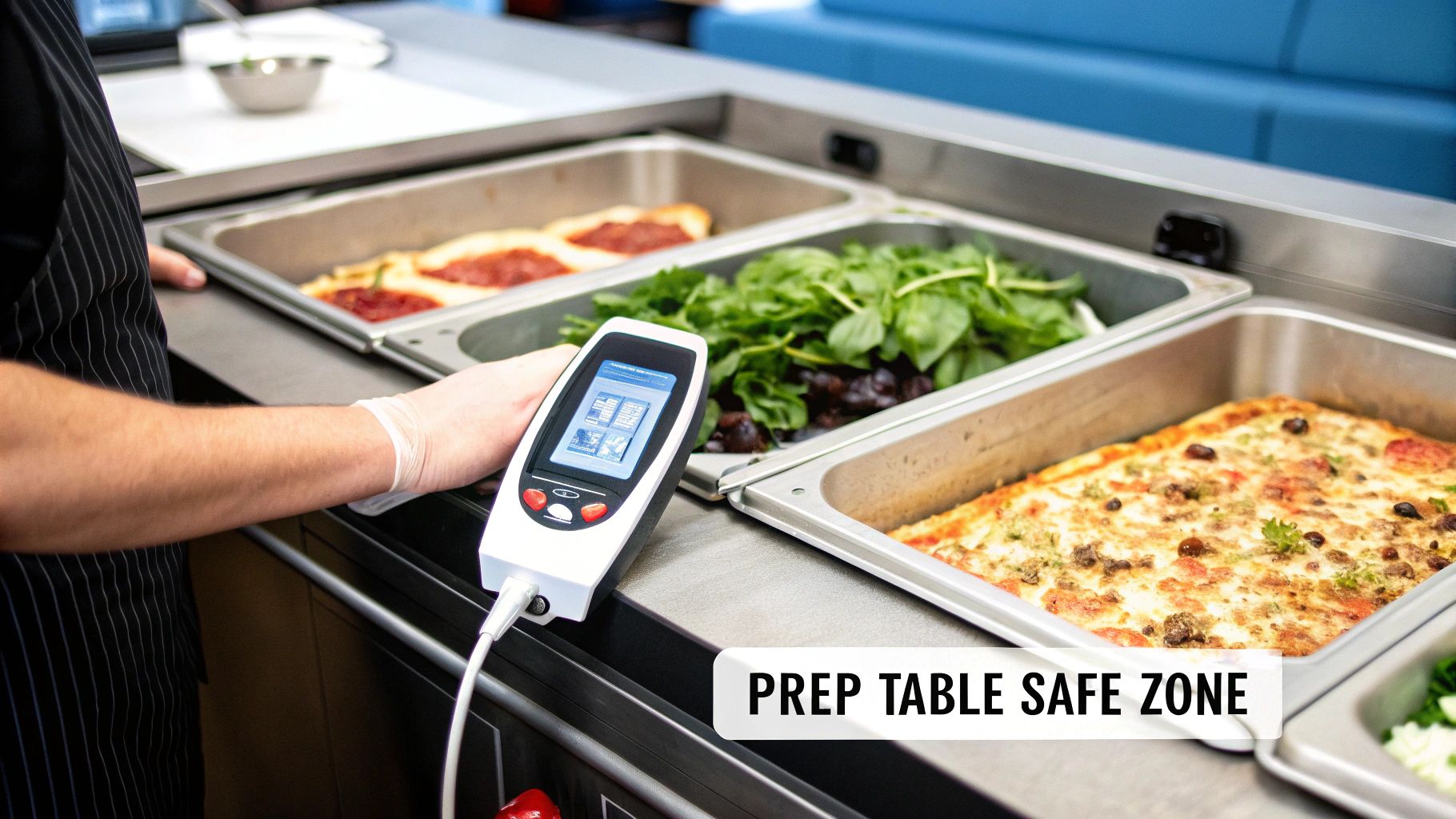
Let's walk through the hands-on, practical steps of managing this vital workstation. This way, you'll always know the answer to what temperature your refrigerator and freezer components should be for your pizzeria.
Setting and Monitoring Temperatures Correctly
Most modern pizza prep tables have a digital thermostat, which makes setting your target temperature pretty straightforward. You should always be aiming for that crucial 33–40°F (0.5–4°C) range.
But here’s the thing: setting the thermostat is only half the battle. You have to verify the actual temperature inside the unit.
Never, ever rely solely on the built-in display. You'll want to place at least one calibrated appliance thermometer inside—I recommend one in the bottom storage area and another right in the ingredient rail. This gives you an accurate, real-world reading of the conditions your pizza toppings are actually sitting in.
A prep table's digital display shows what the unit is trying to achieve. An independent thermometer tells you what it has actually achieved. Trust, but always verify with a secondary tool.
Make temperature checks part of your pizzeria's DNA. A quick log at the start of a shift, another check during the pizza rush, and one more at closing is a simple habit that can prevent a major food safety crisis down the road.
Quick Troubleshooting for Common Pizza Prep Table Issues
Even the best, most reliable equipment can run into trouble. If you notice your pizza prep table’s temperature fluctuating or creeping up, don't panic. The fix is often surprisingly simple and something you can handle without a service call.
Before you pick up the phone to call a technician, run through this quick diagnostic checklist.
Pizza Prep Table Troubleshooting Guide
When your prep table's temperature starts to climb, a few usual suspects are often to blame. This quick guide will help you diagnose the issue and get your unit back in the safe zone fast.
| Problem | Potential Cause | Solution |
|---|---|---|
| Temperature is too high. | Blocked air vents from over-stuffing. | Rearrange dough trays and backup pans to ensure air can circulate freely. |
| Unit is running constantly. | Dirty condenser coils. | Unplug the unit and use a stiff brush or vacuum to clean dust off the coils. |
| Fluctuating temps/ice buildup. | Worn or damaged door gaskets. | Inspect the rubber seals for cracks or gaps. Replace them if they don't form a tight seal. |
| Rail is warm, base is cold. | Lid left open too long during service. | Remind staff to keep the lid closed as much as possible between pizza orders. |
| Unit won't get cold enough. | Unit is too close to the pizza oven. | Move the prep table away from ovens, fryers, or other heat-producing equipment. |
Running through these simple checks can often solve the problem in minutes, saving you time, money, and the headache of a service call.
Here are the most common culprits in a bit more detail:
- Blocked Air Vents: It's tempting to cram as much as possible into the storage cabinet of your prep table, but this can block the vents that circulate cold air. Make sure there’s always a little breathing room for air to move around your backup pizza ingredients.
- Dirty Condenser Coils: The condenser coils, usually tucked away at the back or bottom of the pizza prep table, are magnets for flour dust and grease. This gunk acts like a winter coat, forcing the compressor to work harder and less efficiently. A quick clean with a stiff brush every month can make a massive difference.
- Worn Door Gaskets: The rubber seals around the doors and lids don't last forever. Over time, they can crack, get brittle, or just lose their seal, letting all that precious cold air escape. Check for any gaps and replace them if they’re no longer creating a tight seal.
By proactively monitoring and maintaining your pizza prep table, you transform it from a potential liability into your most reliable asset on the line.
Common Questions About Pizzeria Refrigeration
Alright, let's wrap this up by hitting the questions I hear all the time from pizzeria owners and managers out in the field. Think of this as your go-to cheat sheet for the real-world problems that pop up during a busy pizza shift.
Getting these details right is what separates the pros from the amateurs, ensuring your pizzeria runs like a well-oiled machine every single day.
How Often Should We Be Logging Temperatures?
Don't treat temperature logging like a chore; think of it as your pizzeria equipment's health checkup. The best practice is to check and log temps for every single refrigerated unit at least three times per day. No exceptions.
- Morning Kick-Off: First thing when you walk in. This tells you if everything held its temperature overnight, so you know you're starting the day with safe, fresh pizza ingredients.
- Mid-Rush Check: Right in the middle of your busiest period. This is the ultimate stress test for your pizza prep table. It shows if your equipment can keep up when doors and lids are constantly opening and closing.
- End of Night Shutdown: The last log of the day confirms everything is set correctly to hold steady until morning.
This simple routine is your number one defense in a health inspection. Plus, it helps you spot a struggling compressor on your pizza prep table before it costs you a walk-in full of spoiled product.
What's the Right Way to Cool Hot Pizza Sauce?
Whatever you do, never put a big, steaming pot of pizza sauce straight into the walk-in. It’s one of the most common and dangerous mistakes I see. It acts like a space heater, forcing the cooler's temperature up and putting all your other food into the danger zone.
You have to cool hot foods down fast before they ever see the inside of a fridge. Here are the approved ways to do it in a pizzeria:
- The Ice Bath: Put your pot of hot sauce inside a larger container or a prep sink filled with ice and water. Stir the sauce often to help the heat escape faster.
- Shallow Pans are Your Friend: Break down that giant batch of sauce into several smaller, shallow metal pans. More surface area means the heat has nowhere to hide and dissipates much quicker.
- Ice Paddles: These are awesome for pizzerias. They're basically big plastic sticks you fill with water and freeze. You stir your sauce with one, and it cools the product from the inside out.
Your target is to get the sauce from 135°F (57°C) down to 70°F (21°C) within two hours. From there, you have another four hours to get it from 70°F down to 41°F (5°C) or colder.
A lot of pizzeria owners think a powerful walk-in can handle a hot stockpot of sauce. In reality, you’re just making the unit’s compressor run nonstop, which strains the equipment and jeopardizes the safety of thousands of dollars worth of inventory.
Cooling things down the right way protects your food and prevents you from burning out your refrigeration system. For a deeper look at the science behind this, check out our guide on temperature control for food safety.
Can Meats and Veggies Go Next to Each Other on the Prep Table?
On a busy pizza line, it's pretty standard to see pepperoni right next to green peppers. While this is necessary for a fast workflow, you have to be militant about preventing cross-contamination on the pizza prep table.
If you can, try to place ready-to-eat items like veggies above or away from raw meats. But the most important rule is this: use separate, dedicated utensils for every single topping pan. The scoop you use for raw sausage should never, ever touch the onions.
Wipe down the surfaces between the pans constantly, and if you see any potential contamination, pull the ingredient immediately. There's no room for error here when customer safety is on the line.
How Does All This Pizza Oven Heat Affect My Fridges?
Your pizzeria kitchen is a battleground of heat. The pizza ovens are constantly pumping out BTUs, and your refrigerators and pizza prep tables are fighting against it 24/7.
That constant battle forces your equipment to work way harder than it should. The result? Sky-high energy bills and compressors that die years before their time.
Give your fridges some breathing room. Make sure there’s adequate space between your hot line and your cold units, especially your pizza prep table. And routine maintenance, like cleaning the condenser coils, becomes even more important in a hot pizzeria kitchen. If your units are constantly struggling, it might be worth getting professional commercial cooling services to assess your kitchen's airflow and equipment placement. They can help make sure your gear isn't fighting a losing battle against the heat of the pizza oven every single shift.
At Pizza Prep Table, we provide the high-quality, reliable refrigeration solutions pizzerias need to succeed. From compact prep tables to spacious walk-in coolers, our equipment is designed to hold precise temperatures, ensuring your ingredients stay fresh and safe. Explore our selection and find the perfect fit for your kitchen at https://pizzapreptable.com.