

Finding the Best Oil for Frying Potatoes in Your Pizzeria
For a busy pizzeria, the best oil for frying potatoes is almost always a high-quality blended vegetable oil. These blends hit the sweet spot: a high smoke point, neutral flavor, and great cost-effectiveness. They're tailor-made for turning out consistently crispy fries in a demanding commercial kitchen, right next to your pizza prep table.
The Secret to Perfect Pizzeria Fries
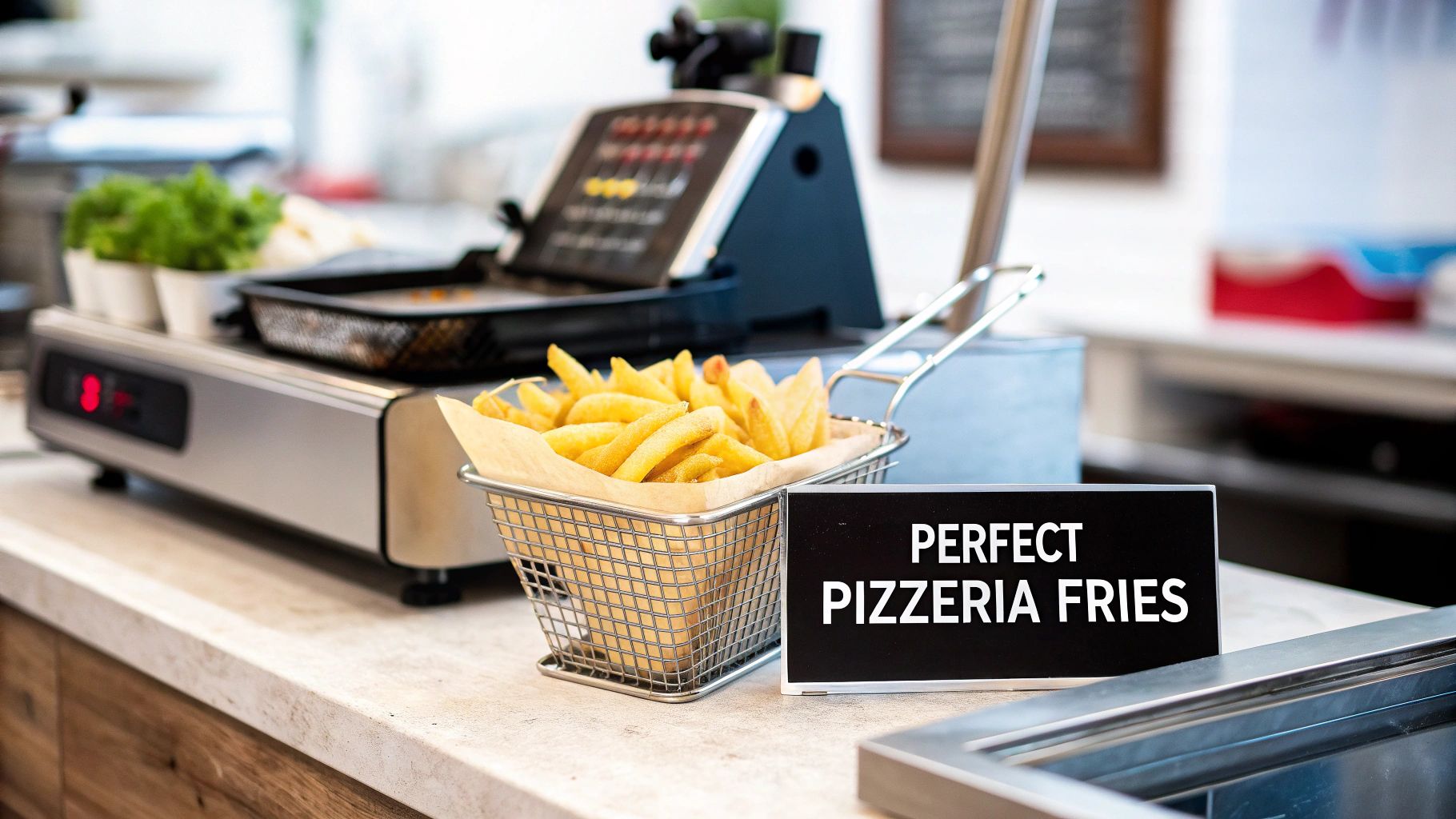
In the pizza world, it’s easy for side dishes like french fries to become an afterthought. After all, the pizza is the star of the show. But a basket of perfectly golden, crispy fries can completely elevate a customer's meal and add a nice bump to your average ticket size. The secret isn't just the potatoes or the fryer—it’s the oil.
Choosing the right oil is a serious operational decision that balances quality, cost, and consistency. From the deep fryer humming next to the pizza prep table to the pan-fried potatoes served as a specialty side, the oil you choose affects everything from flavor to kitchen workflow.
Why Your Oil Choice Matters
The right frying oil makes sure your potatoes cook evenly without burning or soaking up a ton of grease. You get a product that’s fluffy on the inside and has that satisfying crunch on the outside. In the controlled chaos of a busy pizzeria, that consistency is gold.
Globally, vegetable oil consumption has hit a massive 228 million metric tons. While sunflower seed oil is a major player at over 20.27 million metric tons, industry experts will tell you that blended vegetable oils dominate the foodservice scene. Why? Unbeatable affordability and solid performance. You can dig deeper into these global vegetable oil trends on Statista.com.
For a pizza restaurant, the best oil for frying potatoes isn't just about the final taste; it's a strategic choice that affects your budget, workflow, and customer satisfaction. An unstable oil breaks down quickly, requiring frequent changes and driving up costs.
To make your decision a little easier, we've put together a quick guide to the most reliable oils for a pizzeria. This table gives you an at-a-glance comparison to help you pinpoint the best option for your kitchen's needs.
Quick Guide to Top Frying Oils for Potatoes
This table provides a quick comparison of the most common frying oils, highlighting key attributes for pizzeria kitchens.
| Oil Type | Smoke Point | Flavor Profile | Best For |
|---|---|---|---|
| Canola Oil | 400°F (204°C) | Neutral | All-purpose frying; budget-friendly and versatile. |
| Peanut Oil | 450°F (232°C) | Mild, nutty | Creating exceptionally crispy fries with a subtle flavor. |
| Vegetable Blend | 400-450°F | Neutral | High-volume pizzeria use, balancing cost and stability. |
| Sunflower Oil | 450°F (232°C) | Neutral | High-heat applications where flavor neutrality is key. |
Why Some Frying Oils Work Better Than Others
Choosing the right oil for your fries isn't as simple as grabbing the cheapest jug off the shelf. Different oils behave in wildly different ways when you crank up the heat, and knowing the difference is what separates a pizzeria with killer fries from one with a soggy, greasy mess. This is especially true when you're managing costs and quality during a busy Friday night rush.
Three things really separate a high-performance frying oil from one that will let you down: its smoke point, its flavor (or lack thereof), and its stability. Think of these as the three legs of a stool—if one is weak, the whole thing comes crashing down. You could end up with off-tasting fries, a kitchen full of smoke, or an oil budget that’s spiraling out of control. Let's break down what each of these really means for your pizza restaurant.
Understanding Smoke Point
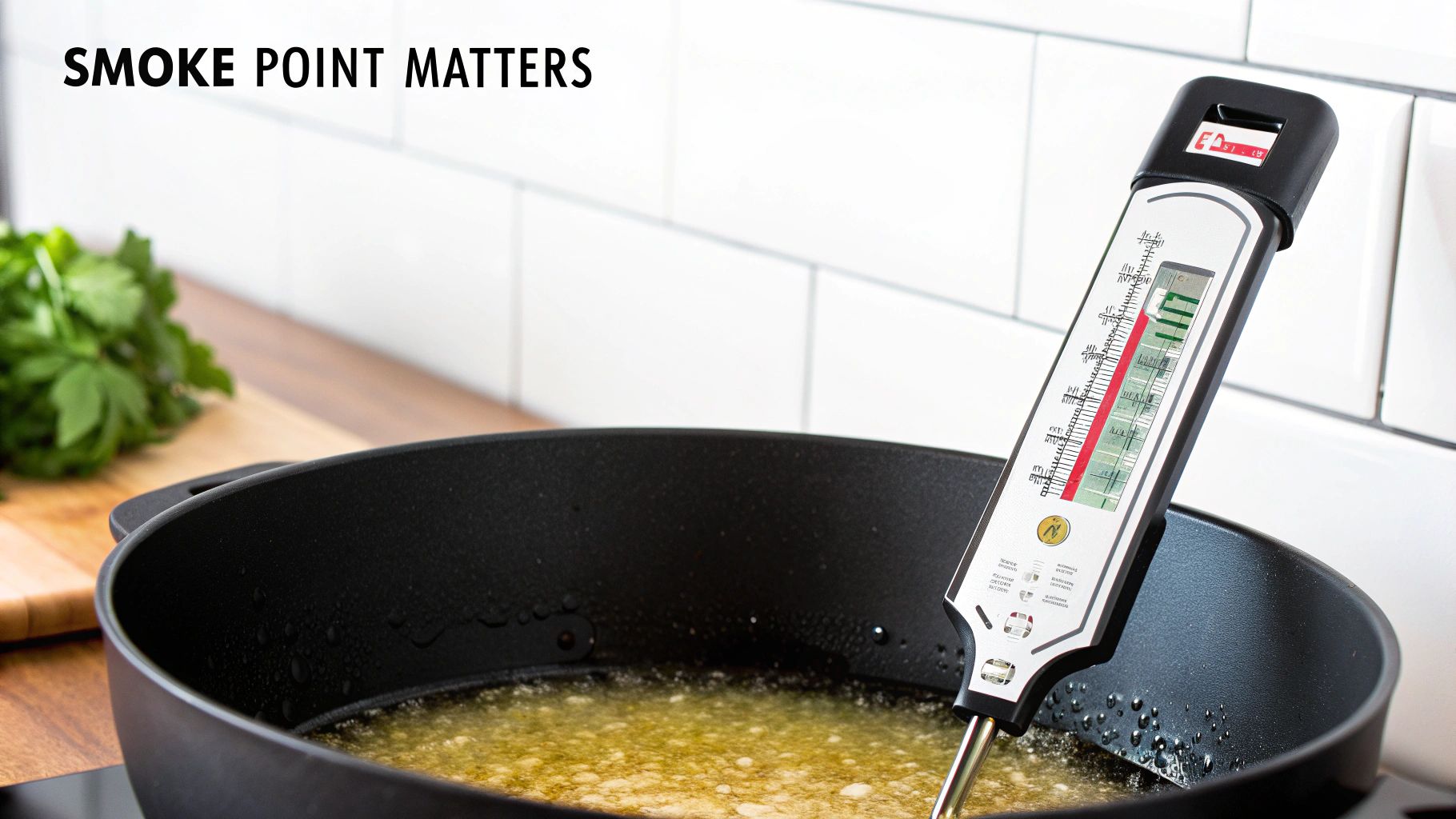
The smoke point is exactly what it sounds like: the temperature where an oil stops shimmering nicely and starts sending up puffs of smoke. This isn't just a visual cue; it's a distress signal. When oil hits its smoke point, it's literally breaking down on a chemical level. This process unleashes nasty compounds and creates a burnt, bitter flavor that will ruin a perfectly good batch of potatoes.
Think about it like your pizza oven. You know the perfect temperature to get that crispy, golden-brown crust without charring the toppings. An oil's smoke point is its absolute temperature limit. Push it past that point, and you're not just cooking the food—you're burning the oil itself.
For deep-frying potatoes, you're typically working in the 350°F to 375°F (177°C to 190°C) range. That means you need an oil with a smoke point well above that, ideally 400°F (204°C) or higher. This buffer gives you a margin of safety, ensuring the oil stays stable and clean-tasting even when the fryer temperature fluctuates. Nailing this is a huge part of proper temperature control for food safety in any professional pizza kitchen.
The Importance of Flavor Neutrality
Unless you're trying to make a statement, your frying oil should be a silent partner. Its job is to transfer heat efficiently and create that craveable crispy texture, not to get in the way of the potato's natural, earthy flavor. This is where flavor neutrality is key.
Some oils, like extra virgin olive oil or unrefined coconut oil, have big, bold personalities. They're fantastic in a salad dressing or for a specific sauté, but they can easily overwhelm a simple basket of fries. Customers expect their fries to taste like delicious, salty potatoes—not olives or coconuts.
A neutral oil—like canola, a good vegetable blend, or refined sunflower oil—is like a blank canvas. It lets the potato be the star of the show. This ensures your fries will taste great on their own and pair perfectly with everything from a classic cheese pizza to a complex specialty pie. It's a small detail that makes a massive difference in the final product.
Stability and Reusability
In a pizza restaurant, you simply can't afford to dump and refill your fryer oil every single day. That's why stability is arguably the most critical factor from a financial point of view. An oil's stability is its ability to resist breaking down over time, even after being exposed to high heat, air, and moisture from the food.
Think of your oil as a team of employees. A stable oil is a team that can work long, hard shifts without getting tired and making mistakes. An unstable oil has a team that's ready to clock out after just a few hours. This breakdown, or oxidation, is what causes oil to get dark, foamy, and rancid.
The longer an oil remains stable, the more batches of fries you can cook before it needs to be replaced. This directly translates to lower operational costs and less waste in your pizzeria.
Oils that are higher in monounsaturated and saturated fats generally hold up better than those high in polyunsaturated fats. This is why oils specifically blended for commercial frying are formulated to maximize this stability, giving you a much longer lifespan from each jug and a better return on your investment.
Alright, let's break down the real contenders for frying potatoes. We've talked about the science—smoke point, flavor, and stability—but now it's time to see how the most common oils perform in the heat of a real pizzeria kitchen.
For a pizzeria owner, this isn't just an academic exercise. The choice you make here directly impacts your food costs, the taste of your fries, and how often your staff has to filter or change out the fryer oil. It’s a decision that hits both your bottom line and your customer satisfaction score.
Each oil has its own personality. Some are incredibly stable but carry a hefty price tag, while others are easy on the budget but break down faster under pressure. We'll look at the everyday workhorses like canola and vegetable blends, the premium players like peanut oil, and even some old-school fats to see where they shine and where they fall short.
The Versatile Workhorse: Canola Oil
Canola oil is a giant in the commercial frying world, and for good reason. With a smoke point around 400°F (204°C), it comfortably handles the ideal deep-frying temperatures you need for perfect potatoes.
Its biggest selling point is its clean, neutral flavor. It gets out of the way and lets the natural, earthy taste of the potato be the star. From a budget perspective, canola is often one of the most wallet-friendly options out there, making it a go-to for high-volume pizzerias that need to manage costs closely. The trade-off? Its stability is solid but not spectacular. It won't last as long as some high-oleic oils, which could mean more frequent oil changes during your busiest stretches.
The Premium Performer: Peanut Oil
Many chefs swear by peanut oil as the secret to unbelievably crispy and flavorful fries. It brings some serious heat resistance to the table, with a smoke point that can hit 450°F (232°C). This resilience means it can take a beating at high temperatures without breaking down.
Peanut oil also adds a subtle, slightly nutty character to fried foods that many people love. However, this top-tier performance comes with a couple of major catches. First, it's significantly more expensive than canola or vegetable blends, which can be a tough pill to swallow for your food costs. Second, the very real risk of peanut allergies is a massive operational headache for any pizza restaurant, demanding strict protocols to avoid cross-contamination.
The High-Heat Champions: Sunflower and Soybean Oils
This is where oil engineering gets impressive. High-oleic sunflower and soybean oils are specifically designed for the brutal environment of a commercial deep fryer. They've been bred to contain more stable monounsaturated fats, which makes them incredibly resistant to breaking down under high heat.
Like peanut oil, their smoke points are often at or above 450°F (232°C). This extra stability translates directly into a longer fry life. You'll do fewer oil changes, which saves on labor and long-term oil costs, even if the upfront price per jug is a bit higher. They're also flavor-neutral, delivering consistent, clean results every time. For a pizzeria running its fryer from open to close, these high-performance oils are a smart investment.
We measure how much an oil has broken down by looking at its total polar compounds (TPC). Once an oil hits a certain threshold, usually between 12% and 25%, it's considered spent. The most stable oils take much longer to reach this point.
It's fascinating how different oils handle the stress. Recent studies on oil degradation show some surprising results. For instance, some tests found that extra virgin olive oil could withstand 28 hours of frying before hitting a 12% TPC limit. In contrast, standard canola or palm oils might hit that same limit in just 16-18 hours. Still, for most high-volume pizzerias, it comes back to balancing performance and price, which is where blends come in.
The Power of Blended Vegetable Oils
This brings us to the most common choice for many pizzerias: blended vegetable oils. Think of these as the jack-of-all-trades of the frying world. They typically combine soybean, canola, sunflower, and corn oils in specific ratios.
Manufacturers create these blends to hit a sweet spot—a high smoke point, neutral flavor, decent stability, and a price that doesn't make you wince. By mixing the strengths of different oils, a blend can perform almost as well as a premium oil but at a cost closer to a budget option. This makes them the perfect middle-ground solution for most pizza restaurants, delivering reliable fries without wrecking the budget.
Traditional Fats: Beef Tallow and Lard
Long before vegetable oils took over, animal fats like beef tallow and lard were the kings of the fryer. They are famous for the incredibly rich, savory flavor they impart to potatoes.
Both have respectable smoke points, usually around 375-400°F (190-204°C), and are very stable thanks to their high saturated fat content. So why aren't they more common in pizza restaurants today? Their distinct, meaty flavor can be a mismatch for a pizzeria's menu and is an immediate no-go for vegetarian customers. They also cost more and require more careful handling.
To pull all this together, let's look at the numbers side-by-side.
Detailed Frying Oil Performance Matrix
This table breaks down how the most popular frying oils stack up across the key metrics that matter in a pizzeria kitchen: smoke point, stability, cost, and flavor.
| Oil Type | Smoke Point (°F) | Key Fatty Acid Type | Flavor Impact | Relative Cost | Primary Pro | Primary Con |
|---|---|---|---|---|---|---|
| Canola Oil | 400°F | Monounsaturated | Neutral | Low | Excellent value and versatility | Moderate fry life |
| Peanut Oil | 450°F | Monounsaturated | Mildly Nutty | High | Superior crispiness and flavor | High cost and allergy risk |
| High-Oleic Sunflower | 450°F | Monounsaturated | Neutral | Medium-High | Exceptional stability and long life | Higher initial purchase price |
| Vegetable Blend | 400-450°F | Varies | Neutral | Low-Medium | Balanced cost and performance | Inconsistent quality between brands |
| Beef Tallow | 400°F | Saturated | Rich, Beefy | High | Incredible flavor and stability | Strong flavor, not vegetarian |
Ultimately, choosing the best oil is about finding the right balance for your specific pizza operation. What works for a small shop might not make sense for a high-volume chain, but understanding these pros and cons is the first step toward frying the perfect potato.
Choosing the Right Oil for Your Frying Method
The "best" oil for frying potatoes isn't a simple, one-size-fits-all answer. This is especially true in a busy pizzeria kitchen, where you might be knocking out more than just classic french fries. The method you're using—deep-frying, pan-frying, or oven-roasting—completely changes the game. Each technique asks something different from your oil, whether it's brute heat stability or a subtle flavor profile.
For the high-volume world of deep-frying, your biggest concerns are a high smoke point and rock-solid stability. You need an oil that can sit pretty at a consistent 350°F to 375°F for hours on end without breaking down and tasting funky. A commercial countertop deep fryer is a serious workhorse, and the oil inside it has to be just as tough.
Pan-frying potato wedges or finishing off some oven-roasted potatoes, on the other hand, calls for a different playbook. You have a lot more wiggle room to use oils that actually add a bit of character and flavor. Since the heat is less intense and the cook times are shorter, stability isn't nearly as critical, which opens up a wider range of options.
This decision tree helps you visualize the choice between two of the most popular, high-performance oils based on what matters most to your pizzeria.
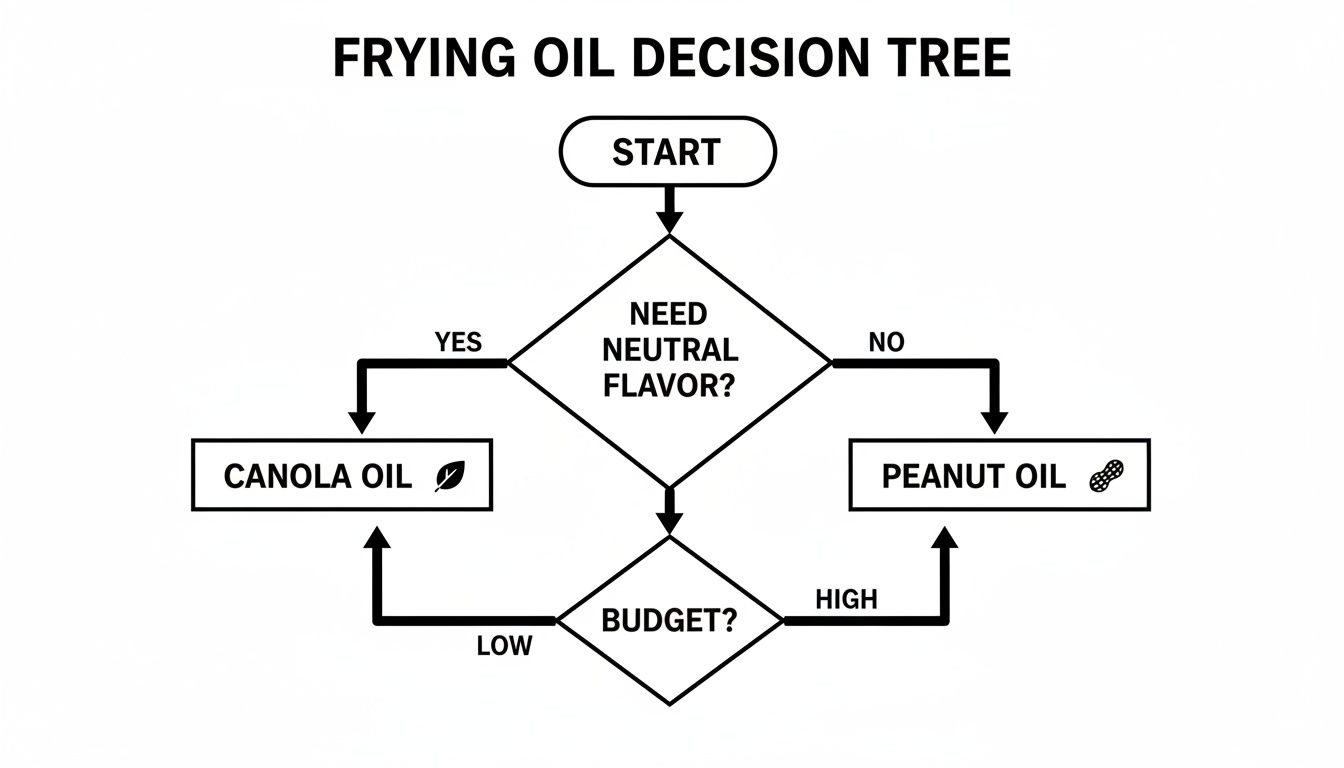
As you can see, your budget and flavor goals are what drive the decision. Canola is your go-to for an economical, neutral workhorse, while peanut oil brings a premium flavor to the table, but at a higher cost.
Best Oils for Deep-Frying
For that commercial fryer humming along next to your pizza prep table, you need an oil that's both a marathon runner and a heavy lifter. It has to withstand hours of intense heat without degrading and making your fries taste like last week's special.
- High-Oleic Sunflower or Canola Oil: Think of these as oils that have been engineered for durability. Their high monounsaturated fat content makes them incredibly stable, which extends their fry life and saves you a ton of money on oil changes.
- Vegetable Oil Blends: Often specifically formulated for the rigors of commercial frying, these blends strike a great balance between a high smoke point, neutral flavor, and cost-effectiveness. They're the default choice for many high-volume pizzerias for a good reason.
- Peanut Oil: This is a fantastic choice if you want exceptionally crisp fries with a subtle, nutty background note. The catch? Its higher cost and the significant allergy risks make it a less common choice for pizza restaurants that need to cater to a broad audience.
Temperature control is absolutely crucial. It impacts not just your oil life but also the quality of your final product. Frying at lower temps might seem safer, but it can lead to greasy, soggy, and all-around disappointing potatoes.
Managing your fryer's temperature directly hits your bottom line. A study on oil uptake in french fries showed that frying at 180°C (356°F) leads to 28% oil absorption by weight. Drop that to 160°C (320°F), and absorption falls to just 23%. For a pizzeria frying 100 kg of potatoes a day, that 5% difference means 5 kg less oil is wasted—a savings that really adds up over a year.
Best Oils for Pan-Frying and Roasting
When you're pan-frying potato wedges or roasting them golden in the oven, the oil's job description changes. This is your chance to add another layer of flavor and use oils that might not survive the harsh environment of a deep fryer.
- Refined Avocado Oil: With one of the highest smoke points out there (around 520°F), avocado oil is perfect for getting a hard sear in a hot pan. It has a mild, almost buttery flavor that works beautifully with potatoes.
- Light Olive Oil: While extra virgin olive oil has a lower smoke point and a strong flavor, "light" or refined olive oil is a solid pick for pan-frying. It brings a delicate flavor to the party without smoking out your kitchen. If you're ever wondering if you can I deep fry in olive oil, you'll find that certain types can handle the heat much better than you might think.
- Beef Tallow or Bacon Grease: For a truly decadent, savory punch, nothing beats a spoonful of rendered animal fat for pan-frying potatoes. This works especially well for creating specialty side dishes that can really make your pizzeria's menu stand out.
By tailoring your oil choice to your cooking method, you make sure every single potato dish you send out is perfectly cooked, cost-effective, and delicious. Whether you need a robust workhorse for your primary fryer or a finishing oil for a special side, you can explore our full range of kitchen equipment, including a great commercial countertop deep fryer, to get your setup just right.
Making Your Frying Oil Last Longer
Picking the right oil for your potatoes is only half the battle. How you manage that oil is what really protects your profit margins. In a busy pizzeria, fryer oil is a major line item on your expense sheet. Squeezing every last drop of life out of it—without your fries suffering—is just smart kitchen management.
Think of your fryer oil like the engine oil in one of your delivery cars. It’s working hard under extreme heat, and over time, it breaks down and gets contaminated. You wouldn't keep running a car on sludgy, old oil, and you can't serve consistently great fries from a fryer filled with burnt, degraded cooking oil. This isn't just about saving cash; it's about quality control.
The Power of Daily Filtering
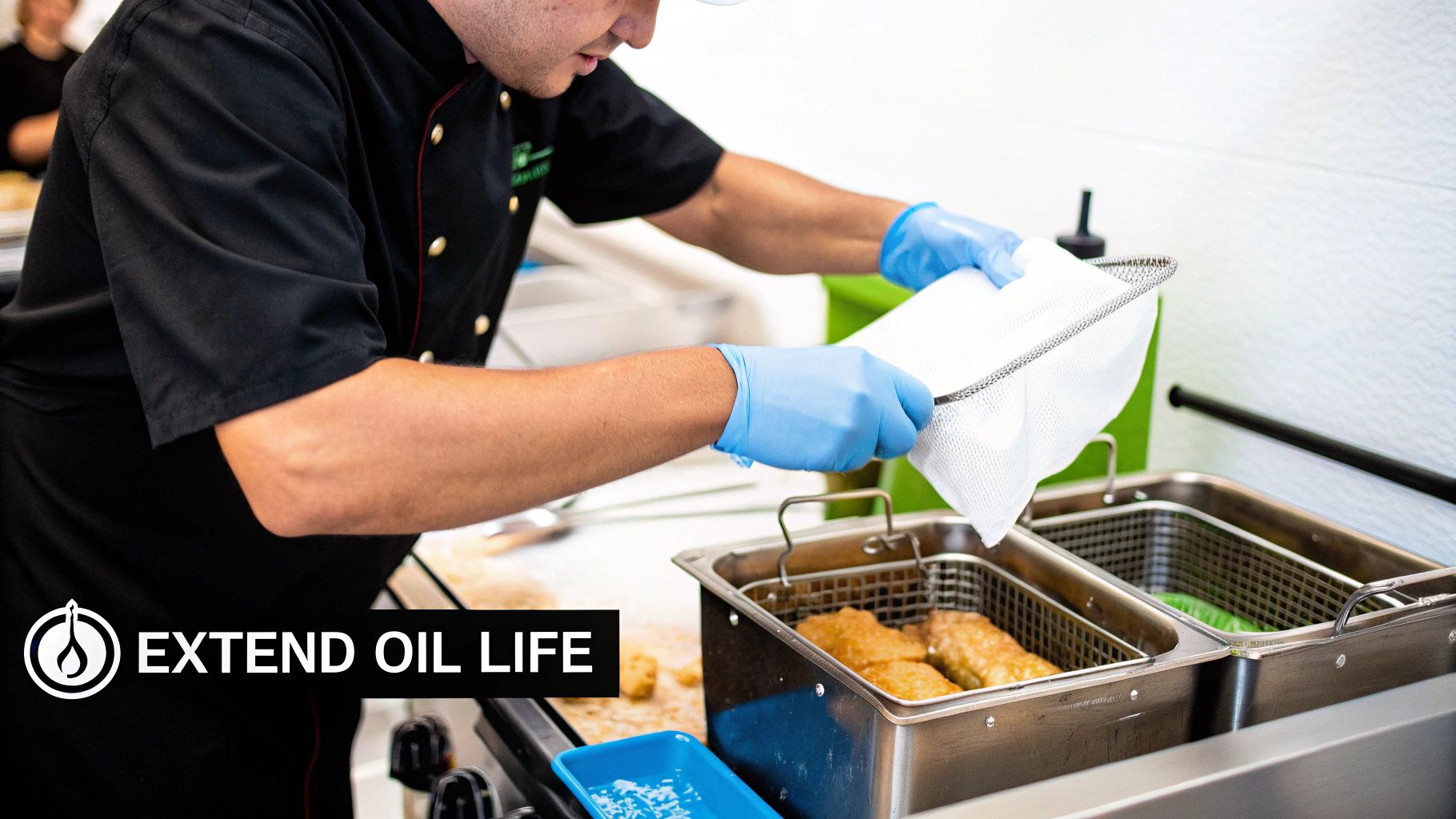
One of the single most effective things you can do is filter your oil. Every single day. Those tiny bits of batter, potato starches, and crumbs that break off during frying act like little sponges. They soak up oil, burn, and accelerate the breakdown process, creating off-flavors that will ruin a fresh batch of fries.
Filtering pulls all that gunk out, essentially hitting the reset button on your oil. For a busy pizzeria, this has to be a non-negotiable part of your closing routine.
- Cool It Down: Let the oil cool to a safer temperature, usually around 300-350°F (149-177°C).
- Drain and Strain: Use a commercial filtering machine or a simple cone filter to strain the oil into a clean, heat-proof container.
- Scrub the Fryer: While the pot is empty, get in there and clean it. Scrape off any caked-on residue from the heating elements and walls. This stuff kills oil life.
- Return and Top Off: Pour that clean, filtered oil back into the fryer and top it off with fresh oil to get it back to the fill line.
This daily ritual can dramatically extend your oil's lifespan, ensuring every basket of fries comes out tasting fresh. And it’s not just about oil—smart practices are key to reducing food waste in restaurants across the board.
Precise Temperature Control Is Key
Your fryer's thermostat is your oil's best friend—or its worst enemy. Running a fryer too hot is the fastest way to kill your oil. You’ll push it past its smoke point and cause it to break down in a hurry. But run it too cool, and you'll end up with greasy, soggy potatoes that soak up oil like a sponge.
The golden rule of frying is consistency. Keeping that fryer dialed in at the sweet spot, typically between 350°F and 375°F, is absolutely critical. A reliable commercial fryer with an accurate thermostat isn't a cost; it's an investment that pays for itself in oil savings and better food.
Even the most stable oils have a breaking point. A fascinating deep-frying study showed that some oils, like EVOO, had just 12.9% unsaturated fatty acid degradation after hours of frying, right on par with palm (12.2%) and canola (13.3%). More importantly, its polar compounds stayed under the 12% safety limit for much longer. That means fewer oil changes—a huge deal in pizza kitchens where regulations cap these compounds for safety.
When to Change Your Frying Oil
Even with perfect filtering and temperature control, all oil eventually gives up the ghost. Frying in spent oil isn't just a quality problem; it's a food safety issue. You'll know it's time for a change when you see these tell-tale signs:
- Dark Color: The oil is noticeably darker than its original golden hue.
- Off-Odor: You get a sharp, rancid, or burnt smell before you even turn the fryer on.
- Smoking: The oil starts smoking at normal frying temperatures, way below its original smoke point.
- Foaming: You see excessive foam on the surface that doesn't burn off quickly. That’s a clear signal of breakdown.
Proper oil management also includes how you store it. For some great advice on that, check out our guide on food truck fryer oil storage tips—the principles are the same for any pizzeria. Nail these best practices, and you'll cut costs, reduce waste, and serve up perfect potatoes that keep people coming back.
Frequently Asked Questions About Frying Potatoes
When you're running a busy pizzeria, it's easy to focus on the dough and sauce, but the small details—like your frying oil—can have a huge impact on food quality and your bottom line. Get it right, and you've got consistently crispy, delicious sides. Get it wrong? Hello, soggy fries and wasted cash. Here are the straight answers to the questions we hear most from pizzeria owners.
How Often Should I Change My Fryer Oil?
There’s no magic number here. Forgetting a fixed schedule like "every three days" is the first step. The real answer is to change it when it's spent. You'll know it's time when you see the classic warning signs: the oil is dark and murky, it starts smoking at normal temps, it foams up excessively, or it just smells off—like burnt or rancid crayons.
A high-volume pizza restaurant might burn through a batch of oil in just 1-2 days, while a smaller spot could stretch it to 5-7 days. The single best thing you can do to get more life out of your oil is daily filtering. It pulls out all the tiny food particles that cause the oil to break down faster.
Think of it like this: your fryer oil's lifespan is a direct result of three things: how much you fry, how well you filter, and how accurately you control the temperature. Nailing all three is the key to maximizing every drop.
Are Expensive Oils Worth It for Frying Potatoes?
This is the classic cost-versus-performance dilemma. For the main deep fryer that's cranking out baskets of fries all day next to your pizza prep table, an expensive oil is almost never worth the extra cash. Sure, high-performance oils like high-oleic sunflower or peanut oil can last a bit longer, but their upfront cost is tough to justify when a solid commercial vegetable blend does a fantastic job for way less.
But that doesn't mean premium oils don't have a place. An expensive oil can be the perfect touch for a specific, higher-margin side dish. If you're offering pan-fried rosemary potato wedges, for instance, using a high-quality refined avocado oil or even beef tallow can add a unique, memorable flavor that absolutely justifies a higher menu price.
- For high-volume deep-frying: Stick with cost-effective workhorses like canola or a good commercial vegetable blend.
- For specialty pan-fried sides: This is where you can experiment with a premium oil to create a distinct flavor profile that makes your pizzeria menu stand out.
Does Frying Frozen vs. Fresh Potatoes Affect the Oil?
Yes, it makes a huge difference, and it all comes down to water. Frozen fries are loaded with ice crystals. When those hit the hot oil, they instantly turn to steam, causing that violent bubbling that can drop your oil’s temperature. Over time, all that water contributes to hydrolytic rancidity—a fancy term for chemical breakdown caused by water.
Fresh-cut potatoes, assuming you've dried them properly, introduce way less water into the fryer. On the flip side, they release more starches, which can make your oil cloudy if you're not filtering it out regularly.
Key Takeaway: Frozen potatoes are tougher on your oil because of all that extra water. If your pizzeria fries a lot of frozen products, expect to filter more often and change your oil more frequently to keep things tasting great.
What Is the Proper Way to Dispose of Used Cooking Oil?
Proper oil disposal isn't just a good idea—it's a legal requirement for any pizza restaurant. Whatever you do, never pour used oil down the drain. It will cool and solidify in your pipes, creating nightmare clogs for your restaurant and the local sewer system. This mistake leads to huge plumbing bills and hefty fines.
The only right way to handle it is to partner with a licensed cooking oil recycling service. The process is simple:
- Cool It: Always let the used oil cool down completely to a safe temperature.
- Store It: Pour the cooled oil into a designated, sealed container, which the recycling company usually provides.
- Schedule Pickup: Your service will pick up the full container on a regular schedule and swap it out with a clean, empty one.
Many of these services will even pay you for your used cooking oil, turning what was once a waste product into a small revenue stream. It's safe, environmentally friendly, and the only professional way to manage oil disposal.
At Pizza Prep Table, we get that every piece of equipment, from the fryer to the refrigerated pizza prep table, is crucial to your success. Find the perfect commercial kitchen solutions to serve up crispy, delicious potatoes every time. Check out our selection at https://pizzapreptable.com.