

A Pizzeria Owner's Guide to Commercial Freezer Undercounter Models
Tucked away under the counter, a commercial undercounter freezer is the unsung hero of a busy pizzeria. It’s a compact, space-saving workhorse designed to slide right under a pizza prep table, giving you instant access to frozen dough, cheese, and toppings right where you need them. This isn't just about convenience; it’s about shaving precious seconds off every pizza order during the dinner rush.
The Secret Weapon of Your Pizzeria Kitchen
Picture a Friday night. Tickets are flying, the oven is roaring, and every second counts. In that controlled chaos, your undercounter freezer isn't just another appliance—it's the quiet engine powering your entire pizza assembly line. Having every frozen ingredient within arm's reach means your team isn't scrambling to the walk-in, breaking their rhythm and slowing down the whole operation.
This guide goes beyond the boring technical specs. I want to show you how choosing the right freezer directly impacts your pizzeria’s speed, the quality of your pizza ingredients, and, ultimately, your bottom line. We're not just going to list features; we’re going to translate them into what actually matters for your pizza shop.
What We'll Cover
My goal here is to give you practical, real-world advice that turns this purchase from a simple transaction into a smart, strategic investment. We'll get into the nitty-gritty of what makes a great undercounter freezer for a pizzeria.
You’ll learn about:
- Finding the Right Fit: How to match freezer capacity to your pizzeria's output, whether you're a small slice shop or a high-volume restaurant.
- Creating a Seamless Pizza Prep Workflow: Tips for integrating your freezer with your pizza prep table to eliminate wasted steps and create a smooth, efficient process.
- Staying on the Right Side of the Health Inspector: Making sense of NSF ratings and installation rules to make sure you pass inspections without a hitch.
- The Real Cost of Ownership: Looking past the sticker price to figure out the long-term costs of energy and maintenance for your pizzeria.
It's no surprise that demand for these efficient little units is on the rise. The global market was valued at USD 880.17 million in 2024 and is expected to hit USD 1,204.58 million by 2032. That growth reflects just how essential they've become in modern kitchens. You can discover more insights about the undercounter freezer market and its trajectory. By the time we're done, you'll know exactly how to pick a freezer that supports your kitchen's flow and boosts your profits.
Decoding Freezer Specs for Pizza Makers
Choosing a commercial undercounter freezer can feel like reading a foreign language. Spec sheets are packed with technical jargon, but for a pizzeria owner, those details translate directly into how smoothly your kitchen runs and how good your pizza tastes. Let's break down what actually matters for your pizza prep line.
Forget abstract numbers like cubic feet. When you're looking at capacity, think in real-world pizza terms. How many dough boxes for your 12-inch pies can it actually hold? A smaller 48-inch unit might get you through a weekday lunch rush, but a 72-inch model could be the difference-maker that keeps you from running to the walk-in every five minutes on a slammed Saturday night.
Temperature And Door Type
The temperature range is a spec you can't afford to get wrong. A lot of standard freezers hover around 0°F, which is fine for some things. But for high-fat mozzarella or your expensive pepperoni, that’s not nearly cold enough.
You really want a freezer that can consistently hold -10°F. This isn't just a number—it's your best defense against freezer burn, the silent killer of pizza topping texture and flavor. A deep, stable freeze protects the quality of your cheese and toppings, which means less waste and happier customers.
Next up, you have to pick a door type. It’s a simple choice, but it has big consequences for your pizza kitchen.
- Solid Doors: These are the undisputed workhorses. They provide way better insulation, making them more energy-efficient and fantastic at holding a steady temperature, especially when they’re sitting next to a screaming hot pizza oven.
- Glass Doors: They look great and let you see your inventory at a glance. That can be handy for a quick stock check during service, but they often struggle to keep their cool in a hot kitchen and will definitely run up your energy bill.
For almost every pizzeria I've worked with, a solid door commercial undercounter freezer is the smarter, more practical choice. The energy savings and rock-solid temperature stability easily outweigh the minor convenience of a glass door, especially in the high-heat battlefield of a pizza kitchen.
The chart below shows just how much these small equipment decisions can ripple through your pizzeria's efficiency, ingredient quality, and ultimately, your bottom line.
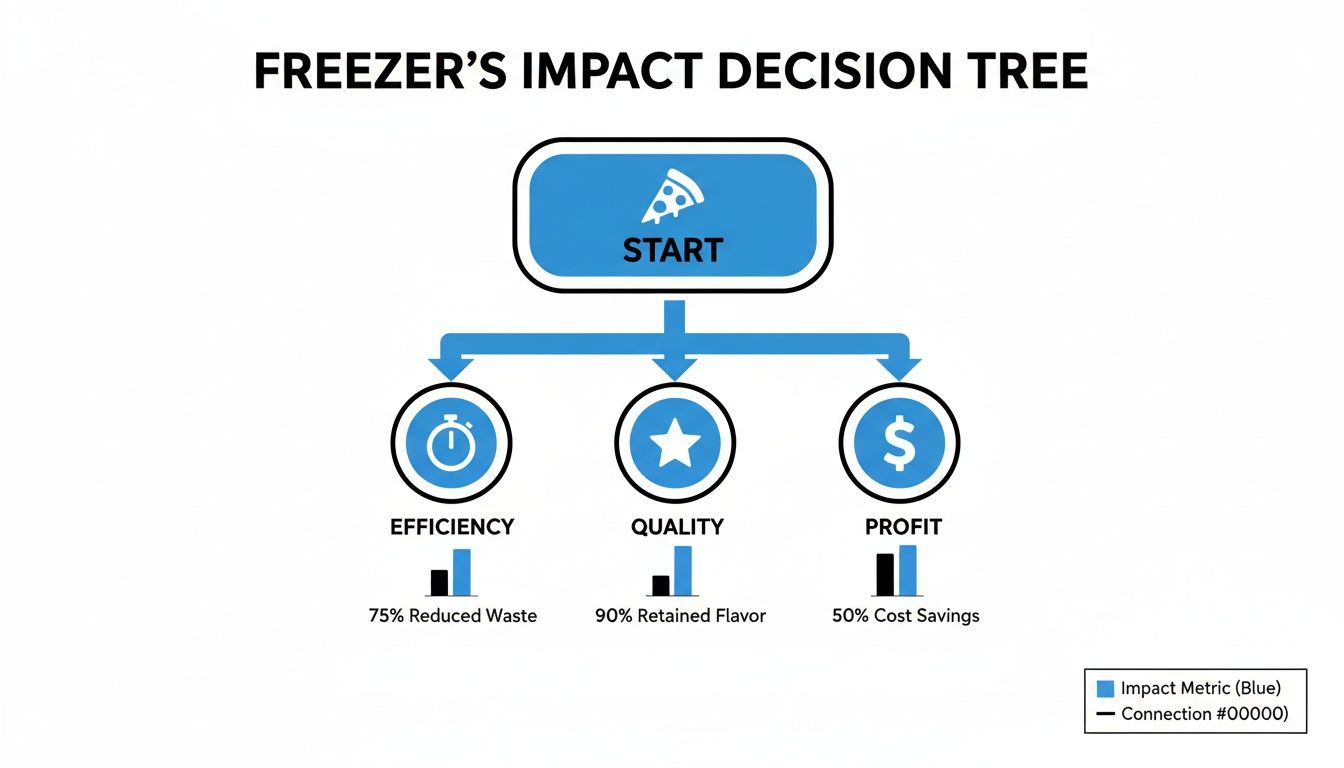
As you can see, what seems like a minor detail on a spec sheet has a direct and pretty significant impact on your day-to-day operations and your long-term success.
To make it even clearer, here’s a quick rundown of the key features to focus on.
Undercounter Freezer Features for Pizzerias
| Feature | What to Look For | Why It Matters for Pizza Prep |
|---|---|---|
| Capacity | Think in dough boxes, not cubic feet. Match the unit's width (48", 60", 72") to your peak service volume. | Prevents constant trips to the walk-in freezer, keeping the pizza prep line moving smoothly during a rush. |
| Temperature | A range that reliably holds -10°F or colder. Digital controls are a must for precision. | Protects expensive ingredients like high-fat cheese and cured meats from freezer burn, reducing waste. |
| Door Type | Solid doors offer superior insulation and energy efficiency. | Maintains consistent internal temperature even when placed next to a hot pizza oven, saving on utility bills. |
| Compressor | Front-breathing design for tight spaces. | Allows the unit to be installed flush against walls or between other equipment without overheating. |
| Refrigerant | Eco-friendly options like R290 (propane). | More energy-efficient than older refrigerants, leading to lower operating costs and a smaller environmental footprint. |
Getting these five features right from the start saves you a world of headaches down the road.
The Engine And Fuel Of Your Freezer
Now, let's talk about what makes the whole thing run. Think of the compressor as the freezer's engine and the refrigerant as its fuel. The type and placement of each one are critically important.
Most modern freezers now use eco-friendly refrigerants like R290 (propane). This isn't just about being green; R290 is incredibly energy-efficient, which translates directly to lower monthly utility bills for your pizzeria.
The compressor's location is just as vital. A front-breathing unit is designed to pull air in and push it out from the front panel. This is a game-changer because it means you can install it snugly between other pieces of equipment—even right next to your 500°F pizza oven—without it gasping for air.
A rear-breathing model, on the other hand, needs several inches of clearance in the back to work properly, making it a terrible fit for a packed pizza prep line. Choosing a front-breathing model ensures your freezer runs efficiently without overheating. For a deeper dive on fitting equipment into your kitchen layout, check out our guide on undercounter refrigerator dimensions. Getting these specs right helps you pick a freezer that works for your kitchen, not against it.
Optimizing Your Kitchen Layout and Workflow
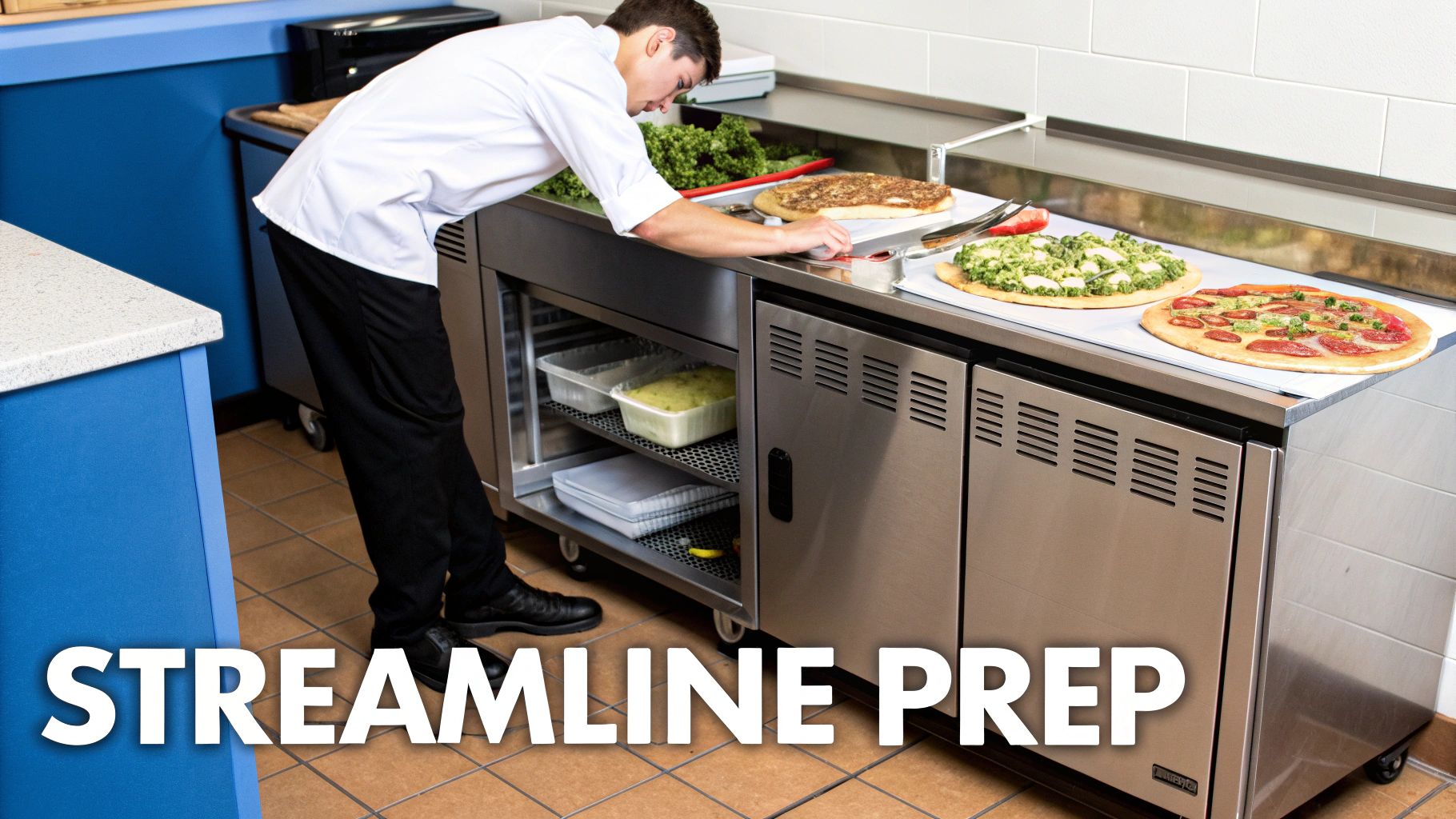
You can have the best equipment in the world, but it means nothing if it’s in the wrong place. The smartest investment you can make in your pizzeria’s speed is optimizing your kitchen layout, and your commercial freezer undercounter is a central piece of that puzzle. Think of it as choreographing a dance where every single step is efficient and purposeful.
The goal is to eliminate wasted motion. Every trip your pizza maker takes to a distant walk-in freezer is a break in rhythm that slows down the entire production line. By placing your freezer directly under the pizza prep table, you create a powerful, self-contained workstation where your team has instant access to dough, cheese, and toppings.
This synergy between the freezer and the pizza prep table is the key to a high-speed workflow. A small slice shop might find a 48-inch undercounter freezer creates the perfect compact station for dough and toppings. A high-volume pizzeria, on the other hand, can use a larger 72-inch unit to anchor an entire pizza assembly line, keeping multiple pizza makers supplied during the busiest rushes.
Smart Placement for Maximum Efficiency
Beyond just sliding it under the counter, a few practical placement details can save you from major headaches down the road. Proper ventilation is absolutely non-negotiable. Blocking the freezer's air vents by pushing it flush against a wall is like forcing a sprinter to run while holding their breath—it will overheat and eventually fail.
Always follow the manufacturer's clearance specifications, which is usually a few inches on the sides and back, to ensure proper airflow. This simple step prevents compressor burnout and emergency service calls. Also, think about the door's swing path. Does it open into a busy walkway, creating a bottleneck? Planning for these small details is what separates a smooth, safe pizza kitchen from a chaotic one.
The most successful pizzerias design their kitchens around "point-of-use" storage. By placing frozen pizza ingredients exactly where they will be used, you reduce staff movement, minimize errors, and significantly cut down on ticket times, especially during peak hours.
Sizing for Your Space and Demand
Choosing the right size is all about balancing footprint with function. The North American commercial refrigeration market shows a strong preference for smaller, space-efficient units. In fact, the capacity segment under 50 cubic feet dominated the market in 2024, capturing a whopping 45.5% of total revenue. This trend highlights just how critical space optimization is for independent pizzerias and other small kitchens.
To nail this in your own shop, using an appliance sizing guide is essential to ensure your undercounter freezer fits perfectly and contributes to an optimal workflow. For more ideas on organizing your kitchen from the ground up, you might be interested in our guide to commercial kitchen layout and design. Strategic planning ensures every piece of equipment works together like a well-oiled machine.
Navigating Health Codes and Installation
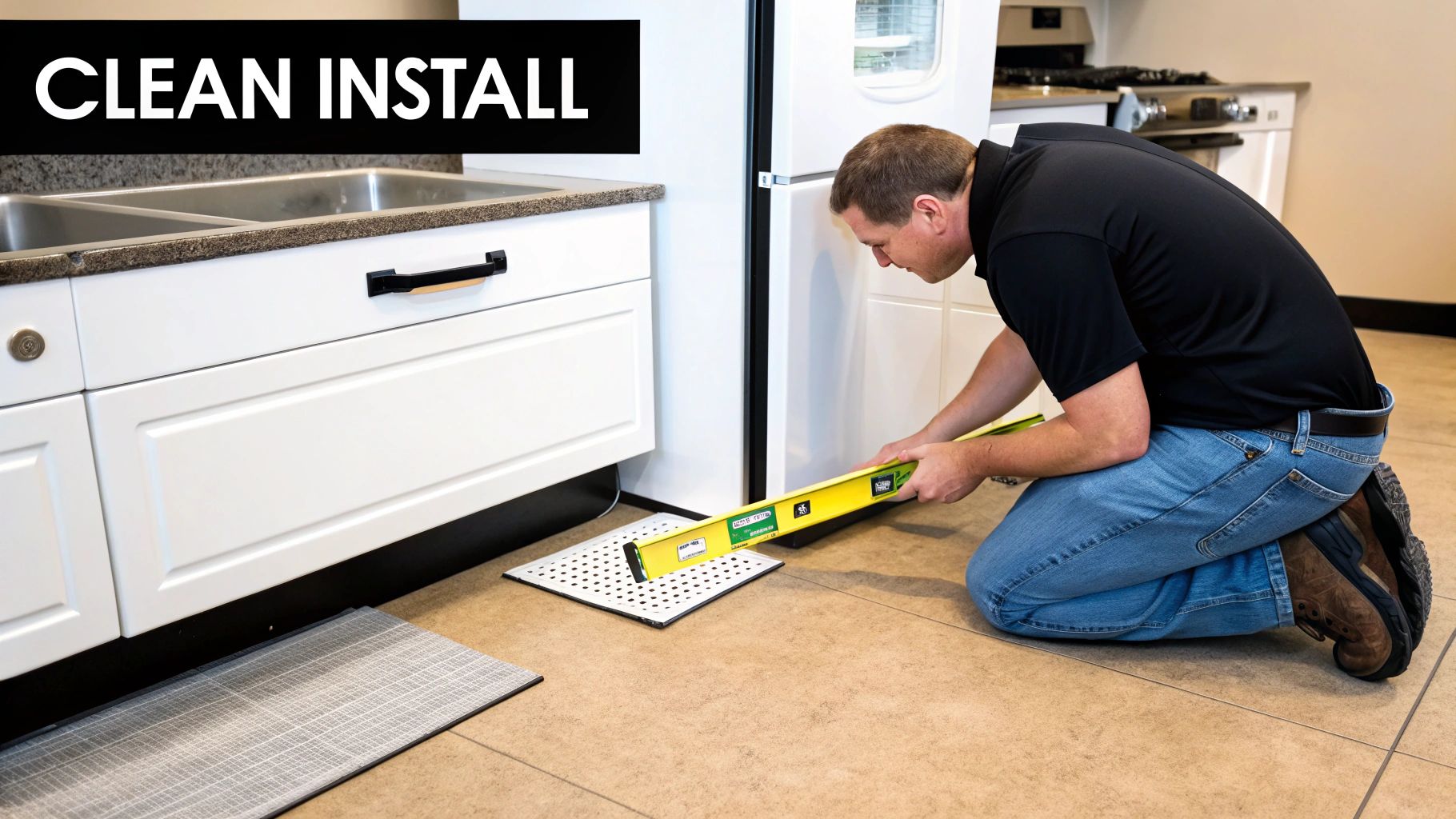
Getting your new commercial freezer undercounter into your pizzeria is a lot more involved than just plugging it in. A solid installation is your first defense against equipment failure, and it's something your local health inspector will be looking at closely. Nail this from day one, and you'll save yourself a world of trouble.
The absolute cornerstone of compliance is NSF certification. Think of that NSF mark as a seal of approval telling the health department your freezer is built for the rigors of a commercial kitchen. It means the unit is durable, safe, and, most importantly, easy to clean. For most inspectors, this certification is non-negotiable.
Pre-Installation Checklist
Before the delivery truck even shows up, a quick run-through of your space can prevent some major headaches. A little prep work now saves a lot of stress later.
- Verify Electrical Supply: A commercial freezer is a power-hungry beast. You need to confirm you have the right heavy-duty electrical outlet (like a NEMA 5-15P) ready to go. A standard wall outlet just won't cut it.
- Ensure a Level Floor: This sounds minor, but it's huge. An uneven floor can wreck the door seal, causing temperature swings and forcing the compressor to work itself to death. Grab a level and check the spot where the freezer will live.
- Measure Clearances: Pull up the manufacturer’s spec sheet and check the required clearance for airflow. Blocking the vents is one of the fastest ways to kill a brand-new freezer. It needs to breathe.
The push for food safety compliance is a huge driver in the commercial refrigeration market. The U.S. market alone was valued at USD 12.63 billion in 2024 and is expected to climb to USD 25.02 billion by 2033. This growth is all about the need for reliable, code-compliant gear in pizza kitchens like yours. Learn more about trends in the commercial refrigeration market.
Common Installation Mistakes to Avoid
A couple of rookie mistakes can seriously shorten your freezer's lifespan. One of the biggest blunders is placing the unit right next to a heat source, like your 500°F pizza deck oven. The constant heat radiating off that oven forces the freezer's compressor into overdrive just to keep up, leading to a much earlier breakdown.
Another common misstep is loading it up too soon. Once the freezer is in place and humming, you have to let it run empty until it hits its target temperature of -10°F. Tossing thousands of dollars in cheese and pepperoni in there right away will stress the system and could even put your food in the temperature danger zone. Give it time to get down to temp first.
Calculating the True Cost of Your Freezer
It's easy to get fixated on the price tag when you're shopping for a commercial undercounter freezer, but that number rarely tells the whole story. To make a truly smart decision for your pizzeria, you have to look past the upfront cost and figure out the Total Cost of Ownership (TCO). This isn't just what you pay today; it's what that freezer is going to cost you every single day it's plugged into the wall.
Think of it less like buying an appliance and more like making a long-term investment in your pizza prep line's reliability. The TCO is really just three simple pieces: the initial purchase price, the ongoing energy bills, and the potential for future repair costs. A cheap unit might save you a few bucks now, but it can slowly bleed you dry with high energy bills and surprise breakdowns.
Beyond the Sticker Price
That initial investment is just the first piece of the puzzle. A slightly more expensive freezer with an ENERGY STAR label might seem like a stretch at first, but these certified models are proven to be 15-20% more energy-efficient than their standard counterparts. That translates directly into hundreds of dollars in savings on your utility bills each year, often paying back the higher initial cost much faster than you'd think.
And let's be real—a well-built, reliable brand is your insurance policy against a catastrophic failure during a Saturday night rush. When a cheap compressor gives out, you're not just looking at a repair bill. You're looking at lost revenue from shutting down and the painful cost of throwing out hundreds of dollars worth of spoiled cheese and dough.
Choosing a dependable freezer isn't an expense; it's an investment in operational stability. A few hundred dollars saved upfront means nothing when you're turning away customers because your dough and cheese are ruined.
A Framework for Smart Comparison
Before you even start comparing models, you need to understand how bonus depreciation can slash your tax bill when you buy new equipment. This powerful tax strategy can make a much higher-quality unit surprisingly affordable, so it’s worth a conversation with your accountant.
When you're ready to compare a few different freezers, just create a simple cost analysis for each one:
- Initial Purchase Price: This is the sticker price, plus any shipping and installation fees.
- Estimated Annual Energy Cost: Look for the yellow EnergyGuide label or the manufacturer's spec sheet. Multiply that number by the freezer's expected lifespan (usually about 7-10 years).
- Potential Repair Costs: Do some quick research on brand reliability. For a less reputable brand, it’s smart to budget a small amount for potential repairs to get a more realistic TCO.
Add those three numbers up, and you'll get a much clearer picture of what each commercial freezer undercounter will truly cost your business over its lifetime. It’s a simple calculation that ensures the choice you make today will still be helping your bottom line years from now.
How to Finance and Purchase Your Equipment
Alright, you've done the hard work. You’ve sifted through the specs, measured your space, and picked out the perfect commercial undercounter freezer for your pizzeria. Now for the final step: actually getting it into your kitchen. This part is about more than just clicking "buy"—it's about making a smart purchase that protects your cash flow and ensures the equipment shows up ready to work.
For most independent pizzeria owners, cash is king. A big, upfront payment for a new freezer can sting, tying up money you need for payroll, pizza ingredients, or that marketing push you've been planning. This is where lease-to-own financing programs come in. They let you get the equipment you need right now but break the cost down into predictable monthly payments, keeping your precious capital free for other things.
The Purchasing Roadmap
Once you have a handle on financing, the actual buying process needs your full attention. My best advice? Work with a specialized equipment supplier who actually gets pizzerias. You want a partner who understands the unique demands of a high-heat pizza kitchen, not a big-box store clerk who sells refrigerators one minute and patio furniture the next. A dedicated supplier offers curated equipment that's built for our world.
Here’s a simple roadmap to follow for a hassle-free purchase:
- Request a Custom Quote: Always start here. Get a detailed quote that breaks down the unit price, freight shipping costs, and any taxes. No surprises.
- Understand Freight Shipping: This isn't a package from Amazon. Commercial freezers are heavy and arrive on a freight truck. You need to confirm if the delivery includes a liftgate service to lower the unit to the ground, especially if you don't have a loading dock.
- Inspect Upon Delivery: This is the big one. Before you sign a single piece of paper, walk around that freezer and inspect it for any damage. Look for dents, scratches, or anything that seems off. If you see major damage, refuse the shipment. It’s a thousand times harder to fix the problem after you’ve signed for it.
I can't stress this enough: a common mistake is signing the delivery receipt without a thorough inspection. Once your signature is on that paper, you are legally accepting the equipment "as is." Filing a damage claim after the fact becomes nearly impossible.
Working with a knowledgeable supplier makes all of this much smoother. If you want to dive deeper into funding your kitchen upgrades, check out our detailed guide on financing restaurant equipment. It lays out a clear path from getting a quote to taking delivery, helping you sidestep those costly rookie mistakes.
Got Questions About Undercounter Freezers? We’ve Got Answers.
Even after you've narrowed down the options, a few questions always come up right before pulling the trigger on a commercial freezer undercounter. Let's tackle the big ones so you can feel confident in your final choice.
How Often Does My Freezer Need Maintenance?
Think of it like an oil change for your car—a little proactive care goes a long way. You should handle the basics yourself every month, which mostly means cleaning the condenser coils. In a pizzeria, they get clogged with grease and flour dust, forcing the compressor to work overtime.
Then, schedule a professional service check every 6-12 months. A pro will make sure the compressor, door seals, and refrigerant levels are all in top shape, which is the best way to prevent a catastrophic failure during a Friday night rush.
What Is the Ideal Temperature for My Pizza Ingredients?
While most freezers are factory-set to 0°F, that’s not quite cold enough to protect high-fat pizza ingredients like mozzarella and pepperoni from degrading. You really want to set your undercounter freezer to -10°F.
That extra cold is crucial for preventing freezer burn, which is what ruins the texture and flavor of your most expensive pizza toppings. Holding at -10°F drastically cuts down on food waste and ensures your cheese melts perfectly on every pizza, every time.
A consistent -10°F is your best insurance policy against ingredient degradation. It ensures that the cheese you pull for a Friday night rush is just as perfect as the day it was delivered.
How Can I Maximize Storage in a Small Freezer?
Space is always tight in a pizzeria kitchen, so smart organization is everything. A few simple tricks can help you make the most of every last inch under your pizza prep table:
- Use Square Containers: This sounds obvious, but it’s a game-changer. Round containers create dead zones in the corners, wasting valuable real estate. Switching to square or rectangular food-safe bins lets you pack everything in without any gaps.
- Label Everything: Get a clear system for dating and labeling the contents. This stops your pizza makers from having to dig around for an ingredient, which lets all the cold air escape and makes the compressor work harder to catch up.
- Create Pizza Prep Zones: Give everything a home. Designate specific shelves for dough, cheese, and toppings. This creates a predictable workflow, making it faster for your team to grab exactly what they need during a busy service.
Ready to find the perfect freezer to anchor your pizza prep line? The experts at Pizza Prep Table can help you choose a model that fits your kitchen's workflow and your budget. Explore our curated selection of NSF-certified freezers designed for pizzerias like yours at https://pizzapreptable.com.