

How to Organize a Chest Freezer for Pizzeria Profit
Organizing your chest freezer is a straightforward process, sure. You empty it, clean it, zone your ingredients, and set up a First-In, First-Out (FIFO) system. But for a busy pizzeria, this isn't just about being tidy. It's about less food waste, faster prep times at the pizza prep table, and ultimately, a healthier bottom line.
The Real Cost of a Chaotic Pizzeria Freezer
That disorganized chest freezer isn't just a headache—it's actively costing you money. Every pizzeria owner knows the stress of a Friday night rush, but what's often overlooked is how a messy freezer fuels the chaos right at your pizza prep table.
When your cook wastes precious minutes digging for the right dough balls or a specific topping, tickets slow down. Orders get backed up. Food waste skyrockets. A strategic system isn't just about tidiness; it’s a core business strategy that starts in the freezer and ends with a perfectly made pizza.
This direct link between freezer organization and your bottom line is undeniable. Think about this real-world scenario: a new case of mozzarella is delivered and gets tossed on top of the older stock. Weeks later, during inventory, you find the older, now freezer-burned cheese buried at the bottom—a total loss. The financial impact goes way beyond just the wasted ingredients.
A disorganized freezer creates hidden operational costs. The extra 60 seconds a cook spends searching for pepperoni is 60 seconds lost on stretching the next dough at the prep table, leading to slower ticket times and potentially comped meals for impatient customers.
A well-managed freezer system directly tackles these issues by creating an intuitive workflow. Staff can find ingredients in an instant, which is crucial when the pizza prep table is slammed with orders. That efficiency translates into tangible benefits every restaurant owner values.
Slashing Food Costs and Boosting Morale
Poor inventory management is a profit killer. The global chest freezer market is projected to grow to roughly $32.13 billion by 2034, and with that growth comes the need for smarter management practices.
Mismanaged cold storage can lead to a product loss of around 2–5% of inventory annually. In an industry where food costs already eat up 28–35% of sales, that extra loss can seriously damage your profit margins. You can discover more insights about this growing market and its impact on food service operations on factmr.com.
By implementing a clear organizational structure, you stop over-ordering and prevent spoilage. But this has a powerful secondary effect: it boosts staff morale. A clean, logical freezer cuts down on frustration and empowers your team to work more effectively. When your kitchen staff isn't fighting with the freezer, they can focus on what matters most—crafting perfect pizzas at the prep table. An organized freezer is the first step toward a smoother, more profitable kitchen operation.
Designing a Freezer Layout for Pizza Prep Flow
Before a single box of pepperoni goes in, you need a blueprint. A pizzeria's chest freezer shouldn't be a random pile of boxes and bags; it should be a direct reflection of your pizza prep table's workflow. This is where the 'zoning' method becomes your most valuable tool.
Zoning is the simple but powerful practice of creating dedicated, physically separated areas for every single ingredient category. Forget that generic stacking that forces cooks to dig through icy layers for sausage during a dinner rush. Instead, you build a logical map that mirrors how ingredients flow from storage to the prep table.
This approach transforms your freezer from a chaotic pit into an efficient extension of your prep line.
The goal is to create an intuitive system where any staff member—from a seasoned chef to a new hire—can instantly find what they need. This drastically cuts down search time, minimizes how long the freezer lid stays open (saving you money on electricity), and prevents costly cross-contamination.
Disorganization isn't just a minor inconvenience; it's a direct financial drain. This flow chart shows exactly how freezer chaos leads straight to waste, inventory loss, and higher operating costs.
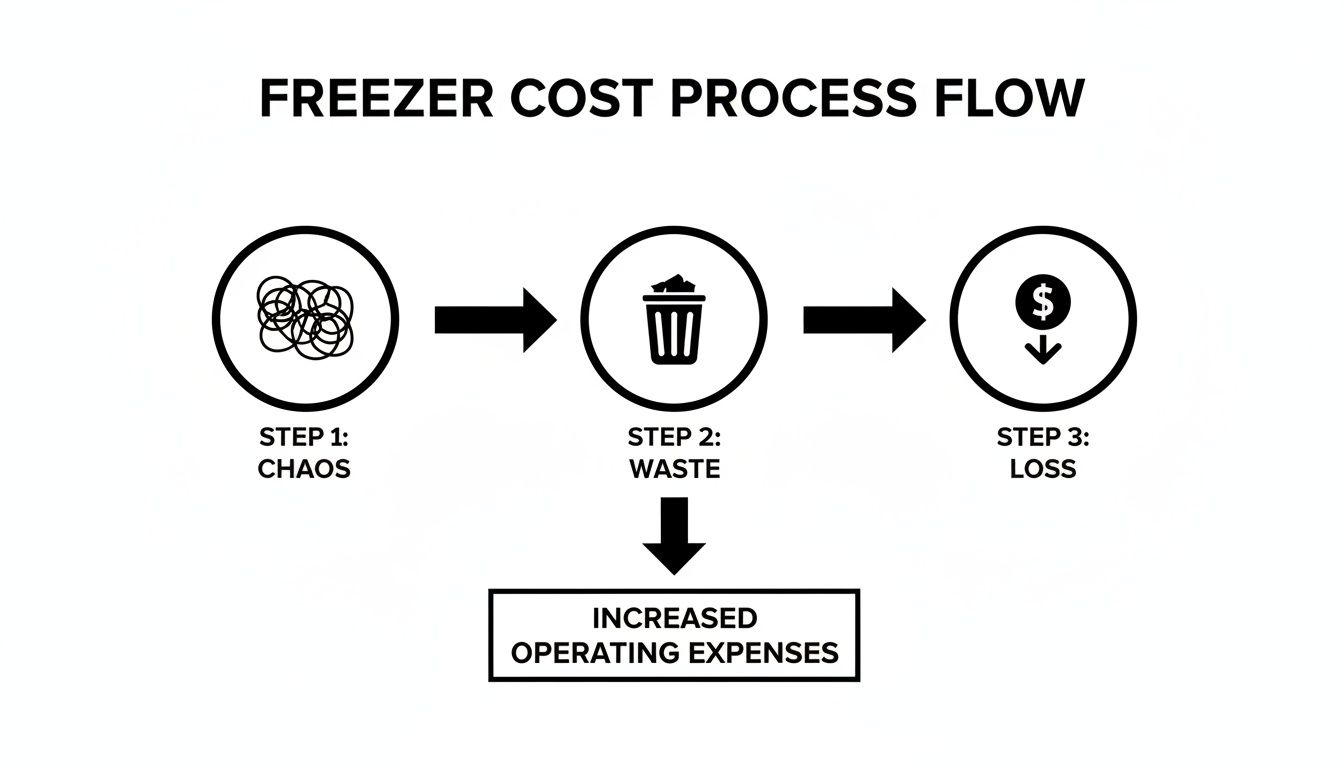
The key takeaway here is that a messy freezer is an active drain on your resources, turning valuable inventory into avoidable expenses.
Creating Your Pizzeria Freezer Zones
The first move is to categorize your inventory based on its role in the pizza-making process. Think of it like setting up stations on your pizza prep table, but vertically. This approach guarantees your high-use items are right on top and easy to grab, while bulk storage stays organized below.
Your primary zones should include:
- Dough Zone: This is home base for all your bread products. Keep dough balls, proofed dough trays, and par-baked crusts grouped together. This also prevents delicate dough from getting crushed under heavier items.
- Protein Zone: A critical area for food safety. Designate specific, sealed containers for raw and cooked proteins like pepperoni, bulk sausage, sliced ham, and grilled chicken strips to eliminate any chance of cross-contact.
- Cheese Zone: Dedicate a large, easily reachable section for what is likely your most-used ingredient. This is where you'll store shredded mozzarella, provolone blends, and blocks of fresh mozzarella.
- Vegetable & Topping Zone: Group all your prepped frozen vegetables here—think sliced bell peppers, onions, mushrooms, and specialty items like pineapple or jalapeños.
- Sauce Zone: If you freeze bulk pizza sauce or specialty sauces, give them their own space. Storing them in portioned, flat containers helps them freeze faster and stack way more efficiently.
By establishing these core zones, you create a predictable and reliable system that supports your pizza prep table's natural rhythm.
Using Dividers and Bins to Enforce Zones
A mental map of your zones is a good start, but physical separation is what makes the system actually work under pressure. Chest freezers are notorious for becoming jumbled messes, but the right tools will maintain order.
Vertical dividers are perfect for sectioning off that big, open space. You can buy commercial-grade freezer dividers or even use sturdy, cut-to-fit plastic boards. These act as walls, preventing your protein zone from spilling over into your dough zone.
Color-coded, stackable bins are another game-changer. Assign a color to each zone—maybe red for proteins, yellow for cheese, and green for vegetables. This visual cue lets staff identify the correct category in a split second, grabbing what they need for the pizza prep table without hesitation.
Pro Tip: When you're picking out bins, make sure they have handles. This makes it incredibly easy to lift an entire category out of the freezer to access items stored underneath. No more unpacking and repacking the entire freezer just to reach the sausage at the bottom.
For pizzerias managing different types of freezers, from small under-counter units to large-capacity chest models, understanding the quirks of each is key. To dive deeper into selecting the right equipment, our guide on commercial kitchen freezers provides detailed comparisons that can help you make an informed decision. Ultimately, a well-designed layout using zones, dividers, and bins is the foundation of a highly functional—and profitable—pizzeria kitchen.
Choosing the Right Bins and Containers
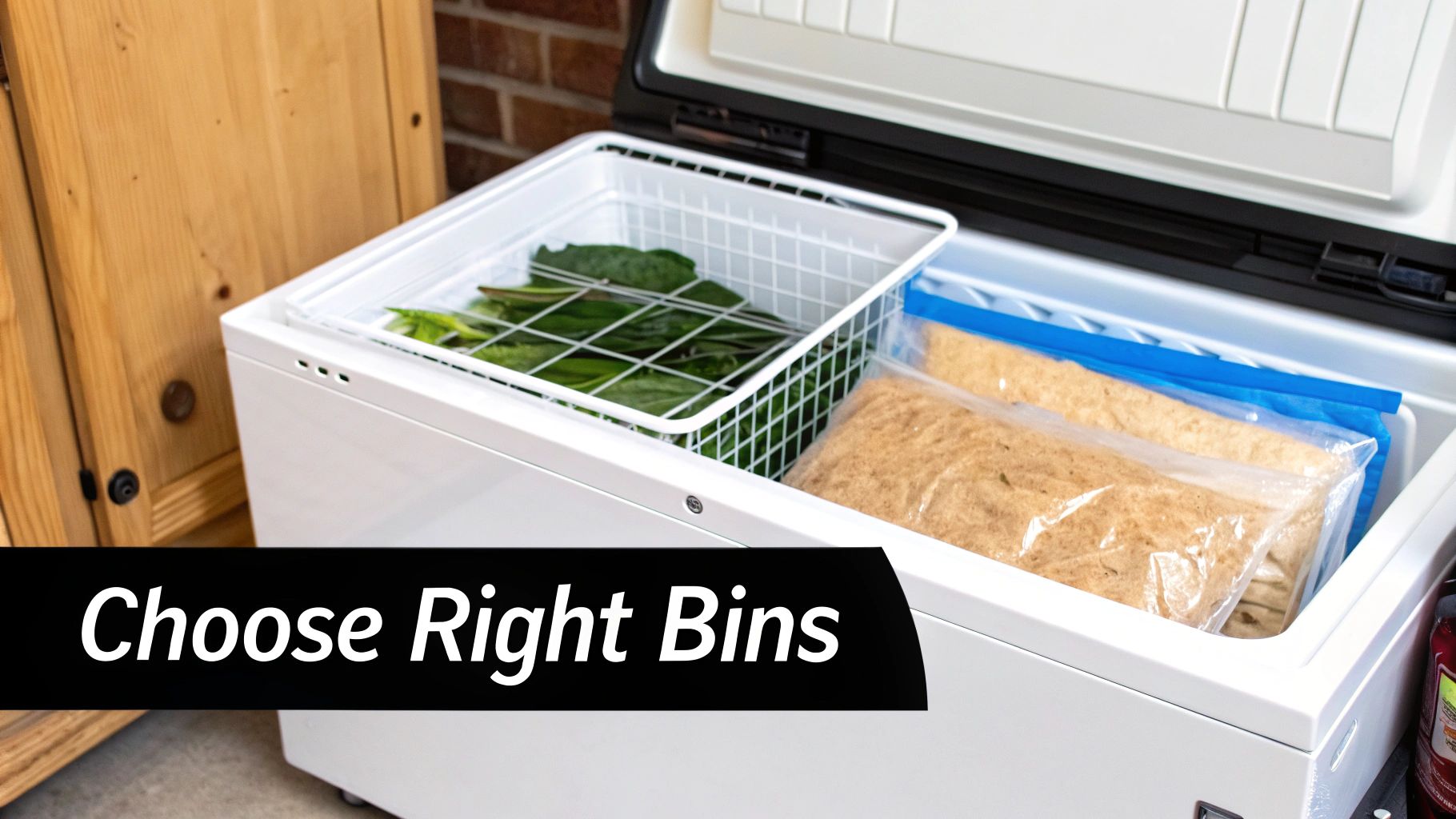
Once you've mapped out your freezer zones, it's time to get the right gear. This is where the system really comes to life. Picking the right containers can be the difference between a smooth Friday night rush and a chaotic scramble for ingredients at the pizza prep table. This isn't about grabbing any old plastic bin from a big-box store; you need tools built for the grind of a commercial pizzeria kitchen.
The wire baskets that ship with most chest freezers are a decent start. They’re great for keeping high-turnover items like bags of shredded mozzarella or pepperoni right on top for easy access. But let's be honest, they don't do much for deep organization. To truly get control of that cavernous space, you need a smart mix of storage solutions tailored to your inventory.
NSF-Certified Bins for Pizzeria Essentials
In a commercial kitchen, food safety is everything. That’s why NSF-certified, food-grade plastic containers are non-negotiable. These bins are specifically designed to be non-porous and easy to sanitize, and they're tough enough to handle sub-zero temperatures without cracking or becoming brittle.
Think about the actual shape of what you're storing. Shallow, rectangular bins are perfect for laying out individual dough balls or storing blocks of cheese so they don’t freeze into an unusable, lumpy mess. For bulk items like bags of chicken wings or frozen bell peppers, deeper, square containers are your best bet.
Here’s what to look for when choosing your bins:
- Material: Hunt for high-density polyethylene (HDPE) or polypropylene. They’re known for being tough and resisting the cold.
- Stackability: Bins with interlocking lids or reinforced rims are gold. They let you use vertical space safely without crushing whatever’s underneath.
- Handles: Don't overlook this. Built-in handles are a must for safely hoisting a heavy bin of frozen sausage out of the freezer to get to the items below.
Vacuum-Sealed Bags and Other Smart Solutions
Beyond the rigid bins, other tools can be game-changers. I'm a huge fan of reusable, vacuum-sealed bags, especially for pricey proteins or specialty toppings. They are fantastic for both portion control and saving space.
When you suck the air out, you’re not just preventing freezer burn and extending shelf life. You’re also creating compact, flat packages that stack like bricks. This is how you turn bulky items like grilled chicken or house-made sauces into neat, uniform blocks that let you use every last square inch of freezer space. You can dive deeper into the full range of options in our guide on commercial food storage boxes, which breaks down different materials and their best applications.
By standardizing your container shapes—using primarily squares and rectangles—you eliminate the wasted space that oddly shaped bags and boxes create. This geometric efficiency can reclaim up to 15-20% of usable freezer space.
The end goal is a modular system where every single container has a clear purpose and a designated home, making restocking the pizza prep table a quick and thoughtless task.
A Head-to-Head Comparison for Pizzerias
Deciding on the right container is often a balancing act between cost, durability, and what you’re actually storing. What’s perfect for bulk dough balls is probably overkill for delicate toppings. From my experience, a strategic mix is almost always the best way for a pizzeria to learn how to organize a chest freezer.
To help guide your decisions, here’s a quick rundown of your main options.
Pizza Freezer Storage Container Comparison
This table breaks down the common storage solutions you'll find in a busy pizzeria freezer, highlighting where each one shines and where it falls short.
| Container Type | Best For | Pros | Cons |
|---|---|---|---|
| Standard Wire Baskets | Frequently used items for the pizza prep table (e.g., shredded cheese, pepperoni). | Allows for air circulation, comes with most freezers, good visibility. | Items can fall through, not stackable, inefficient for small items. |
| NSF-Certified Plastic Bins | Bulk ingredients like dough balls, blocks of cheese, and proteins. | Extremely durable, easy to sanitize, stackable, comes in various sizes. | Higher initial cost, can be heavy when full. |
| Vacuum-Sealed Bags | Portion-controlled proteins, sauces, and specialty toppings. | Maximizes space, prevents freezer burn, extends shelf life. | Requires a vacuum sealer, can be time-consuming to package. |
| Color-Coded Reusable Bags | Grouping similar bagged items (e.g., different frozen vegetables). | Lightweight, flexible, helps with visual zoning. | Offers no structural support, can get buried easily if not managed. |
Ultimately, a well-organized freezer uses a combination of these tools. You'll likely end up with wire baskets for quick grabs, sturdy plastic bins for the heavy lifting, and vacuum-sealed bags to maximize space for your most valuable ingredients.
Mastering Inventory With Smart Labeling and FIFO
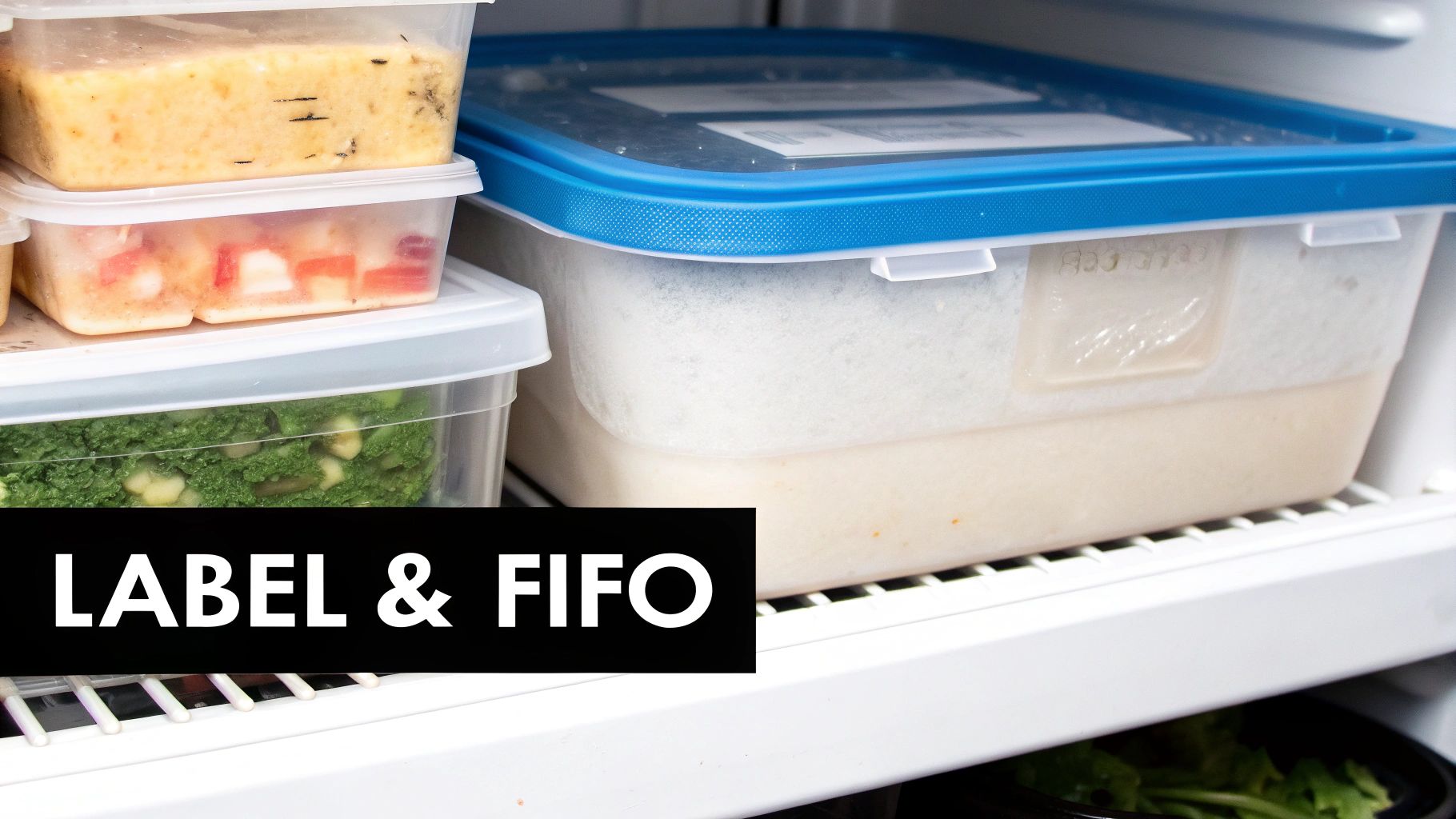
A perfectly zoned freezer is a beautiful thing, but it’s basically useless if your team can’t tell the difference between this week's sausage and last month's. This is where your system truly comes to life, turning a tidy space into a lean, mean, cost-saving machine.
Two principles are absolutely non-negotiable here: smart labeling and the First-In, First-Out (FIFO) method. These systems are the lifeblood of any efficient kitchen. Get them right, and you’ll stop finding freezer-burned mozzarella at the bottom of a bin and put an end to wasteful guesswork when restocking the pizza prep table.
Crafting Labels That Actually Work
Let’s be honest: a label that falls off in the freezer is as good as no label at all. The goal is to create a dead-simple, consistent system using materials that can actually survive sub-zero temperatures. You don't need some complicated setup; you just need clear, readable information that everyone on your team gets at a single glance.
Making your items easy to identify is critical. Learning the best way to label storage bins is a great starting point for total organization, ensuring every container is clearly marked.
For your pizzeria, every single label must have three key pieces of information:
- Item Name: Be specific. "Sausage" isn't enough. It should be "Spicy Italian Sausage Crumbles."
- Received Date (or Prep Date): This is the day the ingredient walked in the door or was prepped and frozen. It’s the absolute cornerstone of your FIFO system.
- Use-By Date: The date by which the item must be used for optimal quality. This helps your team prioritize what to pull for the prep line without a second thought.
A simple change, like pre-printing labels with item names and leaving blanks for dates, can save your prep cooks a ton of time. This small step encourages consistency and ensures every box of pepperoni and bag of cheese gets tagged correctly the moment it arrives.
Putting FIFO to Work in a Chest Freezer
First-In, First-Out sounds simple on paper: use the old stuff before you use the new stuff. In a deep chest freezer, though, it’s a lot easier said than done. Gravity is not your friend here.
This requires a physical system that stops new deliveries from getting dumped on top of your existing stock. The solution I've seen work best is a straightforward two-stage rotation process.
When a new shipment of frozen dough arrives, it doesn’t go directly into the main dough bin. Instead, it has its own designated "holding area" until the older stock gets moved forward. This is a hands-on task that has to become a routine part of your inventory management.
The Two-Zone Rotation System
Here’s how you can put this system into practice. This method is the best way to prevent perfectly good product from getting lost at the bottom and ensures a continuous flow of properly rotated stock to the pizza prep table.
- Designate a "New Stock" Zone: This can be a specific bin or just a section at one end of the freezer. All new deliveries go here first. Never mix them with older inventory.
- Maintain an "Active Stock" Zone: This is where you keep the ingredients that are next up. These are the containers your cooks will pull from during daily prep.
- Schedule a Weekly Rotation: Once a week (or more, depending on your volume), pull the older "Active Stock" to the front. Then, move the items from the "New Stock" zone into the "Active Stock" area behind the older products.
This physical rotation is the most critical step. It guarantees that the oldest product is always the easiest to grab. Training your team on this process is vital for it to stick. Make it a closing duty for a specific team member to ensure it gets done right, every single time. By making smart labeling and FIFO part of your kitchen's DNA, you transform your freezer from a simple storage unit into an active tool for protecting your profit.
Making Your Inventory System Work for You
A perfectly zoned and labeled freezer is a beautiful thing, but it’s only half the battle. The real magic—and the real financial control—happens when you connect that physical organization to a smart tracking system. This is how you turn a neat freezer into a money-saving machine that tells you exactly what to order, prevents stockouts, and slashes food waste.
Think of it as the brain of your freezer operation. For most pizzerias, this doesn't mean you need to rush out and buy expensive software. The goal is simple: create a "living" inventory. You want a constantly updated record that prevents that gut-wrenching moment when you run out of dough balls during the Friday night rush.
Start with What Works: Low-Tech, High-Impact Tools
The best inventory system is the one your team will actually use, day in and day out. More often than not, that means starting simple. A whiteboard or a laminated chart mounted right on the freezer lid is often the most effective first step. It’s immediate, it’s visual, and there’s no password to forget.
The process is dead simple. Every time a cook grabs a full case of pepperoni to restock the pizza prep table, they make a quick tally mark. It’s a low-friction habit that keeps everyone on the same page.
Your chart only needs to track a few key things for your most important frozen items:
- Item: Get specific. Not just "crusts," but "12-inch Par-baked Crusts."
- Unit of Measure: Are you tracking Cases, Bags, or individual Sleeves? Define it.
- Starting Quantity: The count right after your last delivery truck leaves.
- Reorder Point (Par Level): This is your safety net. It’s the minimum number you need on hand before placing a new order. For example, if you burn through 10 cases of mozzarella a week and your delivery takes two days, your par level should probably be around 4 cases.
- Current Count: A simple, ongoing tally updated daily or per shift.
This basic manual system builds accountability and gives you a crystal-clear, real-time snapshot of what you own. It’s the foundation for making smarter, more confident purchasing decisions.
Leveling Up to a Digital Spreadsheet or App
Once your team has the manual tracking habit down cold, shifting to a digital system is a natural next move. A simple spreadsheet on a kitchen tablet can mirror your whiteboard system but with some powerful perks. Spreadsheets can automatically flag items hitting their reorder point, calculate your usage rates, and build a historical record of your consumption patterns over time.
A shared spreadsheet is a game-changer for owners and managers. You can check inventory levels from the office—or your couch—and plan supplier orders without having to physically stand in the cold counting boxes.
If you’re ready for more horsepower, plenty of user-friendly restaurant inventory apps can automate even more of the process. Many integrate directly with your point-of-sale (POS) system, automatically deducting ingredients from your inventory as you sell pizzas. It gives you an incredibly accurate, real-time picture of your stock, but be prepared for a more involved setup.
Your Pizzeria Inventory Template
Whether you choose a whiteboard or an app, the information you track is the same. A solid template is the key to keeping it consistent and easy to follow. It removes the guesswork, which is absolutely vital when you're trying to organize a chest freezer for maximum efficiency.
Here’s a basic template you can steal for your spreadsheet, app, or whiteboard.
| Item Name | Supplier | Unit Size | Starting Qty | Reorder Point | Current Qty | Notes |
|---|---|---|---|---|---|---|
| Shredded Mozzarella | Vistar | 5 lb Bag | 20 | 8 | 11 | Order Mon AM |
| Dough Balls (16 oz) | US Foods | 36/case | 10 | 3 | 4 | High use Fri/Sat |
| Pepperoni Slices | Sysco | 10 lb Case | 8 | 2 | 3 | For pizza prep table |
| Frozen Bell Peppers | Local | 5 lb Bag | 5 | 2 | 2 | ORDER NOW |
By putting a tracking system in place—no matter how simple—you close the loop on freezer management. This is the crucial step that connects your tidy, organized space to the intelligent, data-driven decisions that directly protect your bottom line.
Essential Maintenance and Temperature Monitoring
An organized freezer is only as good as the machine it’s in. You can have the most perfectly zoned and labeled system in the world, but it’s all for nothing if the freezer itself isn't clean and holding temperature. Neglecting basic maintenance is like building a masterpiece pizza on a broken oven—the results will be a disaster.
Think of these tasks as protecting your investment. Routine cleaning and defrosting have a direct impact on food safety, how much electricity you use, and how long your freezer will last. It's not a chore; it's a critical part of safeguarding your pizzeria's bottom line. The bonus? A well-organized freezer with removable bins makes the whole process faster and way less disruptive to your kitchen's flow.
You also need to keep an eye on the physical condition of the freezer. For instance, checking for common freezer door seal issues can stop major temperature swings that spoil product before you even know there's a problem.
The Defrosting and Cleaning Schedule
For a busy pizzeria, you should plan to fully defrost and clean out your chest freezers at least twice a year. But the real signal is the ice. Once you see a quarter-inch of ice buildup, it’s time to defrost, no matter what the calendar says.
That ice acts like an insulator, forcing your freezer's compressor to work overtime. This not only drives up your energy bill but also puts your entire inventory at risk of spoilage.
Your organized system with removable bins is your secret weapon here. Instead of pulling out hundreds of individual items, you just lift out entire categories—the "Protein Zone," the "Dough Zone"—and pop them into another freezer temporarily. This simple trick can cut your defrosting time in half.
Mastering Temperature Monitoring
Consistent temperature monitoring is your first and best line of defense against catastrophic food loss. The built-in thermometer on the freezer gives you a basic reading, but it won't help you when you're not physically in the kitchen.
Crucial Insight: Your chest freezer must be kept at a steady 0°F (-18°C) or below. Even a few degrees of fluctuation can degrade the quality and safety of ingredients like cheese and dough over time.
This is why investing in an external digital sensor is one of the smartest moves you can make. These devices give you continuous readings and can send an alert straight to your phone if the temperature creeps into the danger zone. It gives you a fighting chance to handle a power outage or equipment failure before you lose thousands of dollars in product.
Just think about it: a typical 17.7 cu ft commercial chest freezer can hold over 400 lbs of food. Wasting just 10–15% of that space to disorganization or spoilage means losing 40–60 lbs of capacity—a huge hit for any pizzeria.
The best practice is to build temperature checks right into your team's daily opening and closing duties. Keeping detailed logs is essential, not just for your own quality control, but for breezing through health inspections. Our guide on maintaining food safety temperature logs offers practical templates and advice to make this a seamless part of your routine. It's a simple, consistent habit that protects your inventory and your reputation.
Answering Your Top Freezer Organization Questions
Even with a rock-solid system, the daily grind of a busy pizzeria brings up questions. Here are the quick answers to the real-world challenges I see owners face all the time when they’re trying to tame a chaotic chest freezer.
How Often Should I Defrost My Commercial Chest Freezer?
For a busy shop, plan on defrosting your chest freezer at least twice a year. But honestly, the real signal is the ice. Once that buildup hits a quarter-inch thick, it’s time to get it done.
Why? Because that extra ice makes your compressor work overtime, jacking up your energy bill. More importantly, it can mess with the temperature stability you need for your dough and cheese. An organized setup with removable bins makes this so much faster, turning a dreaded chore into a quick maintenance task.
My Staff Is Ignoring the New System. What Do I Do?
Getting the team to stick with a new freezer system comes down to training and buy-in. Don't just send out a memo. Hold a quick team huddle and explain the "why"—this new way means faster prep at the pizza prep table, less waste, and an easier shift for everyone.
A simple trick that works wonders is to post a laminated diagram of the freezer zones right on the lid. It’s a constant visual reminder. Make reviewing the system part of your new-hire training and get your kitchen managers to gently enforce it. When the team sees how it helps them, they'll actually use it.
What’s the Best Way to Label Items for the Freezer?
You absolutely need labels with a "freezer-grade" adhesive that won’t just peel off in the cold and moisture. In a pinch, a permanent marker on painter's or masking tape works surprisingly well, but you have to apply it to a dry container at room temperature before it goes in.
For those reusable bins that take a beating, I recommend getting durable plastic tags and attaching them with zip ties. This method is practically indestructible. Your core labels like "Dough Balls" or "Mozzarella" will never get lost or become unreadable again.
Whatever you use, every single label needs the item name and the date it was frozen. That’s the only way to keep your FIFO rotation honest and effective.
At Pizza Prep Table, we know that an efficient kitchen is a profitable one. Our selection of commercial freezers and pizza prep tables is designed to help you build the organized, high-performance workspace your pizzeria deserves. Find the right equipment for your kitchen.