

Pizza Perfection: Tools That Make Every Slice a Winner
Why the Right Pizza Cutting Tool Makes All the Difference
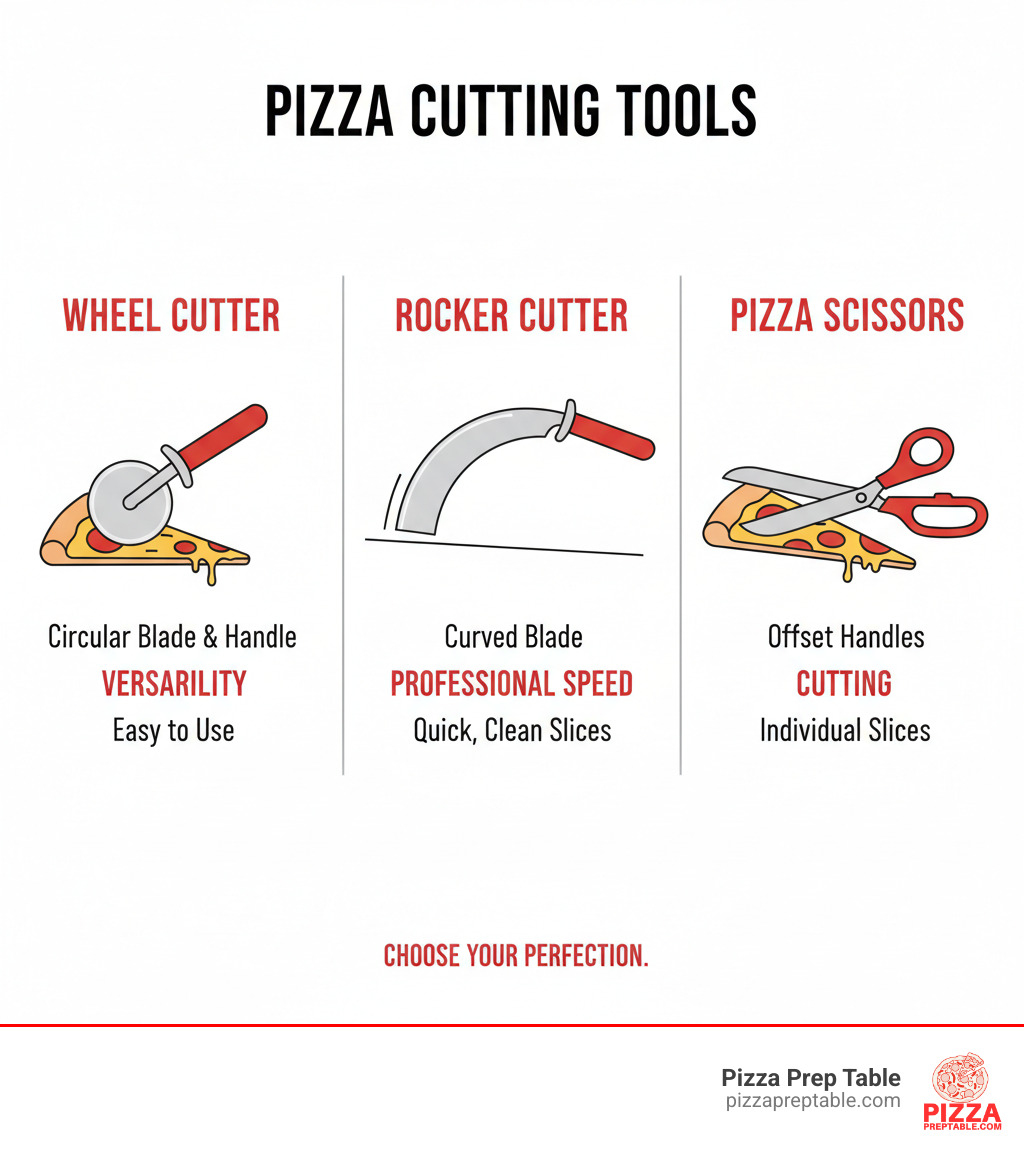
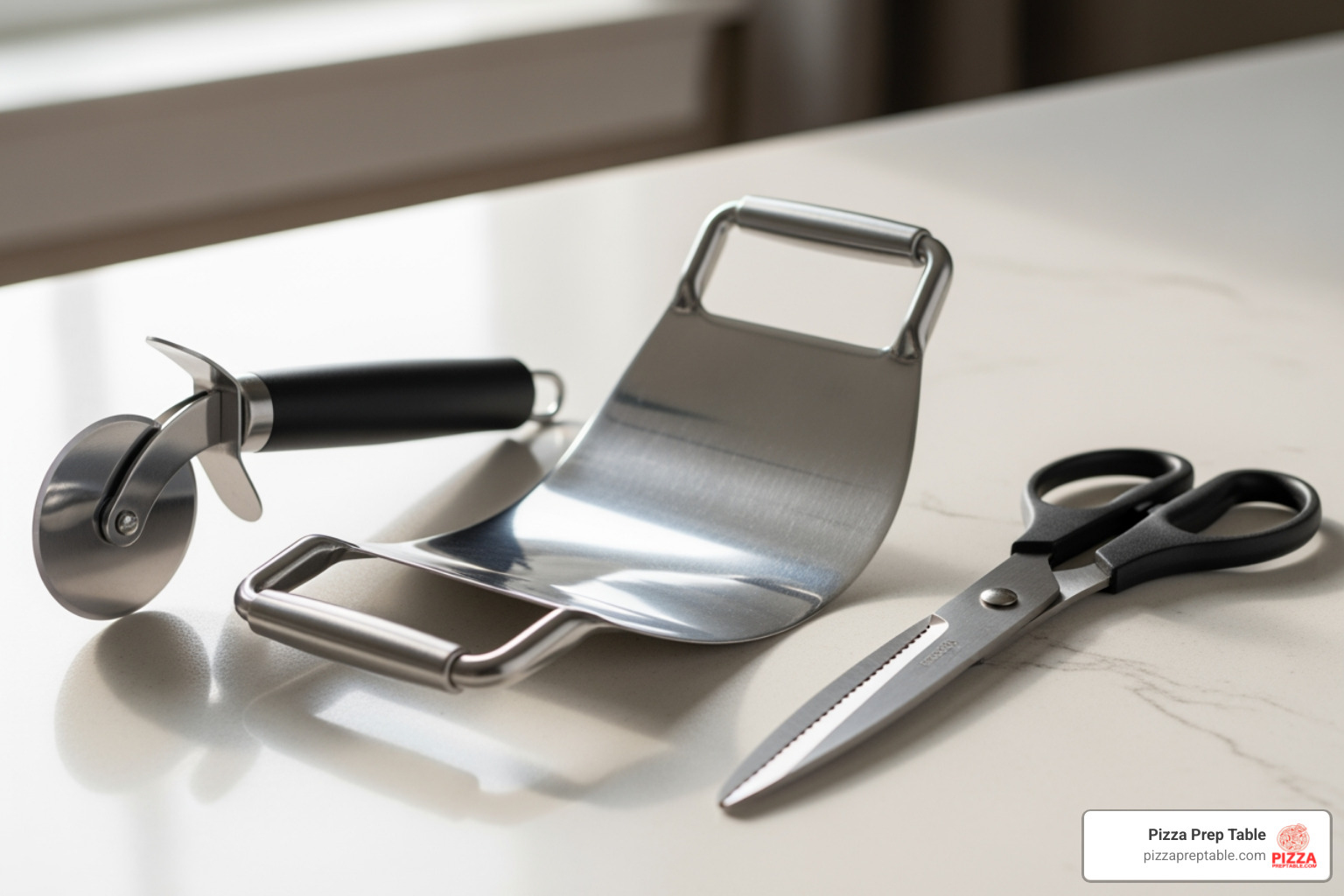
A pizza cutting tool is essential for slicing pizza cleanly without dragging toppings or ruining the presentation. The three main types are:
- Wheel Cutters: A rolling blade on a handle, versatile and easy to use.
- Rocker Cutters: A long, curved blade that rocks across the pizza for fast, clean cuts.
- Pizza Scissors: Shear-style cutters for precision, ideal for serving individual slices.
For a quick overview of these tools and their traditional designs, see pizza cutter.
We've all been there: a perfect pizza from the oven is ruined by a dull cutter that drags toppings and creates a mess. The right tool isn't just about convenience; it's about preserving the quality of your product. A sharp blade and comfortable handle give you the control to make straight, even slices every time.
The pizza cutter market is projected to reach $1.9 billion by 2030, reflecting how seriously both home cooks and professionals take this tool. Choosing the right cutter impacts everything from food presentation to kitchen efficiency.
I'm Sean Kearney, and I've spent years in the foodservice industry helping restaurant owners select the right equipment. I've seen how the perfect pizza cutting tool can transform a kitchen's workflow and product quality.
The Main Contenders: A Slice-by-Slice Comparison
Let's break down the three main players in the pizza cutting tool game. Each has its own purpose, and understanding them will help you choose the right one for your kitchen.
The Classic Wheel: Your Go-To Pizza Cutting Tool
The wheel cutter is the familiar friend most of us grew up with: a circular blade on a handle that rolls across your pizza.
What makes it great: The wheel cutter is versatile, handling most crusts with ease. It's straightforward to use, widely available, and affordable, making it a staple in both home and commercial kitchens.
Where it falls short: A dull blade can drag toppings, creating a mess. Thicker or heavily loaded pizzas may need multiple passes, which can compress the crust. Cheaper models often have wobbly blades that ruin control.
The size secret: Blade size matters. Larger blades (around 4 inches) steer through toppings and crusts more easily than smaller blades (around 2.75 inches), which struggle with thicker pizzas.
Best for: This is your all-rounder for home use and lighter commercial settings. A great example is a model like the OXO Good Grips 4-Inch Pizza Wheel, loved for its comfortable grip and sharp, durable blade.
The Rocker Blade: A Professional's Pizza Cutting Tool
Walk into any serious pizzeria, and you'll likely see a rocker cutter, or mezzaluna. This tool has a long, curved blade with handles on both ends. You rock it across the pizza in one smooth motion.
The professional advantage: Speed is the main benefit. You can slice an entire pizza in one or two motions, which is why high-volume kitchens love them. The rocking motion creates clean cuts with minimal topping drag and is gentler on delicate crusts.
The trade-offs: The long shape can be awkward to store in smaller kitchens, and there's a slight learning curve. Weight and grip are important; a well-designed rocker is lightweight with comfortable handles.
Best for: This is the pro's choice for high-volume settings. The Gozney Pizza Rocker is highly rated for being lightweight, sharp, and comfortable to use, making quick, confident slices feel effortless.
The Underdogs: Pizza Scissors and Knives
Don't overlook less common options.
Pizza shears offer ultimate precision for individual slices. They typically have an offset handle and a flat bottom blade, perfect for keeping toppings in place and serving directly from the pan. They are slower than wheels or rockers, making them best for personal pizzas or serving by the slice. You can find more info about pizza scissors on our blog.
Multi-purpose knives, like a sharp chef's knife, can work in a pinch on thin-crust pizzas. However, they require a steady hand and a good cutting board, and they can drag toppings if not extremely sharp. They are best for minimalists who prefer a lean tool collection.
Choosing the Right Pizza Cutting Tool: A Buyer's Guide
Now that we've covered the types, let's discuss what separates a mediocre pizza cutting tool from a great one. These features matter whether you're outfitting a pizzeria or your home kitchen.

Blade Material and Sharpness
The blade is the most critical part of any cutter.
Stainless steel is the gold standard. It resists rust, stands up to heavy use, and holds a decent edge. Its durability makes it a top choice for commercial kitchens slicing hundreds of pizzas a week.
Some premium cutters use high-carbon steel, which can achieve a sharper, longer-lasting edge. The tradeoff is that they require more care to prevent rust and must be dried thoroughly after washing.
Sharpness is everything. A sharp blade glides through crust and toppings in one clean motion, with no tearing or dragging. A dull blade makes messy slices, wastes time, and requires more effort, which adds up in a busy kitchen.
Handle Ergonomics and Grip
A comfortable handle is crucial, especially during a long shift.
Handle materials vary: plastic is lightweight and dishwasher-safe, wood looks great but requires hand-washing, and rubber or silicone grips offer the best non-slip control.
A well-designed handle fits your palm naturally, allowing you to apply firm pressure without strain. Poor ergonomics can make it difficult to push down hard enough, leading to a struggle with the cutter instead of a smooth slice. Safety features like finger guards on wheel cutters are important for preventing accidents, especially when moving quickly.
Size, Shape, and Crust Compatibility
The size of your pizza cutting tool should match the pizzas you make.
For wheel cutters, blade diameter is key. Smaller blades (around 2.75 inches) struggle with thick or loaded pizzas. Larger 4-inch blades power through all crust types—thin, thick, or deep-dish—with better leverage and in fewer passes.
For rocker blades, length matters. Longer rockers (14-20 inches) are ideal for large pizzas in commercial settings. A slightly shorter rocker is easier to handle and store in a home kitchen.
Different crust styles need different tools. While most sharp cutters handle thin crusts, thick and deep-dish pizzas demand a cutter with real leverage, like a large wheel or a rocker knife. This allows you to cut through the entire pizza in one confident motion.
Our Top Picks: The Best Pizza Cutters for Every Kitchen
After years of working with restaurant owners and testing countless models, I've seen which pizza cutting tools hold up under pressure. These picks represent the best performers across different categories.
The price for pizza cutters varies, but these selections balance performance, durability, and value.
Best Overall Wheel Cutter: Mercer Culinary Millennia
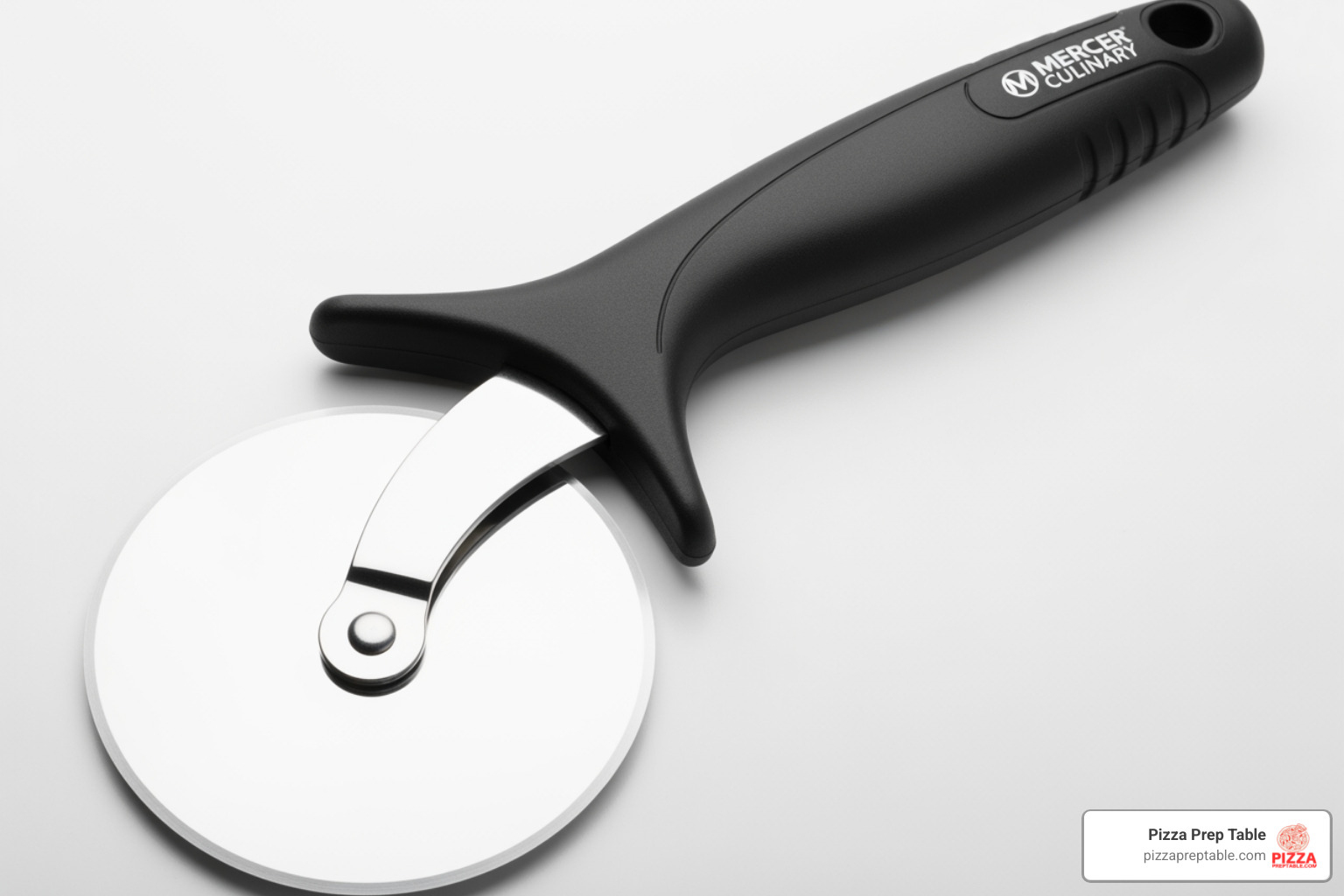
If you invest in one wheel cutter, make it the Mercer Culinary Millennia. This is the pizza cutting tool I recommend most often to restaurant owners.
Its 4-inch blade is large enough to slice through deep-dish pizzas in one pass, yet maneuverable enough for thin-crust pies. When the blade dulls, you can order replacements instead of buying a new cutter, which saves money and reduces waste.
The ergonomic, non-slip handle prevents hand cramps during busy service. What truly sets this cutter apart is its professional-grade sharpness that lasts, cutting cleanly without dragging toppings. It's a standard in many commercial kitchens for good reason.
Best Rocker Cutter: Lamson Pizza Rocker
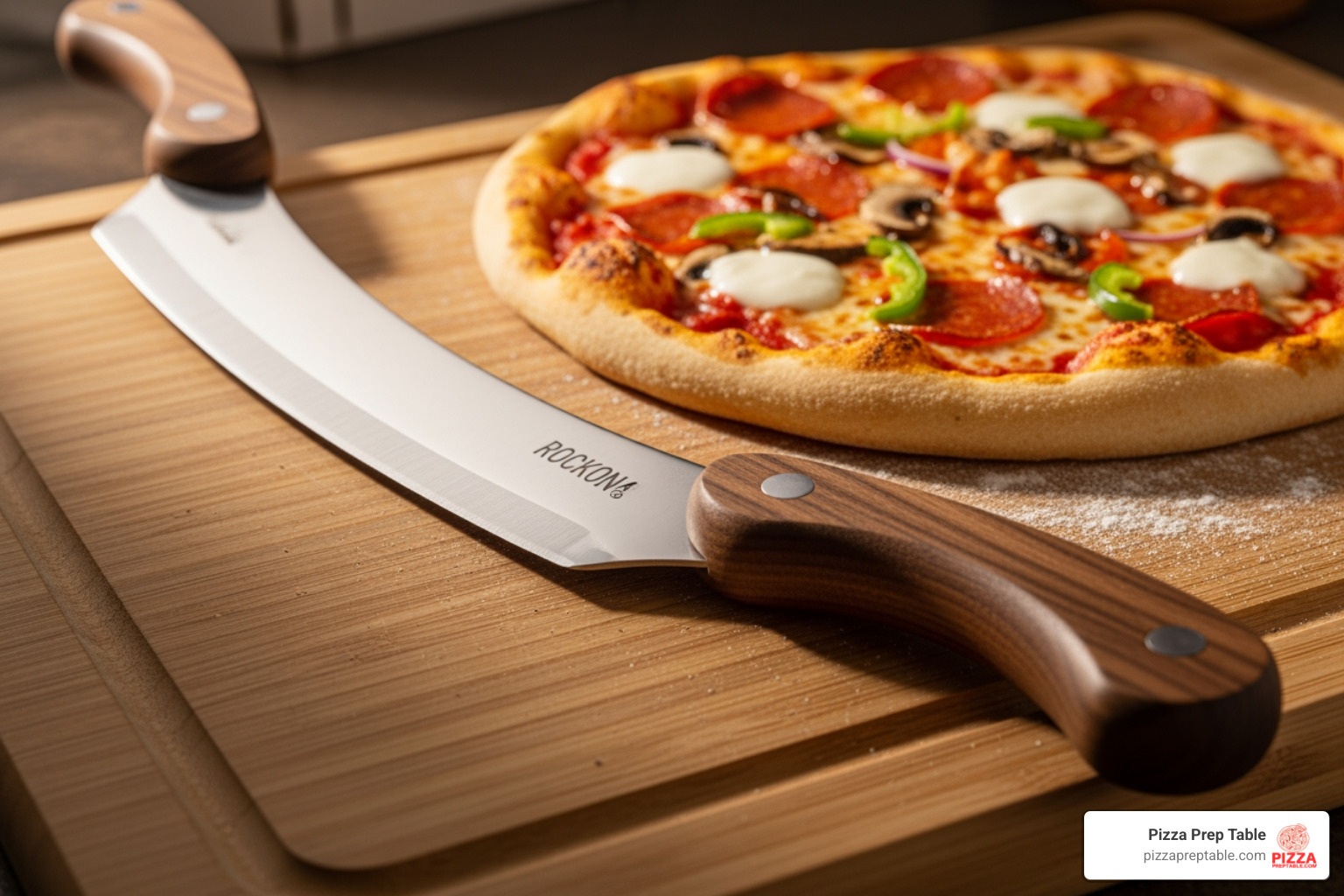
For speed and clean presentation, nothing beats a quality rocker blade. The Lamson Pizza Rocker combines traditional craftsmanship with professional performance.
The walnut handles provide a secure, balanced grip. When you rock this blade across a pizza, you get perfectly separated slices with toppings that stay put. The balanced design is surprisingly easy to use, even for beginners, allowing you to slice pizzas faster than with a wheel cutter. If you're looking for an even lighter option, the Gozney Pizza Rocker is another excellent choice praised for its sharp blade and comfortable grip.
Most Innovative Design: Kitchy Pizza Cutter Wheel
Sometimes the best innovations come from rethinking familiar tools. The Kitchy Pizza Cutter Wheel takes the traditional wheel design and flips it - literally - with its palm-held approach.
Instead of a long handle, your palm rests directly over the blade. This allows you to apply straight downward pressure, which works brilliantly for thin-crust pizzas by reducing topping drag.
The retractable blade guard is a thoughtful safety feature that makes storage worry-free. It also disassembles easily for thorough cleaning. This compact design shines in tight spaces and is particularly effective on thin-crust pizzas, making it a worthy addition to your pizza cutting tool arsenal.
Keep it Sharp: Pizza Cutter Maintenance and Longevity
Even the best pizza cutting tool will lose its edge without proper care. A little attention will keep your cutter slicing like new for years. A well-maintained cutter performs better, is safer, and saves you money.
Want to level up your cutting technique? Check out Mastering the Slice: Pizza Cutter Techniques for Your Pizza Stone for expert tips.
Cleaning Your Pizza Cutter
Proper cleaning prevents rust and maintains a sharp edge. While many cutters are labeled dishwasher-safe, hand washing is almost always better. Harsh detergents and high heat can dull blades and are especially damaging to wooden handles.
Some models, like the Kitchy or Zulay Kitchen cutters, are built to disassemble for cleaning, which is a game-changer for removing hidden bits of cheese and dough. For stuck-on food, soak the blade in warm, soapy water before gently scrubbing.
Most importantly, dry your cutter completely after every wash. Even stainless steel can develop rust spots if left damp.
Sharpening and Storage
A dull cutter drags toppings and requires too much effort. Sharpen your cutter when it starts pulling cheese or requires more muscle to make a clean cut. For home use, sharpening every few months is usually enough; commercial kitchens will need to do it more often.
Both rocking and rolling-style cutters can be sharpened at home with a whetstone. For wheel cutters, rotate the blade to sharpen the entire edge evenly. Rocker blades are more straightforward. If you're not comfortable doing it yourself, many professional knife-sharpening services can handle round blades, but call ahead to confirm.
Use blade guards for storage to protect the blade and your fingers. Keep your pizza cutting tool in a drawer or on a knife magnet where it won't bang against other utensils.
Finally, never cut pizza directly on a pizza stone or metal pan. This will dull your blade instantly. Always transfer your pizza to a proper cutting board first. Our guide on Cutting Edge Choices: Best Pizza Prep Table Cutting Boards can help you choose the right one.
Frequently Asked Questions about Pizza Cutters
We hear these questions all the time from both home cooks and restaurant owners. Let's clear up some of the most common concerns about your pizza cutting tool.
Can you put a pizza cutter in the dishwasher?
Most are technically dishwasher-safe, but it's not always the best idea. Always check the manufacturer's instructions. Hand wash any cutter with wooden handles, as the dishwasher will damage them. For all other cutters, hand washing is still recommended to keep the blade sharper for longer. If you must use a dishwasher, place the cutter on the top rack.
What is the best way to cut a deep-dish pizza?
Deep-dish pizza requires a substantial pizza cutting tool. Small, flimsy wheel cutters will struggle. Your best bet is a large rocker knife, which can slice through thick layers in one clean motion. If you prefer a wheel cutter, choose one with a large blade (around 4 inches) and a sturdy handle for better leverage. The key is to apply firm, even pressure in one smooth motion.
How do you stop a pizza cutter from dragging the cheese?
This common problem is preventable.
- Use a sharp blade. A dull blade is the number one cause of topping drag. If your cutter is pushing toppings around, it needs to be sharpened or replaced.
- Use a confident motion. Apply firm, even pressure in a quick, decisive slice. Hesitating allows the cheese to stick and drag.
- Let it rest. Let your pizza cool for a minute or two before cutting. This allows the cheese to set slightly, leading to cleaner cuts.
The Final Slice: Finding Your Perfect Match
Choosing the right pizza cutting tool really does matter more than most people think. The moment of slicing a hot pizza should be effortless, with the blade gliding through to create perfect portions with toppings intact.
As you make your decision, remember the fundamentals.
- Sharpness is non-negotiable for clean cuts.
- Ergonomics provide comfort and control, preventing fatigue.
- Material quality, like stainless or high-carbon steel, ensures durability.
- Suitability means matching the tool to the type of pizza you make most often.
At PizzaPrepTable.com, we've built our reputation on understanding what works in real kitchens. Our experience in the restaurant supply industry means we stock professional-grade equipment that performs night after night. We also understand that quality equipment is an investment, which is why we offer financing options to make it easier to get the tools you need.
Don't settle for dragged toppings and messy slices. The right pizza cutting tool transforms a frustrating chore into a satisfying part of your process.
Explore our full range of professional pizza tools and equipment and find how we can help you achieve pizza perfection, one clean slice at a time.