

What is a Pizza Cutter Press and Why You Need One
Why Pizza Shops Are Switching to Press-Style Cutters
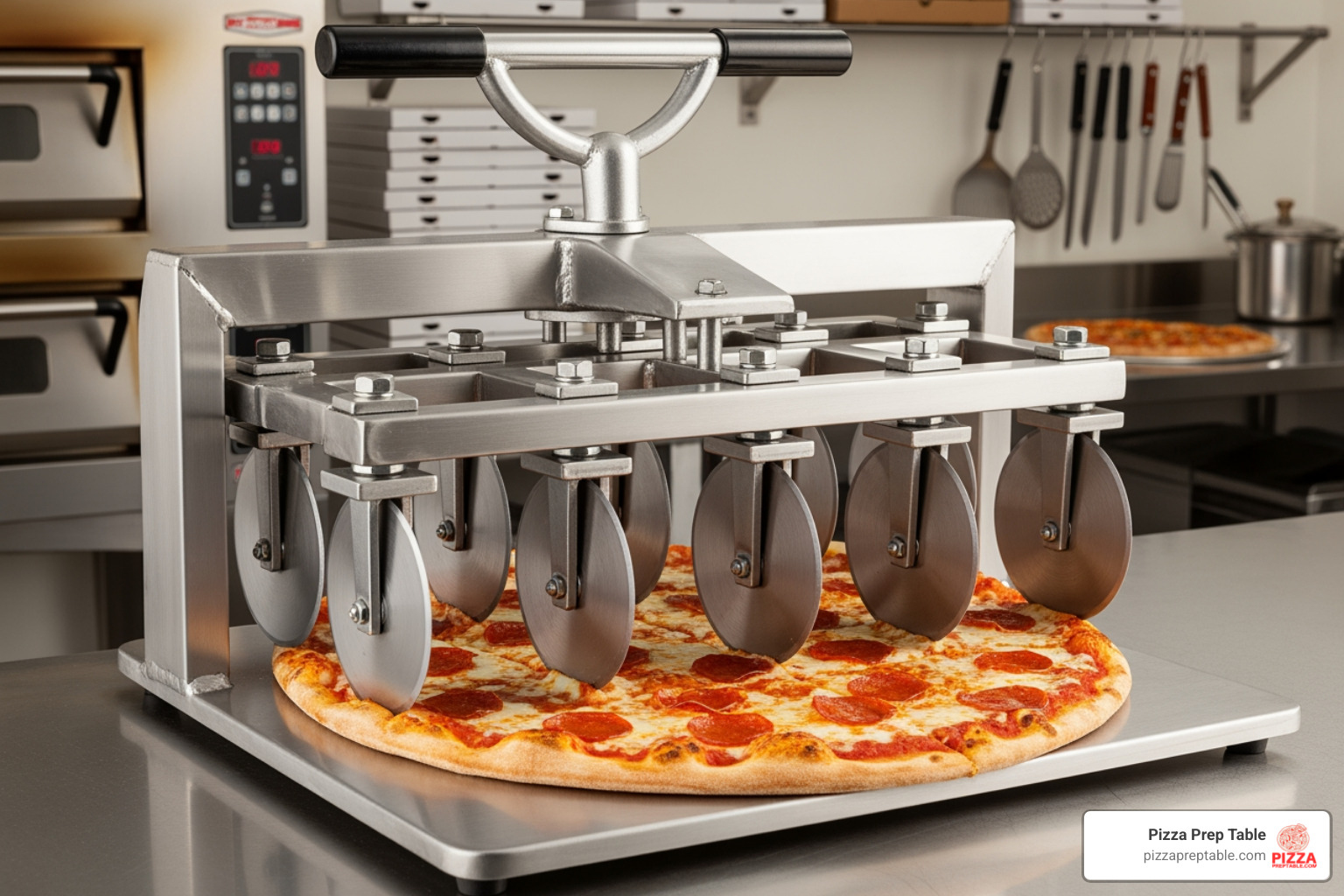
A pizza cutter press is a commercial pizza slicing tool that uses a downward pressing motion with fixed blade assemblies to cut pizzas into perfectly equal portions in a single action. Unlike traditional pizza wheels or rocker knives that require rolling or rocking motions, a pizza cutter press delivers consistent slices every time through simple lever operation or automated mechanisms.
Key Types of Pizza Cutter Presses:
- Manual Pizza Cutter Press - Countertop models ideal for pizzerias, featuring interchangeable blade assemblies that slice pizzas into 3, 4, 5, 6, 8, 10, 12, or 16 equal portions
- Automated Pizza Cutter Press - High-volume industrial machines designed for food processors, capable of slicing up to 2,700 products per hour with dual product lanes
Main Advantages:
- Speed - Slice a pizza in one second versus multiple passes with a wheel
- Consistency - Fixed blades guarantee identical portions every time
- Cleaner cuts - Downward pressure keeps toppings in place, no dragging or mess
- Portion control - Perfect for by-the-slice operations and inventory management
If you're running a pizzeria or restaurant with limited space and a tight budget, inconsistent slices can hurt your bottom line. Customers notice when one slice is twice the size of another. Staff waste time fighting with traditional cutters that drag toppings across the pie. And messy presentation makes even great pizza look unprofessional.
The solution is simple: a pizza cutter press transforms slicing from a skill-based task into a foolproof, one-motion operation. Whether you're serving lunch rush crowds or packaging frozen pizzas for retail, the right press ensures every slice meets your standards without slowing down your kitchen.
I'm Sean Kearney, and I've spent years helping restaurant owners find equipment that solves real problems without breaking the bank. I've seen how the right pizza cutter press can eliminate the frustration of uneven slices and turn a bottleneck into your fastest station.
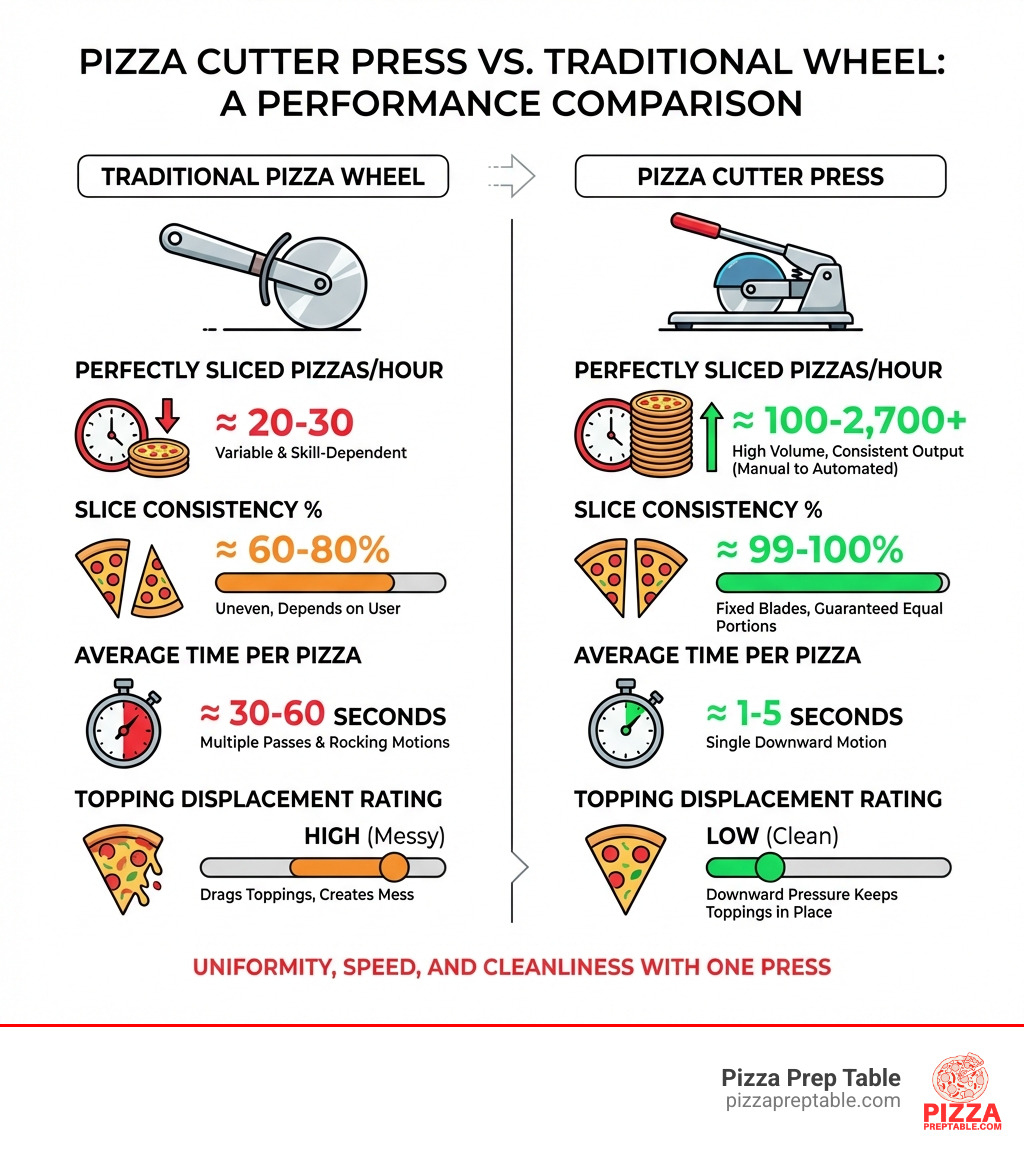
Decoding the "Pizza Cutter Press": More Than Just a Slicer
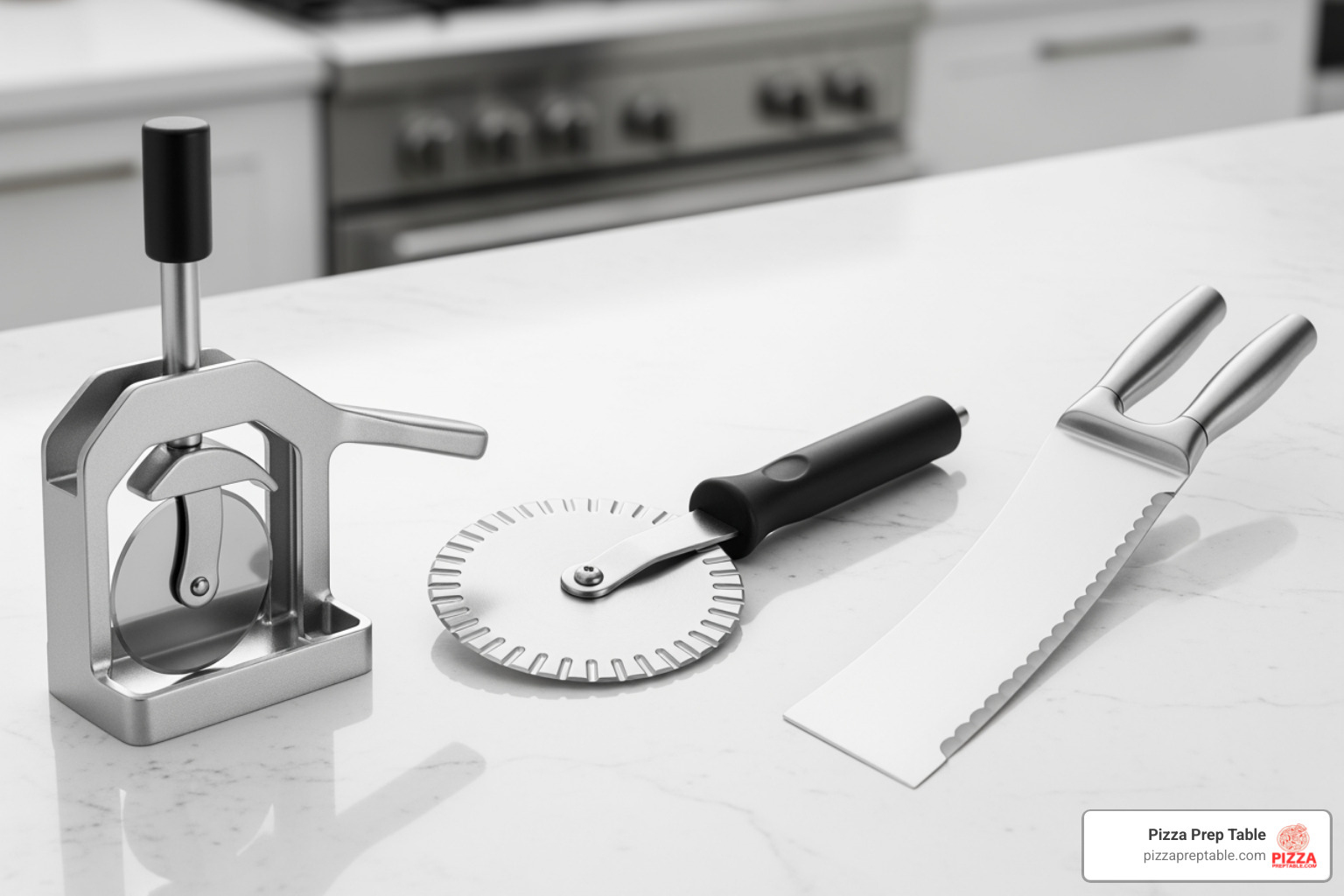
When we talk about a pizza cutter press, we're not just talking about any tool that cuts pizza. This isn't your grandma's pizza wheel, nor is it the professional rocker knife that so many pizzerias swear by. While both of those have their place in the pizza world—and we've got great guides on why a rocker pizza knife will change your pizza game and a cheat sheet for the best pizza wheels and cutters—the pizza cutter press operates on an entirely different principle.
At its core, a pizza cutter press uses a pressing motion. Instead of rolling a wheel across the pizza or rocking a curved blade back and forth, a press uses a set of fixed blades that descend onto the pizza, cutting all slices simultaneously in a single, decisive action. This downward pressure ensures a clean, consistent cut through the crust and toppings, leaving you with perfectly portioned slices.
The magic truly happens with its interchangeable blade assemblies. These assemblies are pre-configured with blades set to specific angles, allowing us to achieve exact slice counts—be it 3, 4, 5, 6, 8, 10, 12, or even 16 equal portions. This is a game-changer for businesses where consistency is paramount, like "by the slice" operations in busy cities such as New York City, Chicago, or Los Angeles.
It's also crucial to distinguish a pizza cutter press from a pizza dough press. While both use pressure, a dough press is designed to flatten and shape raw dough, creating a uniform crust, as we discuss in our guide to finding your perfect commercial dough cutter. A pizza cutter press, however, is exclusively for slicing cooked pizzas. Its precision blades are engineered to glide through baked crusts and melted cheese, not raw dough. This distinction is key to understanding its unique advantages and how it can streamline your pizza production.
The design of a pizza cutter press inherently impacts its efficiency and ease of use. By eliminating the need for manual dexterity or multiple passes, it reduces human error and speeds up the entire slicing process. This means less training time for new staff and more consistent results, no matter who is operating the machine.
Types of Pizza Cutter Presses: From Manual to Fully Automated
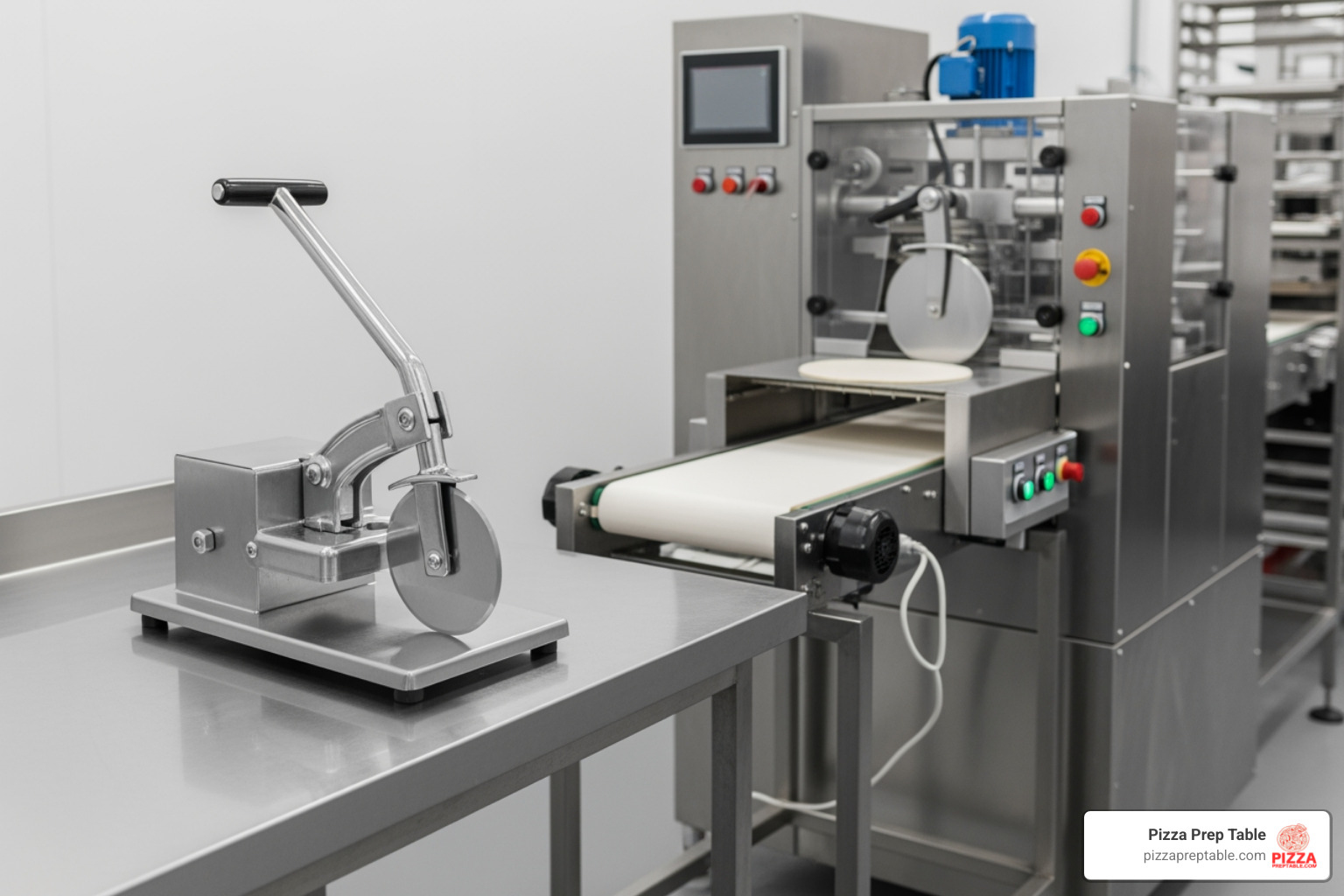
Just like pizzas themselves, pizza cutter presses come in a variety of styles, each suited for different kitchen environments and production volumes. From compact, hand-operated units perfect for a busy storefront in Boston or San Francisco, to industrial-scale machines that can churn out thousands of slices an hour for large food processors, there's a press designed to fit almost any need. Let's explore the two main categories.
Evaluating a Manual Pizza Cutter Press
For many pizzerias, especially those with moderate to high volume, a manual pizza cutter press is an ideal solution. These are typically countertop models, designed to be robust yet user-friendly. Think of a busy pizza joint in Dallas or Atlanta, where speed and consistency are vital during peak hours. A manual press can be a true workhorse here.
A prime example is the MANUAL PIZZA SLICER (Model # PC1018). This type of machine boasts an all stainless steel frame construction, which is not only durable but also easy to clean and sanitize—a critical factor for any foodservice establishment. Its hardened stainless steel blades are designed for longevity and a consistently sharp cut.
What truly sets manual presses apart is their versatility in portioning. The Model PC1018, for instance, can slice pizzas into 3, 4, 5, 6, 8, 10, 12, and 16 equal portions. This is achieved through interchangeable cutter assemblies. Imagine being able to quickly switch from a 6-slice assembly for a standard pie to an 8-slice for a larger one, or even a 10-slice option for smaller, more uniform portions. This flexibility allows us to cater to diverse customer preferences and menu items.
The operation is typically simple: place the cooked pizza on the base, lower the cutting assembly with a lever, and lift. In one swift motion, your pizza is perfectly sliced. This ease of use means less training for our staff and more time focusing on crafting delicious pizzas.
What to Know About an Automated Pizza Cutter Press
Stepping up in scale, we enter the field of automated pizza cutter presses. These are not for your typical neighborhood pizzeria. Instead, they are engineered for high-volume food processors and large-scale manufacturing operations, like those producing frozen pizzas for nationwide distribution from facilities that might be located near major distribution hubs outside of Houston or Indianapolis.
Consider the ACCUSLICE-100PC Commercial Pizza Cutter. This is a beast of a machine, designed for in-line production processes. It can slice up to an astonishing 2,700 products per hour, with 2 products per cycle! This kind of speed is essential when dealing with sheet products up to 16" x 16", round products up to 16" in diameter, and items up to 3" tall.
These automated systems often feature dual product lanes, meaning they can cut two pizzas (or other products like lasagna or quesadillas) simultaneously. They are built for automated offloading to a packaging station, seamlessly integrating into a larger production line. The ability to cut frozen products at high speed is another significant advantage, allowing for efficient processing of items like frozen pizzas, lasagna, or quesadillas before packaging.
While the upfront investment is considerably higher, the efficiency gains and labor savings from an automated pizza cutter press are immense for operations that demand such high throughput. These machines represent the cutting edge of food processing technology, ensuring unparalleled speed and consistency for commercial giants.
The Press Advantage: Speed, Consistency, and Professionalism
At PizzaPrepTable.com, we understand that every second and every perfectly cut slice counts in a busy kitchen. The pizza cutter press isn't just another gadget; it's a strategic investment that brings significant advantages over traditional pizza cutting methods. Let's break down why we believe it's a superior choice for many commercial operations.
| Feature | Pizza Cutter Press | Rocker Knife | Pizza Wheel |
|---|---|---|---|
| Speed | Instant (1 second) | Fast | Moderate |
| Consistency | Perfect (fixed blades) | Good (skill-dependent) | Fair (skill-dependent) |
| Topping Disturbance | Minimal | Low | Moderate (can drag) |
| Safety | High (contained blades) | Medium (exposed blade) | Medium (exposed blade) |
| Ideal Use Case | High volume, portion control | High volume, large pizzas | Home, low volume, small pizzas |
This table clearly illustrates the compelling benefits of a pizza cutter press compared to its counterparts.
Best Portion Control
One of the most frustrating aspects of slicing pizza with traditional methods is the struggle for consistent portion sizes. We've all seen it: one slice is a generous wedge, while its neighbor looks like it went on a diet. This inconsistency can lead to customer dissatisfaction, especially in establishments where customers are paying by the slice or when managing inventory is crucial.
A pizza cutter press eliminates this headache entirely. With its fixed blade configuration, every single slice is identical. Whether we're cutting a pizza into 6, 8, or 12 portions, the blades are precisely spaced, guaranteeing uniform size and shape every time. The MANUAL PIZZA SLICER (Model # PC1018), for example, offers standard cutter assemblies for 6/12 and 8/16 slices, ensuring we can easily achieve the desired consistency.
This level of precision isn't just about aesthetics; it's a business advantage. Consistent portioning means better inventory management, reduced waste, and a clear understanding of your food costs. It also builds customer trust, as they know they'll receive the same great portion every time they order. For pizzerias in competitive markets like Philadelphia or Phoenix, delivering on consistency can be a key differentiator.
Boost Your Kitchen's Efficiency
Time is money in the restaurant business, and nowhere is this more evident than during a busy lunch rush or dinner service. A traditional pizza wheel requires multiple passes, and a rocker knife still demands a careful, deliberate motion. A pizza cutter press, however, slices a whole pizza in one second. Yes, you read that right—one second!
Imagine the impact on your throughput. While a skilled operator might slice a pizza with a rocker knife in 5-10 seconds, a pizza cutter press drastically cuts that time. For high-volume operations, this speed is invaluable. The ACCUSLICE-100PC, an automated pizza cutter press, can slice up to 2,700 products per hour. That's an incredible boost to efficiency that translates directly into reduced labor costs and faster service.
This kind of efficiency allows our staff to focus on other critical tasks, improving overall kitchen flow and productivity. It means fewer bottlenecks during peak hours, happier customers who receive their orders quicker, and a more streamlined operation. As we often discuss in our articles, like Pizza Perfection: Tools That Make Every Slice a Winner, having the right tools can truly lift your pizza game.
A Cleaner Cut Every Time
Beyond speed and consistency, the quality of the cut itself is a significant advantage of a pizza cutter press. Traditional pizza wheels, especially if not perfectly sharp, can drag cheese and toppings, creating a messy, unappetizing appearance. The rolling motion can also tear the crust, leading to uneven edges.
A pizza cutter press uses a clean, downward pressing motion. The sharp blades descend vertically, cutting straight through the pizza without any horizontal dragging. This means toppings stay exactly where they belong, neatly contained within each slice. The result is a professional, pristine presentation that improves the visual appeal of your pizzas.
This cleaner cut is not just about looks; it's about the eating experience. No one wants to pull a slice out of the box only to have half the cheese and pepperoni slide off onto the table. A pizza cutter press ensures every slice is intact and ready to be enjoyed. It's a small detail that makes a big difference in customer satisfaction, helping us achieve that "slice of heaven" every time, as explored in our guide Slice of Heaven: Finding Your Perfect Pizza Cutter.
Buyer's Guide: How to Choose the Perfect Pizza Cutter Press
Investing in a pizza cutter press is a significant decision for any commercial kitchen, whether you're a busy pizzeria in Denver or a large catering operation in Charlotte. To ensure you make the best choice, we need to consider several key factors. It's not just about getting any press; it's about getting the right press for your specific needs.
Key Features to Consider
When evaluating a pizza cutter press, we look for a combination of durability, versatility, and ease of use.
- Material: For any commercial kitchen equipment, material quality is paramount. We always recommend models constructed from high-quality stainless steel. This material is not only incredibly durable and resistant to corrosion, but it's also non-porous and easy to sanitize, which is crucial for food safety. The blades themselves should be made from hardened stainless steel for long-lasting sharpness and precision. This ensures a clean cut every time, even after repeated use.
- Certifications: Always look for NSF Certification and the use of FDA Approved Materials. NSF certification indicates that the equipment meets strict public health standards, particularly important for cleanliness and safety in a commercial setting. FDA approval confirms that materials used are safe for food contact. For general background on these standards, resources like the NSF International overview can be helpful, though you should always verify requirements with your local health department. These certifications are non-negotiable for professional kitchens across our service areas, from Washington, D.C. to San Diego.
- Blade Assembly: The heart of the pizza cutter press is its blade assembly. Look for models with interchangeable heads. This allows us to switch between different slice counts (e.g., 6, 8, 10, 12 slices) quickly and efficiently, adapting to different pizza sizes or customer demands. Some advanced models even offer custom slice options, which can be invaluable for unique menu items or specific portioning requirements. Our guide on an essential guide to the best pizza cutters can provide more context on blade types.
- Size & Capacity: Consider the size of pizzas you typically make. Manual presses often handle pizzas up to 16" in diameter, which is suitable for most standard commercial pizzas. For automated systems, pay close attention to the throughput volume (e.g., 2,700 products per hour for the ACCUSLICE-100PC) and the maximum product dimensions it can accommodate. Matching the press's capacity to your operational volume prevents bottlenecks and ensures efficient workflow.
- Ease of Cleaning: A sanitary design is critical. Look for presses where blade assemblies can be easily removed for thorough cleaning. Dishwasher-safe components are a huge plus. Simple, smooth surfaces with minimal crevices will make daily cleaning routines much faster and more effective, contributing to overall kitchen hygiene.
Understanding the Price Range
The price of a pizza cutter press can vary widely, reflecting its complexity, capacity, and level of automation. It's an investment, but one that often pays for itself through increased efficiency and reduced waste.
- Manual Presses: For small to medium-sized pizzerias, manual pizza cutter presses are typically priced in the hundreds to a few thousand dollars range. This makes them an accessible upgrade for many establishments looking to improve consistency and speed without a massive capital outlay. They offer a fantastic return on investment, especially when considering the savings from consistent portioning and reduced labor.
- Automated Presses: Automated pizza cutter presses, like the ACCUSLICE-100PC, represent a much larger investment. These are high-end industrial machines, and their pricing is typically quote-based, reflecting their customizability and advanced engineering. For large food processors, however, the ROI is clear. The ability to slice thousands of products per hour drastically cuts labor costs, minimizes product waste, and ensures unparalleled consistency, which is vital for brand reputation and profitability.
When considering the cost, look beyond the sticker price and calculate the potential return on investment. The labor savings from faster slicing, the reduction in wasted product due to uneven cuts, and the improved customer satisfaction from consistent portions all contribute to a strong ROI. If you're exploring financing options for your pizza restaurant equipment, we can certainly help guide you through the process, as detailed in our pizza restaurant financing resources.
Operating Your Pizza Cutter Press: Maintenance and Safety
Once you've made the smart decision to integrate a pizza cutter press into your kitchen, understanding its proper operation, maintenance, and safety protocols is paramount. These aren't just suggestions; they are crucial for maximizing the life of your equipment, maintaining hygiene standards, and most importantly, ensuring the safety of your team.
Cleaning and Maintenance
A well-maintained pizza cutter press is a happy pizza cutter press, and a happy press means consistently perfect slices.
- Daily Cleaning: After each shift or day of use, the pizza cutter press must be thoroughly cleaned. We always emphasize that easy-to-remove blades are a huge advantage here. Being able to quickly detach the blade assembly allows for complete access to all cutting surfaces, preventing the buildup of cheese, sauce, or dough particles. Many modern presses are designed for easy disassembly, making this process quick and efficient.
- Sanitary Design: Look for models with a sanitary design, meaning smooth surfaces and minimal crevices where food debris can hide. This aligns with NSF standards, ensuring that our equipment meets the highest hygiene benchmarks.
- Avoid Abrasive Materials: When cleaning, always use mild detergents and soft brushes or cloths. Abrasive cleaners or scrubbers can scratch stainless steel surfaces, potentially creating microscopic havens for bacteria or damaging the finish.
- Blade Sharpening and Replacement: While hardened stainless steel blades are designed for longevity, even the sharpest blade will eventually dull. Regular inspection of the blades for nicks or dullness is important. Some manual presses allow for blade sharpening, while for others, blade replacement is the more practical option. Having spare blade assemblies on hand is a smart move to minimize downtime. For more on maintaining cutting surfaces, check out our guide on cutting edge choices: best pizza prep table cutting boards.
Critical Safety Protocols
Safety in the kitchen is non-negotiable. While a pizza cutter press is generally safer than manually handling sharp blades, proper protocols are still essential.
- Blade Guards: Most commercial pizza cutter presses come with built-in blade guards or protective housings around the cutting mechanism. Always ensure these are in place and functioning correctly before operation. Never operate a press with damaged or missing safety features.
- Proper Staff Training: Every team member who operates the pizza cutter press must receive comprehensive training. This includes not just how to use it, but also how to safely clean, disassemble, and reassemble it. Understanding emergency stop procedures is also vital. This training is crucial for every kitchen, from a small shop in Austin to a large chain in Las Vegas.
- Emergency Procedures: While rare, accidents can happen with any piece of commercial kitchen equipment. We've heard stories, like the unfortunate incident where firefighters had to free a worker trapped in a pizza dough machine. While not a pizza cutter press specifically, it highlights the importance of being prepared for real-world risks. Ensure that all staff know where emergency shut-offs are and what steps to take in case of an incident. Always keep hands clear of the cutting area during operation, and never try to force the press if it encounters resistance.
By adhering to these maintenance and safety guidelines, we can ensure our pizza cutter press operates efficiently and safely for years to come, becoming a reliable asset in our busy pizza preparation workflow.
Conclusion: Slice Your Way to Success
In the world of commercial pizza, every detail counts. From the quality of our ingredients to the efficiency of our prep, achieving consistent excellence is the recipe for success. The pizza cutter press emerges not just as a tool, but as a transformative solution for pizzerias and food processors striving for perfection in every slice.
We've seen how these innovative machines offer unparalleled consistency, ensuring that each portion is identical, which is a huge win for customer satisfaction and precise inventory management. The speed at which a pizza cutter press operates—slicing an entire pizza in a single second for manual models, or thousands of products per hour for automated systems—translates directly into boosted efficiency and significant labor cost savings. And let's not forget the professional presentation that comes with a cleaner cut, keeping toppings exactly where they belong.
Whether you're running a busy pizzeria in Chicago, a growing chain across Texas, or a large-scale food manufacturing operation, the advantages of a pizza cutter press are clear. It's an investment in not just equipment, but in the consistency, speed, and professionalism of your entire operation.
At PizzaPrepTable.com, we are committed to equipping your kitchen with the best restaurant and pizza equipment available. We understand the unique demands of our customers in cities like New York City, Los Angeles, and Atlanta, and we're here to help you find the right tools to slice your way to success.
Ready to revolutionize your pizza slicing? Explore our complete guide to restaurant and pizza equipment and find how we can help you achieve pizza perfection.