

The Complete Guide to Comparing Pizza Screens
Why Pizza Screens Are Essential for a Crispy, Professional Crust
Pizza screens are perforated aluminum or steel mesh discs designed to bake pizza with maximum airflow underneath the crust. By allowing hot air to circulate directly around the dough, they create a crispier, evenly browned bottom while speeding up cook times—solving the common problem of soggy, undercooked crusts.
What pizza screens do:
- Allow air circulation for crispier crusts
- Speed up baking time compared to solid pans
- Prevent moisture buildup that causes soggy bottoms
- Require no preheating (unlike stones or steel)
- Cost less than pizza stones or steels
- Work in conveyor, deck, and home ovens
If you've struggled with inconsistent pizza bottoms or slow cook times, pizza screens offer a simple, affordable solution, especially in high-volume commercial settings where speed and consistency matter most.
The science is straightforward: Traditional solid pans trap steam. Pizza screens eliminate this by letting moisture escape through their mesh design while heat transfers directly to the crust. The result is the crispy, golden-brown bottom customers expect.
For new pizzeria owners on a budget, pizza screens are one of the most cost-effective tools available. They're lightweight, stackable, and typically cost between $1.50 and $10 each. Compared to a $100+ pizza stone or $200+ pizza steel, the value is clear.
My experience in foodservice equipment sales has shown me how the right tools—like quality pizza screens—can transform a kitchen. Understanding pizza screens will help you serve better pizza faster.
What is a Pizza Screen and How Does It Achieve the Perfect Crust?
A pizza screen is a flat metal disc, usually round, made from aluminum or steel and covered in perforations or a fine mesh pattern. This simple tool is one of the smartest additions to a pizza kitchen.
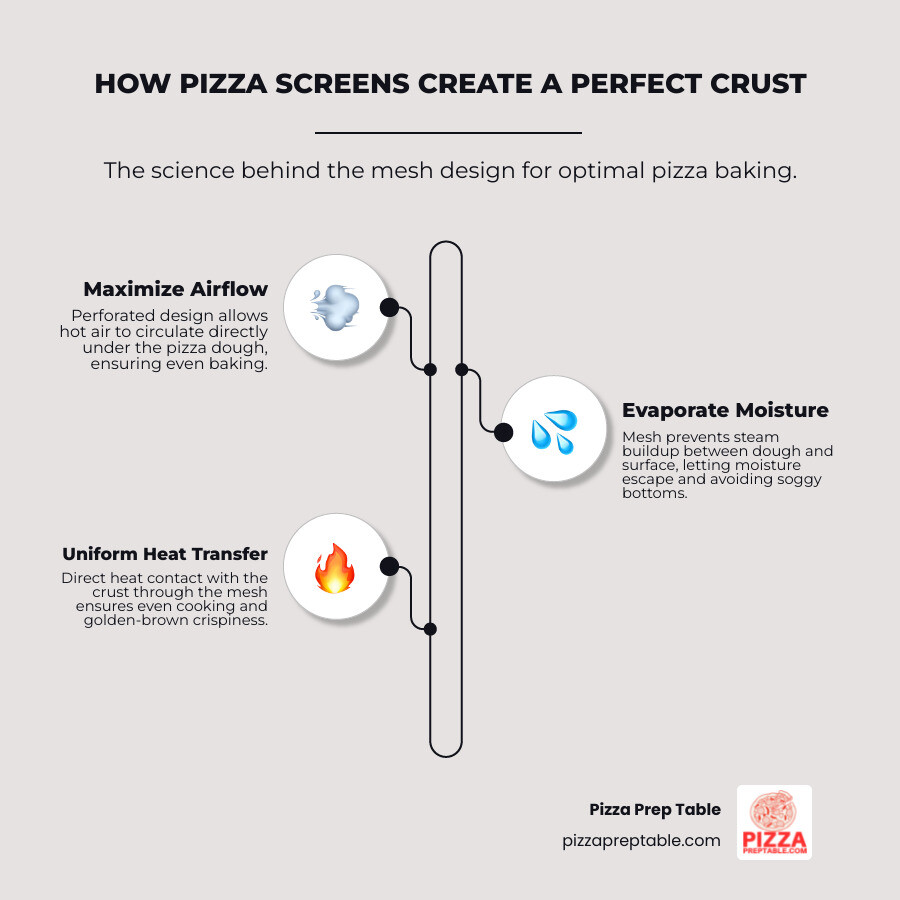
Unlike a solid pan that blocks heat, a pizza screen allows hot air to reach the entire crust.
Air circulation is where pizza screens excel. The perforations create pathways for hot air to flow underneath the dough, blasting it with direct heat from below for a better bake.
The heat transfer is also excellent. Most pizza screens are made from aluminum, which conducts heat beautifully. Quality screens made of 14 gauge, 1.5 mm heavy-weight aluminum absorb and spread oven heat quickly and evenly. Some feature 3/32″ mega perforations engineered to maximize airflow while supporting the dough.
This design also promotes moisture evaporation. When dough bakes, it releases steam. On a solid pan, this steam is trapped, making the crust soft. With a pizza screen, moisture escapes through the holes, resulting in a dry, crispy texture.
The Maillard reaction—the browning process that creates flavor—thrives on consistency. Even heat from below ensures uniform browning across the bottom surface, with no pale spots or burnt patches.
This combination of airflow, heat transfer, and moisture management creates a crispy bottom—the hallmark of professional pizza. Understanding this science shows why pizza screens deliver results that other baking surfaces can't easily match.

Pizza Screens vs. Other Baking Surfaces: A Head-to-Head Comparison
Pizza screens aren't your only option for baking great pizza. Here's how they stack up against the other popular choices so you can make the right decision for your needs.
Pizza Screen vs. Solid Pizza Pan
A solid pizza pan is a flat metal disc that traps moisture between the dough and the pan, which can cause soft, pale, or soggy bottoms. The solid metal also slows down cook times.
Pizza screens solve this by letting moisture escape and allowing hot air to flow directly to the dough, delivering a crispier crust in less time. The heat transfer is far more efficient. For a full breakdown, see our An Essential Guide to Comparing Pizza Pans.
Pizza Screen vs. Pizza Stone
Pizza stones are popular with home bakers for their ability to produce an authentic, crispy crust. A stone absorbs and retains a massive amount of heat, giving dough excellent oven spring.
However, stones require a 45-60 minute preheat, are heavy, and can crack, making them impractical for a busy pizzeria.
Pizza screens require no preheating. You assemble the pizza and slide it into the oven. They are lightweight, easy to handle, and ideal for conveyor ovens, providing consistent browning and crisping. For more on baking surfaces, see our comparison in Cast Iron vs Pizza Stone: The Grill Off for Perfect Homemade Pizza.
Pizza Screen vs. Pizza Steel
Pizza steels are the turbocharged version of stones, made from solid steel that conducts and retains heat better than anything else. They offer the fastest cook times and an incredibly crispy, almost charred bottom.
The drawbacks are significant: they are extremely heavy (15-20 pounds), expensive ($100-$200+), and require substantial preheating.
Pizza screens are a more economical and practical alternative. While they don't produce the same blistering heat as a steel, they provide consistent, even bottom heat that prevents sogginess. They are a fraction of the weight and cost, and you can stack dozens in the space of one steel. For commercial operations, screens are the clear winner. We explore this in our article Pizza Screen vs Pizza Steel: Unlocking the Secrets to a Better Bake.
To help you see these differences at a glance, here's how these four options compare:
| Feature | Pizza Screen | Solid Pizza Pan | Pizza Stone | Pizza Steel |
|---|---|---|---|---|
| Crispiness | High | Low-Medium | Very High | Extremely High |
| Cook Time | Fast | Medium-Slow | Fast | Very Fast |
| Preheating | Not Required | Not Required | 45-60+ min | 30-45+ min |
| Cost | Low | Low | Medium-High | High |
| Ease of Use | Very Easy | Easy | Medium (heavy) | Medium (very heavy) |
| Durability | Good (aluminum) | Good | Fragile | Excellent |
| Best For | Commercial, crispy crust, high volume | Soft crust, pan pizza | Artisan, home baking | Artisan, home baking, super hot crust |
Each baking surface has its place, but for most commercial pizzerias, pizza screens deliver the best balance of performance, convenience, and value.
Choosing the Right Pizza Screen for Your Pizzeria or Kitchen
Once you've decided that pizza screens are the right tool for your kitchen, the next step is choosing which ones to buy. The material, shape, and size all matter—and getting these choices right will make a real difference in your kitchen's efficiency and your pizza's quality.
Material Matters: Aluminum, Steel, and Special Coatings
Aluminum is by far the most popular choice, and for good reason. It conducts heat beautifully, leading to faster cook times and consistent results. It's also lightweight, a real benefit during a dinner rush. Most commercial-grade screens use 14 gauge aluminum (about 1.5 mm thick) for a good balance of durability and heat distribution.
For a bit more investment, hard-coat anodized aluminum screens offer a tough, protective layer that resists scratches and corrosion. Over time, this coating develops natural non-stick properties, simplifying cleanup. This extra durability is a smart choice for busy pizzerias.
Stainless steel screens are another option, though they're less common. They are incredibly durable but don't conduct heat as well as aluminum. For most pizzerias, aluminum's superior heat transfer makes it the better choice.
Types and Shapes of pizza screens
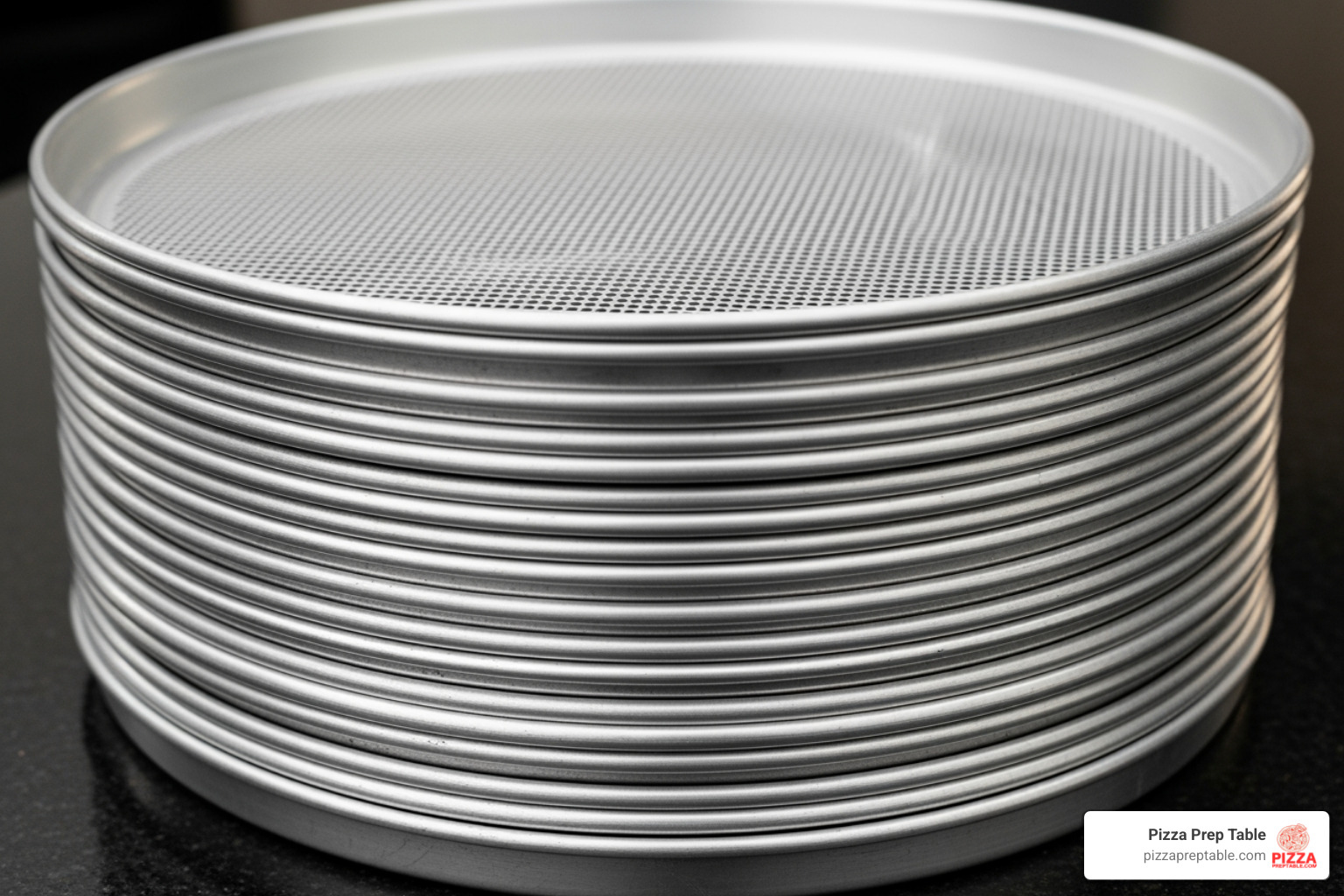
Pizza screens come in different shapes for different purposes.
Round screens are the classic choice for traditional round pizzas and will be the workhorse in most pizzerias.
Rectangular screens are ideal for sheet pizzas, focaccia, or Detroit-style pies. They also help maximize space in conveyor ovens.
You'll see terms like perforated disks and mesh screens, but they all describe a metal surface with holes for airflow. Also, look for screens with seamless rims, which are safer, more durable, and easier to clean as they have no crevices for food to get trapped.
Common diameters in commercial kitchens include 10, 12, 14, 16, and 18 inches. You can find screens as small as 6 inches or as large as 28 inches. Most pizzerias stock at least three or four different sizes.
Selecting the Perfect Size
The rule is simple: match your screen diameter to your pizza diameter. A 14-inch pizza needs a 14-inch screen to ensure the crust is supported and cooks evenly. Stock the sizes that match your menu.
Also, consider your oven dimensions, especially with rectangular screens or when baking multiple pizzas at once. Measure your oven's interior to ensure there's enough room for air to circulate. Cramming screens too tightly defeats the purpose of the airflow design. Our Commercial Pizza Ovens Reviewed guide can help you evaluate different oven types. For kitchen layout tips, see our article on How to Choose the Right Pizza Prep Table Dimensions for Your Kitchen.
Individual pizza screens range from about $3 to $40, but buying by the case significantly drops the per-unit cost, sometimes to as low as $1.24 to $2.75 per screen. This makes them one of the most economical investments for your kitchen.
Best Practices for Using and Maintaining Your Pizza Screens
Getting the most out of your pizza screens is easy. A few simple practices will keep them performing beautifully for years, delivering that perfect crispy crust every time.
How to Use Your pizza screens for Optimal Results
Start with seasoning. Before first use, give a new aluminum screen a light coat of high-smoke-point oil (like canola) and bake it at 350-400°F (175-200°C) for 15-20 minutes. Let it cool and wipe off the excess. This creates a natural non-stick surface that improves over time.
To prevent sticking, minimize the time raw dough sits on the screen. Roll out your dough on a separate, floured surface, like your pizza prep table, and transfer it to the screen just before adding toppings and baking.
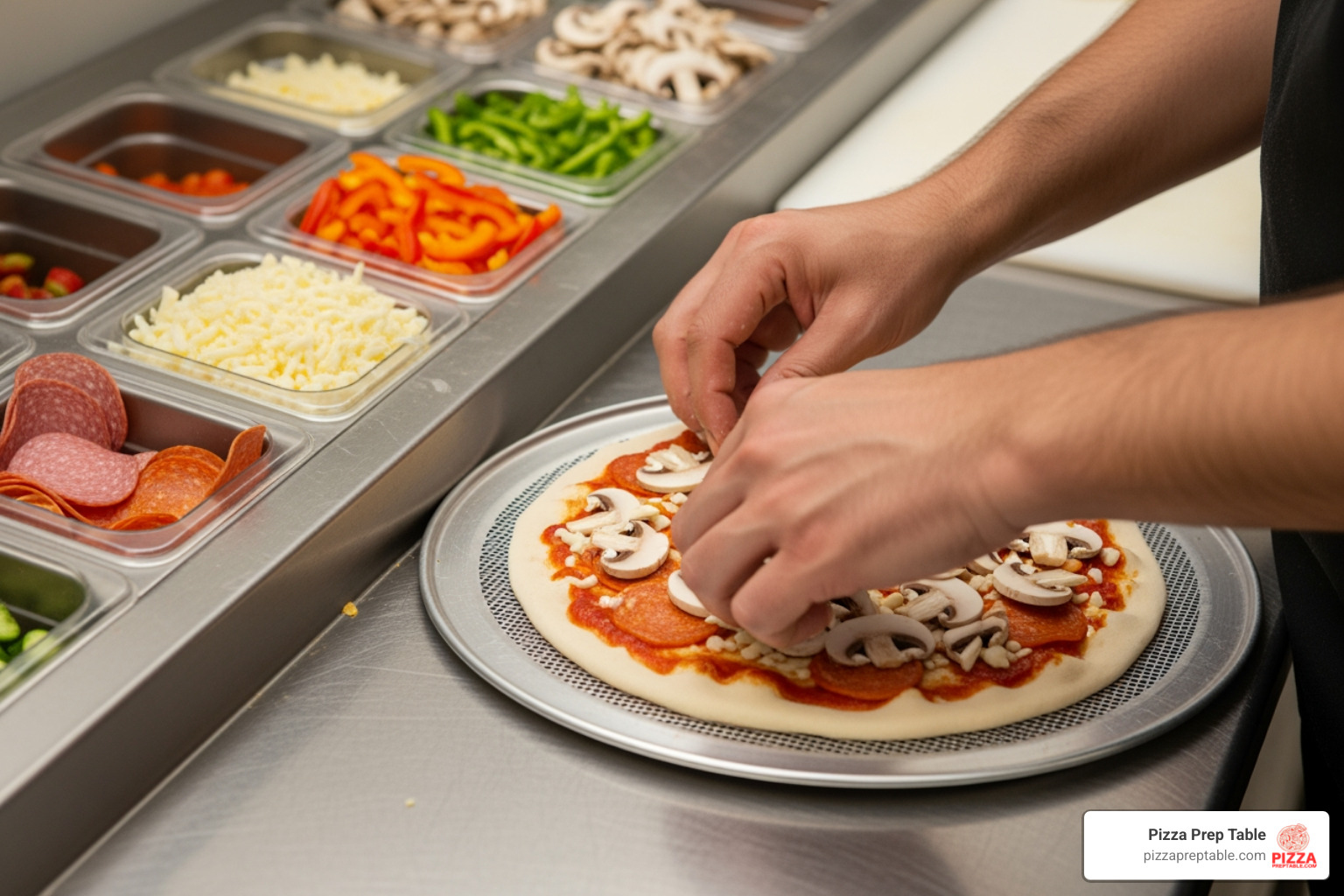
A major advantage is that you can build your pizza directly on the screen, eliminating awkward transfers from a peel. Just assemble, top, and slide it into the oven.
Screens are also excellent for par-baking crusts, as the airflow creates perfectly cooked bottoms ready for toppings later. This can dramatically speed up order fulfillment. They're also great for reheating slices, restoring a crispy bottom without making the cheese rubbery.
Screens adapt to both conveyor ovens and deck ovens. In deck ovens, you can start the pizza on a screen and then slide it directly onto the deck for an extra-crispy finish, a great technique for thin crust pizza. For more pro techniques, see our guide on How to Prep Pizza Like a Pro.
Cleaning and Care for Longevity
Proper care is simple but crucial for longevity.
First, hand wash only. Commercial dishwashers use harsh detergents that will strip the seasoning and corrode aluminum. Before first use, wash new screens with warm, soapy water to remove any manufacturing residue.
After each use, let the screen cool and use a stiff brush or scouring pad to scrub away any baked-on food. A plastic scraper can help with stubborn bits without damaging the mesh.
Thorough drying is essential to prevent oxidation or rust. Dry screens immediately with a towel before storing them. Most pizza screens are stackable, saving valuable kitchen space, but ensure they are completely dry before stacking.
If pizzas start sticking, it's time to troubleshoot. The solution is usually to re-season the screen. A fresh coat of oil and a quick bake will restore its non-stick properties.
Frequently Asked Questions about Pizza Screens
We talk to pizzeria owners every day, and these questions about pizza screens come up often.
Can I put a pizza screen directly on the oven rack?
Yes, and that's exactly how they are designed to be used! A pizza screen should sit directly on your oven rack to allow hot air to flow freely around the pizza. Putting a pan underneath would defeat the purpose of creating a crispy crust. The screens are sturdy enough to support the pizza on their own.
Do I need to season a new pizza screen?
Yes, we highly recommend it. Seasoning an aluminum screen before its first use is the best way to prevent dough from sticking. This process creates a natural non-stick surface that improves over time. Simply coat the screen lightly with a high-smoke-point oil, bake it at 350-400°F for 15-20 minutes, and let it cool.
What's the main advantage of a pizza screen over a solid pan?
The main advantage is airflow. A solid pan traps steam, which makes the crust soft or soggy. A pizza screen's perforated design allows this moisture to escape while hot air circulates directly underneath the pizza. This results in a crispier, evenly browned crust and faster baking times—a critical advantage in any busy pizzeria.
Conclusion: Lift Your Pizza Game with the Right Tools
Pizza screens might seem like a small detail, but they are a game-changing tool that consistently delivers results.
As we've covered, pizza screens solve the soggy bottom problem by creating optimal airflow for crispy, evenly baked crusts. They are affordable, require no preheating, and work perfectly in both conveyor and deck ovens. Their efficiency is a major advantage: they speed up baking, stack easily, and cost a fraction of stones or steels. For busy kitchens where consistency and speed are key, this combination is hard to beat.
At Pizza Prep Table, we know that building a successful pizzeria means getting every detail right. When you're ready to equip your kitchen, our guide on Must-Have Commercial Pizza Oven Supplies for Perfect Pies can help.
For a comprehensive overview, see our resource, Everything You Need to Know to Buy Pizza Shop Supplies. We also offer financing options that work for businesses of all sizes.
Visit PizzaPrepTable.com to explore our full selection of commercial pizza equipment, from pizza screens to complete pizza prep tables. We're here to help you build a kitchen that works as hard as you do.
Here's to crispy crusts, happy customers, and kitchens that run like clockwork. Your pizza deserves the best—and so does your business.