

Mastering the Art of Sandwich Making: A Deep Dive into Prep Refrigerators
Why Commercial Sandwich Prep Units Transform Kitchen Operations
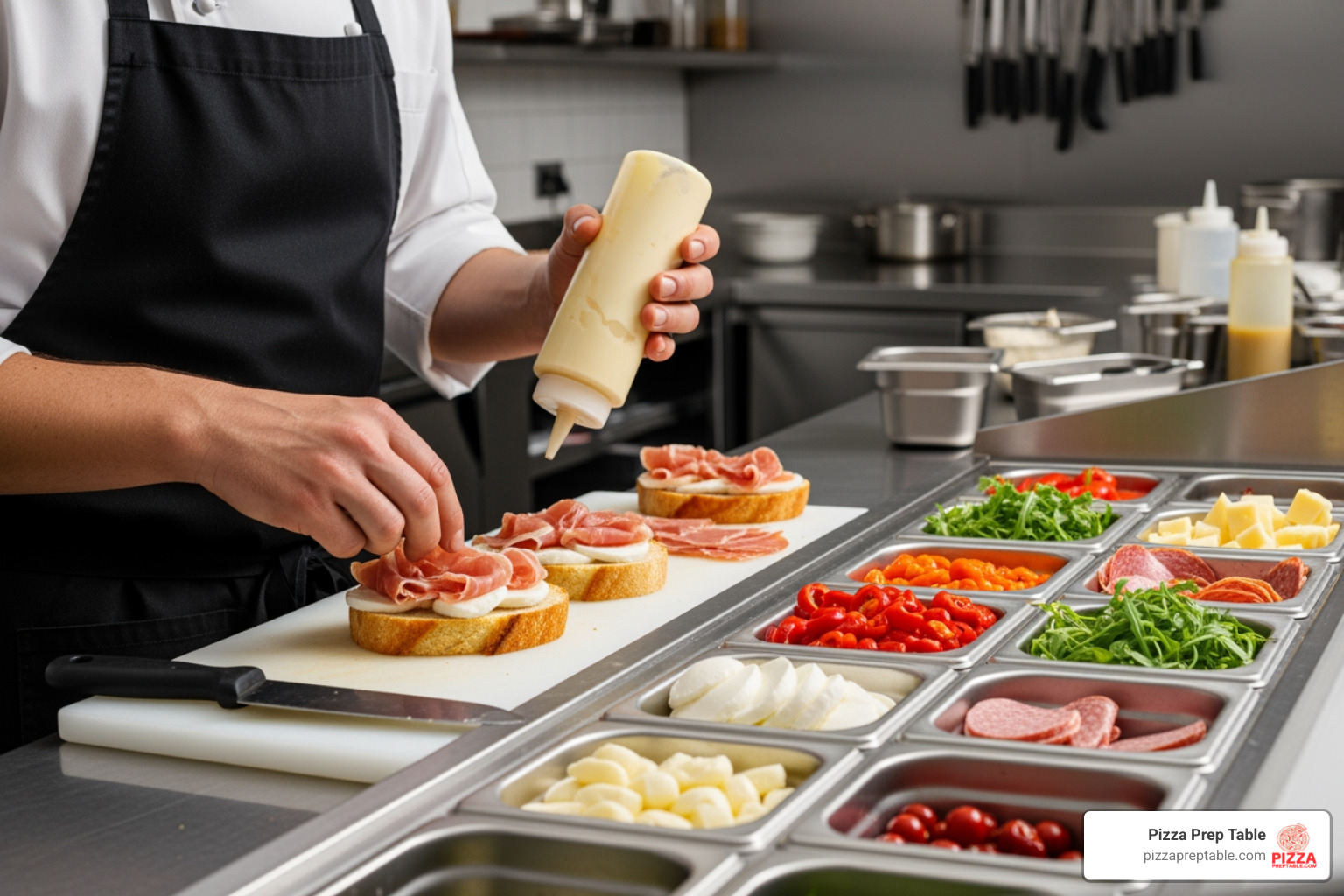
A sandwich prep unit is a specialized commercial refrigerator designed to streamline sandwich and salad making by keeping ingredients fresh and within arm's reach.
Key Features:
- Temperature Range: Maintains 33°F to 41°F (0.5°C to 5°C) to meet NSF-7 food safety standards.
- Configuration: Available in door, drawer, or combination models from 27" to 72" wide.
- Core Components: Refrigerated base, insulated pan rail with a lid, and a removable cutting board.
- Construction: Durable stainless steel with polyurethane foam insulation.
- Capacity: Holds 8 to 16+ ingredient pans (typically 1/6 size).
Watching staff scramble between the walk-in cooler and the prep station highlights a common problem: wasted time, broken workflow, and food safety risks. A dedicated sandwich prep unit solves this by keeping refrigerated ingredients at the point of assembly.
More than just a refrigerator with a cutting board, these units are engineered for high-volume work. They feature ducted airflow for consistent pan temperatures, front-breathing ventilation for tight spaces, and self-closing doors to save energy. Precise temperature control keeps ingredients fresh and safe.
I'm Sean Kearney, a foodservice industry expert. I've seen how the right sandwich prep unit can transform a chaotic kitchen into a smooth, profitable operation.
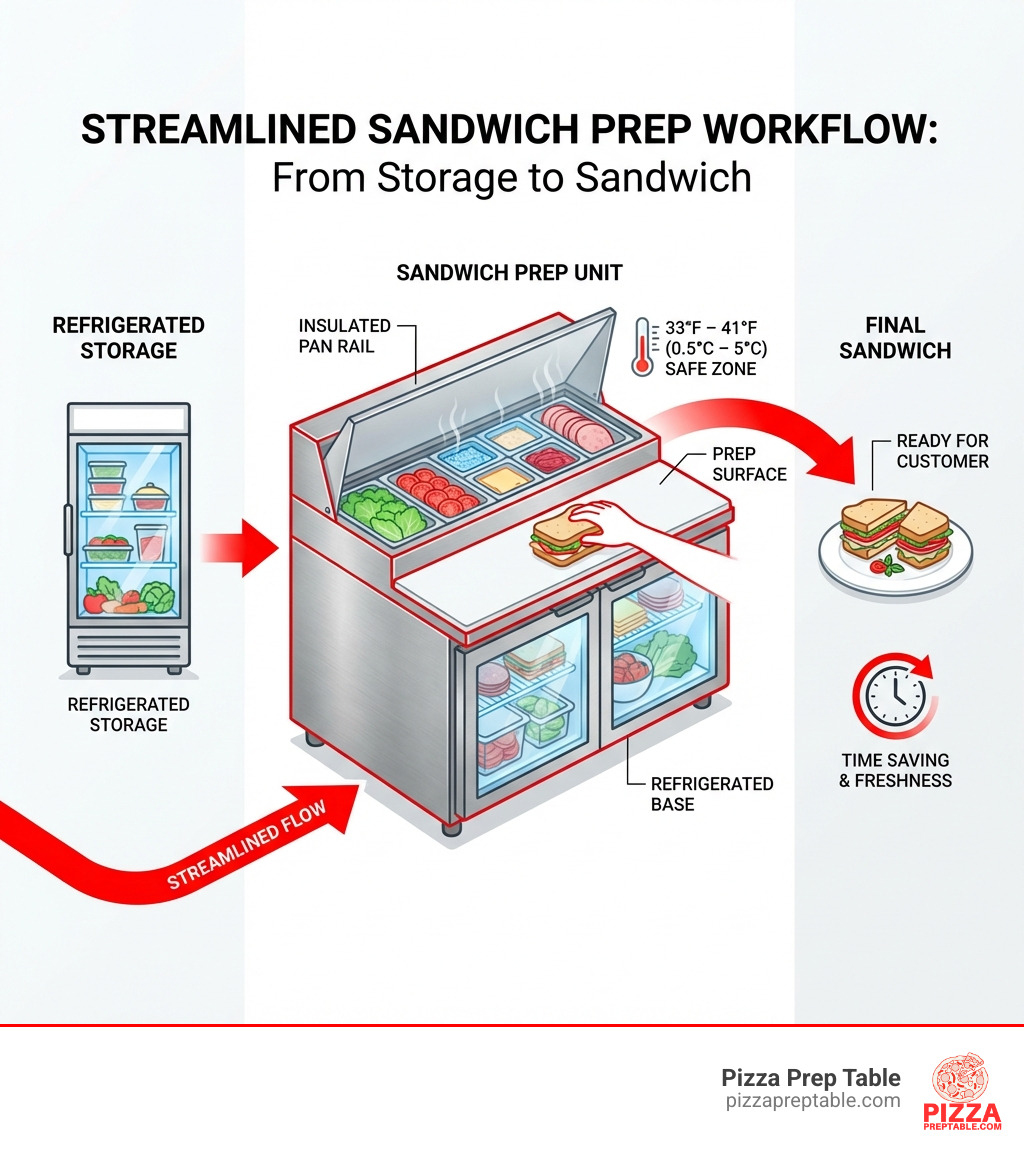
Quick Sandwich prep unit definitions:
The Core Benefits: Why Your Kitchen Needs a Dedicated Sandwich Prep Unit
Investing in a dedicated sandwich prep unit is an investment in your kitchen's efficiency, quality, and safety. From New York City to Los Angeles, we've seen how these units improve profitability and customer satisfaction.
Improved Workflow & Speed
A sandwich prep unit centralizes all necessary ingredients, allowing staff to work faster and more efficiently. This "keep your ingredients within reach" philosophy streamlines operations, enabling quick and confident sandwich assembly.
Consistent Food Quality
The quality of your sandwiches depends on fresh ingredients. A dedicated sandwich prep unit keeps components at optimal temperatures. Advanced airflow systems direct cold air onto food pans, preventing wilting or drying and ensuring every sandwich tastes fresh. This consistency is key to building a loyal customer base, from Chicago to San Francisco.
Superior Food Safety
Food safety is paramount. A sandwich prep unit maintains ingredients within the safe temperature zone of 33°F to 41°F (0.5°C to 5°C), preventing bacterial growth. These precise controls are vital for meeting health department regulations and earning NSF-7 certification, protecting your customers and your reputation.
Reduced Food Waste
Spoiled ingredients mean wasted money. By maintaining consistent, safe temperatures, a sandwich prep unit extends the shelf life of perishable items. This leads to less spoilage, less restocking, and a healthier bottom line, which is critical for high-volume businesses in cities like Dallas or Houston. More info about keeping ingredients fresh.
Improved Organization
A well-organized workspace is a productive one. Sandwich prep units have flexible pan configurations, allowing you to arrange ingredients logically. This systematic approach reduces errors, speeds up preparation, and keeps your kitchen looking professional, whether in a small café in Austin or a large catering service in Charlotte.
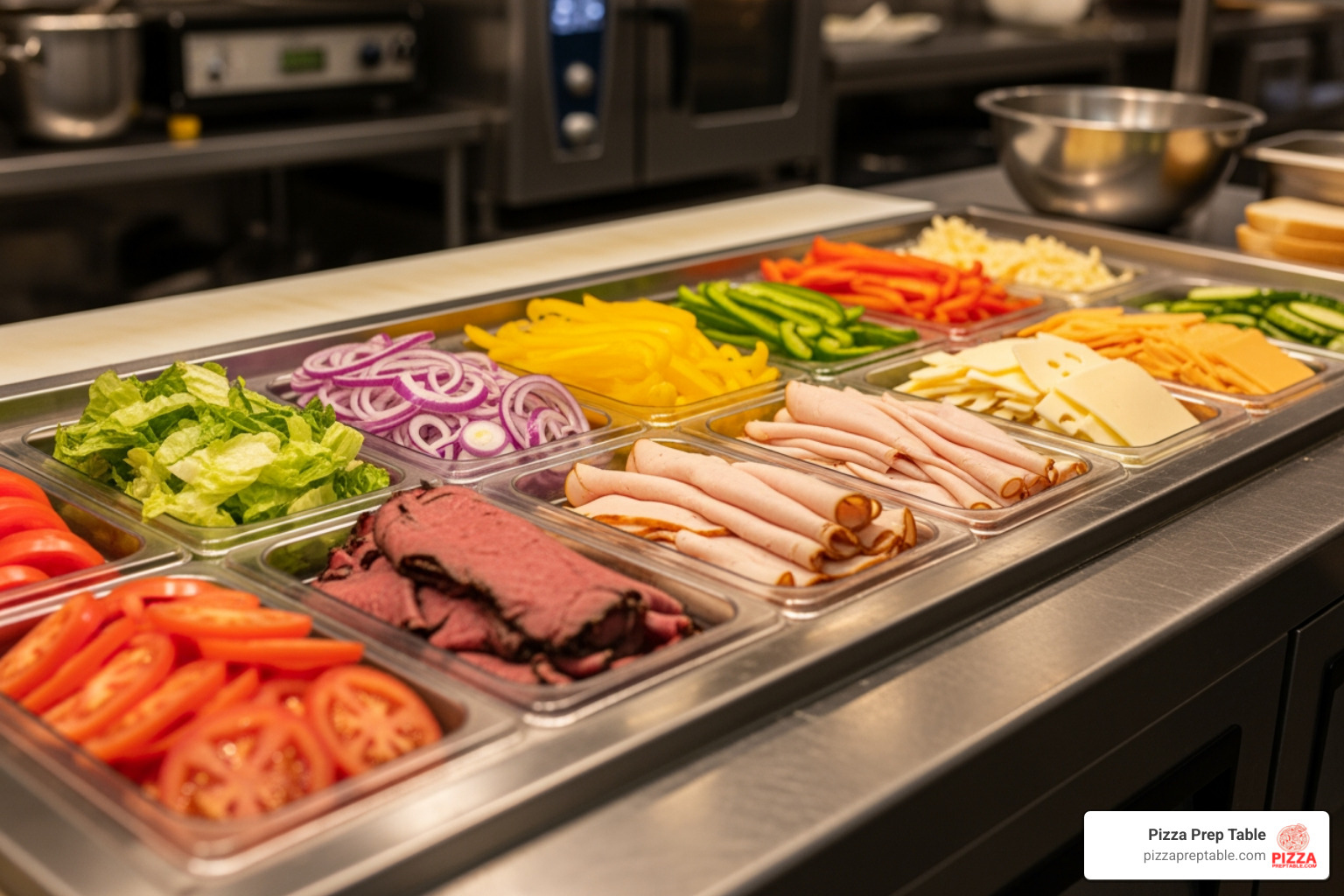
Anatomy of a High-Performance Sandwich Prep Unit
Understanding the components of a sandwich prep unit is crucial for making an informed purchase. These are engineered workstations designed to optimize the sandwich-making process.
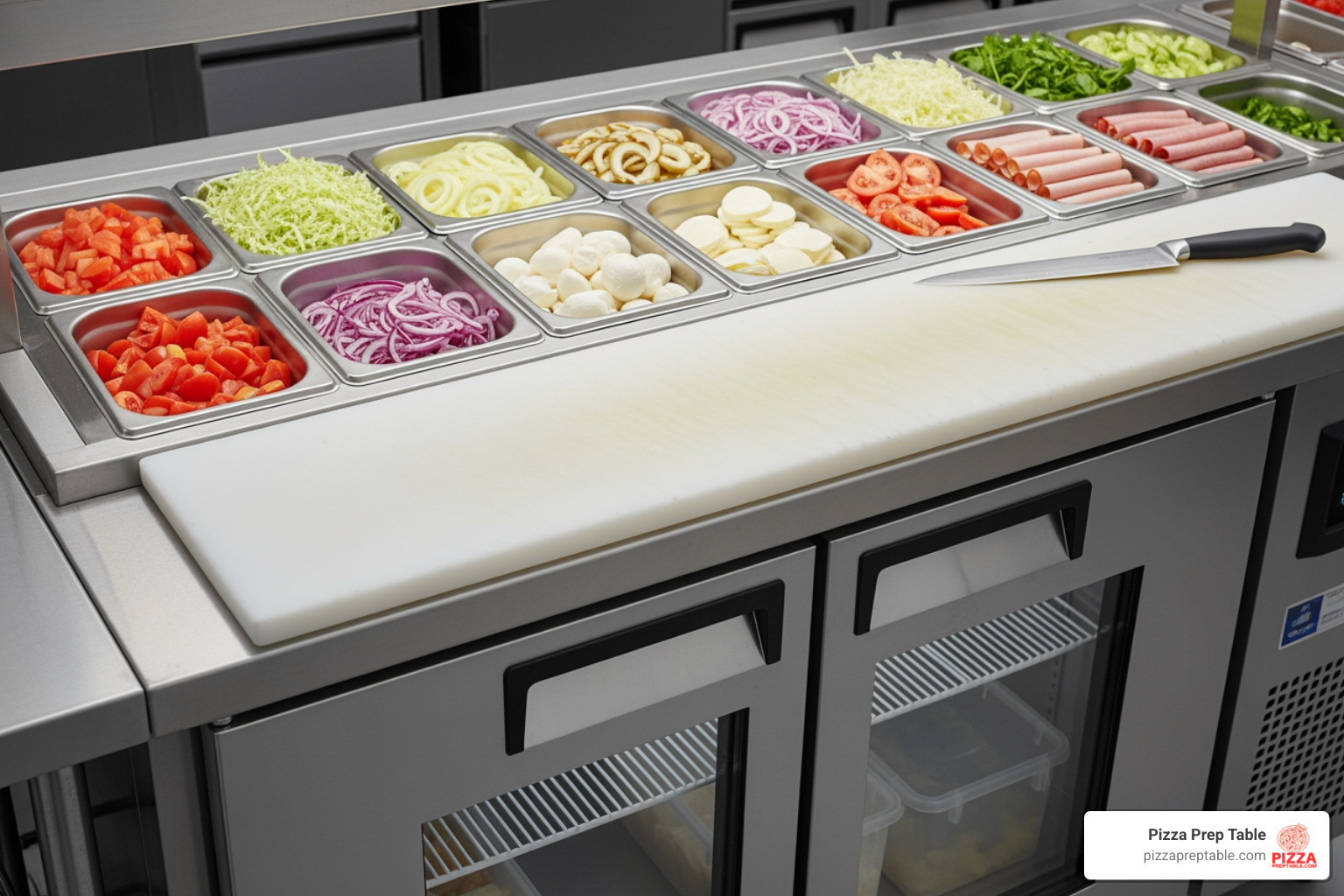
Key Features of a Modern Sandwich Prep Unit
A high-performance sandwich prep unit combines robust construction, precise temperature management, and industry-standard compliance.
Construction Materials: The unit's durability and hygiene depend on its build.
- Stainless Steel: The gold standard for commercial kitchens, offering corrosion resistance, easy cleaning, and longevity.
- Anodized Aluminum: Often used for interiors, it provides a strong, lightweight, and corrosion-resistant surface.
NSF Certification: NSF/ANSI Standard 7 certification is non-negotiable. It ensures the equipment meets strict public health and safety standards for temperature maintenance, design, and construction, which is vital for health inspections from Philadelphia to Seattle.
Temperature Control: Precision is key to food safety.
- Digital Thermostats: Modern units feature digital controls for accurate temperature adjustments and monitoring. Some offer alarms to alert staff if temperatures deviate from the safe zone of 33°F to 41°F (1°C to 5°C). Keep Your Cool: Best Sandwich Prep Table Choices.
Essential Components for Peak Efficiency
Several design elements contribute to a unit's overall efficiency.
Cutting Boards: An integrated cutting board streamlines workflow.
- Polyethylene: Most units include a removable, high-density polyethylene cutting board that is durable and easy to sanitize.
- Removable Boards: The ability to remove the board is crucial for thorough cleaning. Some are also reversible for extended use.
Pan Rails: The heart of the station, the pan rail holds your ingredients.
- Food Pans: Rails are designed for standard food pans (typically 1/6 size), allowing for organized and accessible ingredients.
- Adjustable Shelves: The refrigerated base often includes adjustable shelves for flexible backup storage.
Insulated Lids: These covers are vital for maintaining pan temperatures. Foam-insulated lids keep pans colder, lock in freshness, minimize condensation, and reduce energy consumption. Choosing Your Perfect Mega Top Sandwich Prep Table.
Choosing Your Perfect Match: Types, Sizes, and Features
Selecting the right sandwich prep unit depends on your kitchen layout, menu volume, and workflow. At PizzaPrepTable.com, we offer a diverse range to suit every need, from a compact cafe in San Diego to a high-output pizzeria in Atlanta.
Doors vs. Drawers: Which Sandwich Prep Unit is for You?
The base of a sandwich prep unit comes in two main configurations: doors or drawers.
Door Models: The most common type, featuring hinged doors with shelving inside. They are ideal for storing larger containers and bulk ingredients. Many have self-closing doors to conserve energy.
Drawer Models: Designed for superior organization, drawers allow quick access to specific ingredients without opening the entire compartment, which is more energy-efficient. They are great for pre-portioned items.
Combination Units: These offer a mix of doors and drawers, providing the best of both worlds for versatile storage. The choice depends on your kitchen's workflow and storage needs.
Sizing Up Your Needs
The size of your sandwich prep unit is critical. Too small, and you'll constantly be refilling; too large, and you'll waste space and energy.
Consider these factors:
- Kitchen Space: Measure your available footprint carefully.
- Menu Complexity: A diverse menu requires more pan capacity.
- Volume: High-volume operations need larger units to minimize restocking.
Compact Units: Ideal for smaller kitchens, units like the 27 Inch Sandwich Prep Table offer efficiency without a large footprint.
Mid-Size Units: A popular choice like the 48 Inch Sandwich Prep Table balances capacity and space, often holding 12 pans.
Large Capacity Units: For high-volume establishments, a 72 Inch Sandwich Prep Table provides maximum pan capacity and storage.
A Look at Leading Brands
At PizzaPrepTable.com, we proudly offer a selection of top-tier brands known for their reliability, innovation, and performance. Here's a brief comparison of some leaders in the sandwich prep unit market:
| Brand | Key Temperature Range | Common Refrigerant | Unique Selling Point |
|---|---|---|---|
| True | 0.5°C to 5°C (33°F to 41°F) | Hydrocarbon (HC) | Airflow system designed for uniform temperature. |
| Atosa | 33°F to 38°F | R-290 | Embraco compressor for notable energy savings. |
| Maxx Cold | 33°F to 41°F (1°C to 5°C) | R-290 | Integrated condensate evaporator. |
True Manufacturing
True Manufacturing is renowned for robust and reliable refrigeration. Their sandwich prep units feature an "exclusive airflow system" that directs cold air onto food pans, ensuring uniform temperatures between 0.5°C to 5°C (33°F to 41°F). Many models use eco-friendly Hydrocarbon refrigerants. True is known for quality, longevity, and adaptable configurations that help reduce prep time.
Atosa
Atosa offers an efficient and affordable choice. Their sandwich prep tables maintain precise temperatures between 33 and 38°F. A key feature is the Embraco compressor, which can save up to 40% on energy. Using eco-friendly R-290 refrigerant and featuring self-closing doors, Atosa units are a smart investment for businesses from Phoenix to Indianapolis.
Maxx Cold
Maxx Cold units are designed for practicality and streamlined operation. They reliably maintain temperatures of 33°F to 41°F (1°C to 5°C). A standout feature is the integrated condensate evaporator, which simplifies installation by eliminating the need for a drain line. Maxx Cold also focuses on organization, providing divider bars and pans to keep ingredients neat and accessible.
The "Cool" Science: Refrigeration, Temperature, and Safety
Behind every chilled ingredient in a sandwich prep unit lies a sophisticated refrigeration system. Understanding this science highlights their role in food safety and efficiency.
Understanding Refrigeration Systems
Modern cooling systems have seen significant advancements in efficiency and environmental impact.
Hydrocarbon Refrigerants (R290): The industry is shifting towards Hydrocarbon refrigerants like R290 (propane). This "environmentally friendly R290 refrigerant" has a low global warming potential (GWP) and zero ozone depletion potential (ODP). It's also highly energy-efficient, which lowers electricity bills.
Energy Efficiency: Modern sandwich prep units are designed to be energy-conscious. Features like high-density polyurethane insulation (CFC-free with zero ODP and GWP) and energy-saving compressors can reduce energy use by up to 40%.
Front-Breathing Design & Zero-Clearance Installation: Space is a premium in commercial kitchens. Many units feature a "front-breathing design," allowing for "zero-clearance" installation. This means the unit can be placed flush against a wall or other equipment without compromising airflow, preventing overheating and maximizing your kitchen layout.
Before purchasing, we recommend checking for Prop 65 warnings. You can learn more about Prop 65 Warnings to make informed decisions.
The Critical Importance of Temperature Control
Maintaining precise temperatures is a legal and ethical requirement in foodservice.
NSF-7 Standard: The "NSF-7 standard" is the benchmark for commercial refrigeration. An "NSF-7 approved" unit is certified to maintain safe food temperatures, protecting your customers and your business from health code violations.
Food Danger Zone: A sandwich prep unit is designed to keep perishable ingredients out of the "food danger zone" (40°F to 140°F), where bacteria multiply rapidly.
Temperature Ranges: Reputable brands design their units to maintain precise temperatures, typically within the 33°F to 41°F (0.5°C to 5°C) range. This consistency is crucial for product freshness and preventing spoilage. Keeping ingredients just above freezing ensures they retain their texture and quality, directly impacting the taste of your final product.
Installation, Maintenance, and Getting the Most Out of Your Unit
A sandwich prep unit is a significant investment. Proper installation and regular maintenance are key to its longevity and performance, whether your business is in Washington, D.C. or Houston.
Installation Checklist
Correct setup from day one prevents future headaches.
- Leveling: Ensure the unit is level for proper drainage and door alignment. Most units have adjustable feet or casters.
- Ventilation Space: Even with a "front-breathing design," ensure adequate airflow. For other models, consult the manufacturer's manual for required clearance from walls.
- Electrical Requirements: Check the unit's voltage, amps, and NEMA plug configuration. A dedicated circuit is recommended to protect the compressor.
Daily Maintenance
Simple daily tasks extend your unit's life and maintain hygiene.
- Cleaning Gaskets: Wipe door and drawer gaskets daily with warm, soapy water. Clean gaskets ensure a proper seal, keeping cold air in.
- Wiping Surfaces: Regularly wipe down all stainless steel surfaces with a food-safe cleaner to remove spills and prevent cross-contamination.
Weekly Checks
Perform these checks weekly or bi-weekly.
- Condenser Coil Cleaning: This is the most important maintenance task. A dirty coil forces the unit to work harder and consume more energy. Clean the coils every 30-90 days with a brush and vacuum. Many units have slide-out condensers for easy access.
- Check Drainage: Ensure drain lines are clear to prevent water buildup.
- Temperature Verification: Use an external thermometer to verify the unit's internal temperature is accurate and consistent.
Frequently Asked Questions about Sandwich Prep Units
We often hear similar questions from our customers in commercial kitchens from San Antonio to Baltimore. Here are the answers to some common inquiries about sandwich prep units.
What is the difference between a sandwich prep table and a pizza prep table?
While similar, they are designed for different tasks. The key differences are:
- Cutting board depth: Sandwich prep units have a shallower cutting board (10-12 inches), which is perfect for assembling sandwiches. Pizza prep tables have a much deeper board (19+ inches) to provide space for stretching dough.
- Pan rail design: Pizza prep tables often have a wider, raised pan rail to keep a larger variety of toppings extra cool during long periods of use.
Essentially, a sandwich prep unit is optimized for linear assembly, while a pizza prep table is built for the larger workspace needed for pizza making.
For a deeper dive, you can explore A deeper look at the Sandwich Prep Table on our blog.
How often should I clean the condenser coil?
As a general rule, clean the condenser coil on your sandwich prep unit at least every 90 days.
In kitchens with high amounts of grease or dust, you may need to clean it monthly. Neglecting the coil leads to reduced cooling, higher energy bills, and potential compressor failure. Regular cleaning ensures your unit runs efficiently and lasts longer.
Can I use a sandwich prep unit for other foods?
Absolutely! These units are incredibly versatile. Customers use them for:
- Salads: Keeping greens, vegetables, and dressings chilled and organized.
- Tacos & Burritos: Holding fillings like cheese, lettuce, and salsa at safe temperatures.
- Dessert Prep: Chilling ingredients for parfaits, fruit tarts, and other cold desserts.
- General Cold Prep: Any task requiring quick access to an array of chilled ingredients.
Their versatility makes them a valuable asset in almost any commercial kitchen.
Conclusion: Lift Your Sandwich Game
We've explored the benefits and features of the sandwich prep unit. From enhancing workflow and ensuring food safety to reducing waste and improving organization, it's clear this is a strategic investment in your kitchen's success.
The meticulous design—from stainless steel construction and precise temperature control to energy-efficient refrigerants—contributes to a smoother, safer operation. Whether you're a busy deli in Phoenix, a fast-casual restaurant in Charlotte, or a cafe in Seattle, the right sandwich prep unit can revolutionize your food preparation.
At PizzaPrepTable.com, we pride ourselves on offering a wide selection of high-quality sandwich prep units from leading brands. We understand the demands of the restaurant supply industry and provide solutions for businesses of all sizes, backed by flexible financing options.
Don't let inefficient workflows or compromised food safety hold your business back. It's time to invest in a sandwich prep unit that will lift your menu and streamline your kitchen.
Explore our complete collection of Refrigerated Sandwich Prep Tables.