

Fast, Efficient, Delicious: Our Picks for the Best Conveyor Pizza Ovens
The Secret to Speed and Consistency in Your Pizza Kitchen
A conveyor pizza oven is a commercial cooking appliance that uses a moving belt to transport pizzas through a heated chamber, delivering consistent results at high speeds. Here's what you need to know:
What Makes Conveyor Pizza Ovens Special:
- Speed: Cook 20-60 pizzas per hour depending on the model
- Consistency: Even heat distribution ensures every pizza comes out perfect
- Ease of Use: Minimal training required - just place pizza on the belt
- Temperature Range: Typically 400-600°F for optimal baking
- Versatility: Cook sandwiches, flatbreads, appetizers, and more
- Space-Saving: Many models are stackable or countertop-friendly
For busy pizzerias, the pressure to deliver orders fast without sacrificing quality is immense. While traditional deck and wood-fired ovens can be slow and inconsistent, conveyor pizza ovens solve these problems by automating the cooking process with perfect temperature control.
The technology is simple: a pizza travels on a moving conveyor belt through heating elements (air impingement, infrared, or stone-based) and emerges fully cooked. Belt speed controls cooking time, and the temperature remains consistent, meaning less labor, fewer mistakes, and more pizzas per hour.
This guide will help you steer the options—from gas versus electric to ventless technology—to find the right conveyor pizza oven for your kitchen and budget.
I'm Sean Kearney, and with years of experience in the foodservice industry, I've seen how the right conveyor pizza oven can transform a kitchen into a high-volume success story.
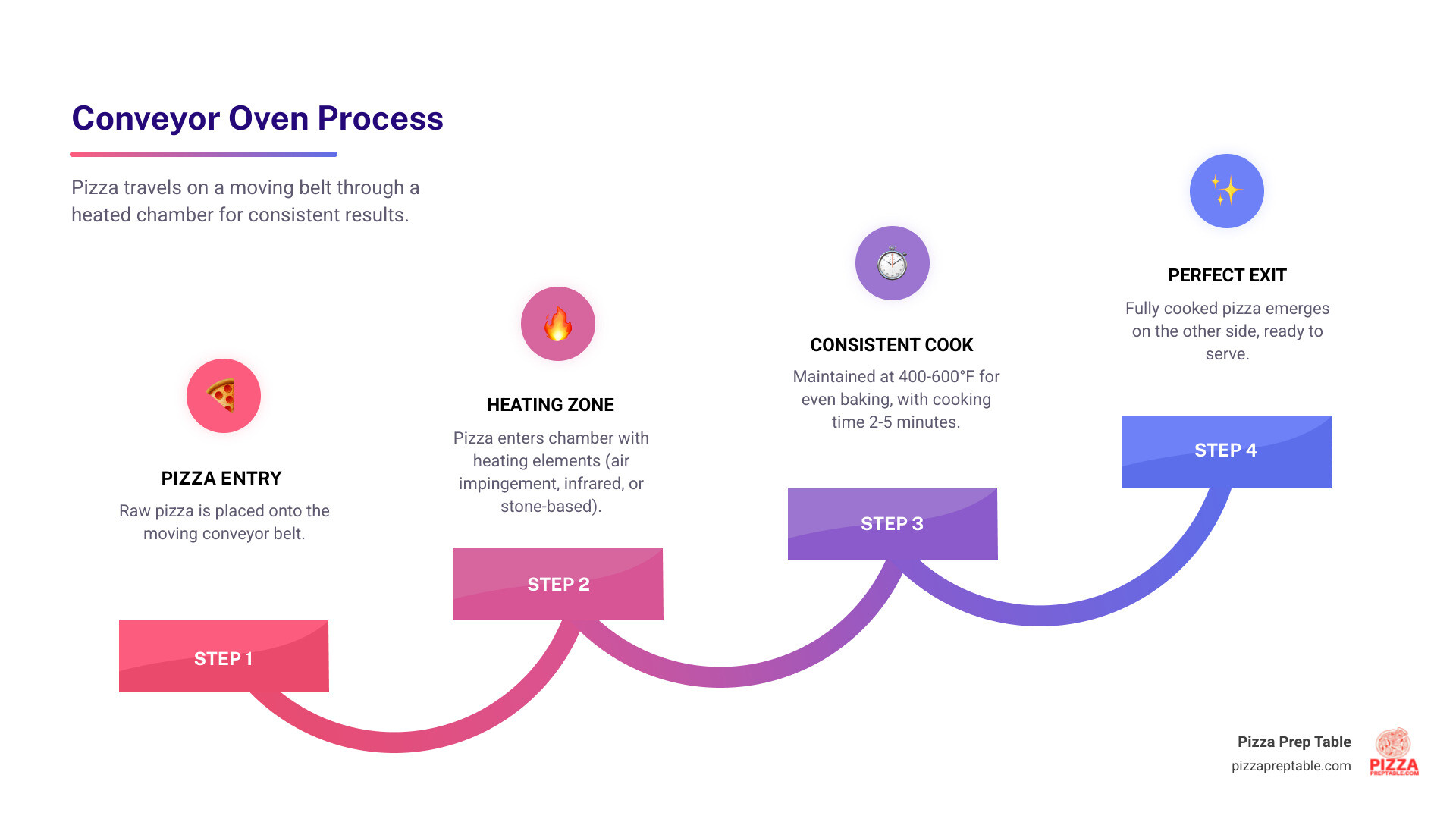
Handy conveyor pizza oven terms:
Why Choose a Conveyor Oven for Your Pizzeria?
Running a commercial kitchen, especially in busy cities like New York City, Los Angeles, or Chicago, demands speed and consistency. A conveyor pizza oven offers distinct advantages over traditional methods.
Faster Cooking Times: A conveyor system automates cooking, eliminating manual loading and reducing wait times. High-speed models can cook up to 60 12-inch pizzas per hour, a massive boost during a Friday night rush in San Francisco or Boston.
Best Consistency: Every pizza receives the exact same cooking time and temperature, ensuring a perfect, uniform product every time. This eliminates the guesswork of deck or wood-fired ovens, so customers in Dallas or Atlanta always get the quality they expect.
Ease of Use: Once settings are programmed, operation is as simple as placing a pizza on the belt. This reduces training time and frees up staff for other tasks, lowering labor costs.
High-Volume Production: For any kitchen aiming for high output, a conveyor oven is essential. Whether you're a small shop in San Diego or a large chain in Houston, models are available to meet your demand, producing anywhere from 20 to 60+ pizzas per hour.
Versatility Beyond Pizza: These ovens aren't just for pizza. They excel at cooking sandwiches, flatbreads, appetizers like wings and fries, and even pastries, making them a valuable asset for any foodservice business. For more insights, check out our guide on commercial kitchen equipment.
Key Features of a High-Quality Conveyor Pizza Oven
When investing in a conveyor pizza oven, consider these key features:
Size and Footprint: Measure your available space carefully, considering the oven's width, depth, and height, especially if you plan on stacking units.
Belt Width: The belt width (from 16 to 44 inches) determines the size and number of pizzas you can cook at once. An 18-inch belt like on the Vollrath PO4-20818R-L fits a medium pizza, while wider belts handle multiple pizzas.
Chamber Length: A longer cooking chamber (30 to 70 inches) generally means higher output, as more items can be cooked simultaneously.
Power Source (Gas vs. Electric): Gas ovens may have lower operating costs but require a gas line. Electric models are easier to install and offer precise temperature control.
Temperature Range: Most conveyor ovens operate between 400-600°F (204-316°C), ideal for various pizza styles. Some, like the Chefook CHFPTV40, can reach up to 662°F (350°C).
-
Heating Technology:
- Air Impingement: Jets of hot air rapidly cook food, ensuring speed and evenness. This is common in high-performance Lincoln and TurboChef models.
- Infrared: Quartz heating elements provide fast, powerful, and consistent radiant heat, often found in electric ovens.
- Stone-Based: Brands like Hot Rocks Ovens offer conveyors with granite stones for a traditional crispy crust and distinct flavor.
Ventless Technology: A game-changer for kitchens in Philadelphia or Washington, D.C., ventless ovens use internal catalytic converters to eliminate grease and odors, removing the need for a costly exhaust hood.
Stackable Design: To maximize output in a small footprint, many models can be stacked two or three units high, a crucial feature for high-volume kitchens in Phoenix or Charlotte.
For more details, explore our resources on commercial pizza ovens.
Special Types of Conveyor Ovens
Beyond standard models, specialized conveyor ovens cater to specific needs.
Stone Conveyor Ovens: For the authentic taste of stone-baked pizza with conveyor efficiency, ovens from brands like Hot Rocks use granite stones on the belt. This draws out moisture for a crispy crust and adds a unique flavor.
High-Speed Rapid Cook Ovens: Engineered for maximum throughput, brands like TurboChef use advanced air impingement for incredibly fast cooking. The TurboChef High h Conveyor 2020 can cook up to 60 pizzas an hour or toast a sandwich in 60 seconds, perfect for quick-service spots in Las Vegas or San Antonio.
Ventless Countertop Models: Ideal for tight spaces, these compact units like the Vollrath PO4-20818R-L sit on a counter and don't require an exhaust hood. This reduces installation costs and offers layout flexibility for cafes, small pizzerias, or food trucks. Our guide on commercial countertop pizza ovens has more.
Our Top Picks for the Best Conveyor Pizza Oven Models
Choosing the right conveyor pizza oven is critical for your kitchen's efficiency and profitability. Here's a comparison of our top picks:
| Model | Type | Capacity (Pizzas/hr) | Belt Width | Temp Range | Best For |
|---|---|---|---|---|---|
| TurboChef High h Conveyor 2020 | High-Speed Rapid Cook | Up to 60 (12-inch) | 20-inch cook chamber | Up to 600°F (316°C) | High Volume, Versatility, Ventless |
| Lincoln 1130-000-U Impinger II Express | Impingement Conveyor | 20 (fresh dough) | 18 inches | 250°F-575°F | Medium Volume, Consistency, Stackable |
| Vollrath PO4-20818R-L | Countertop Ventless | Medium volume | 18 inches | Not specified | Medium Volume, Space-Saving, Flatbreads |
| Chefook CHFPTV40 | Digital Control Conveyor | Up to 30 (33cm) | 40 cm (approx. 15.7 in) | Up to 350°C (662°F) | Medium Volume, Digital Precision |
Best for High Volume: High-Capacity Conveyor Pizza Oven
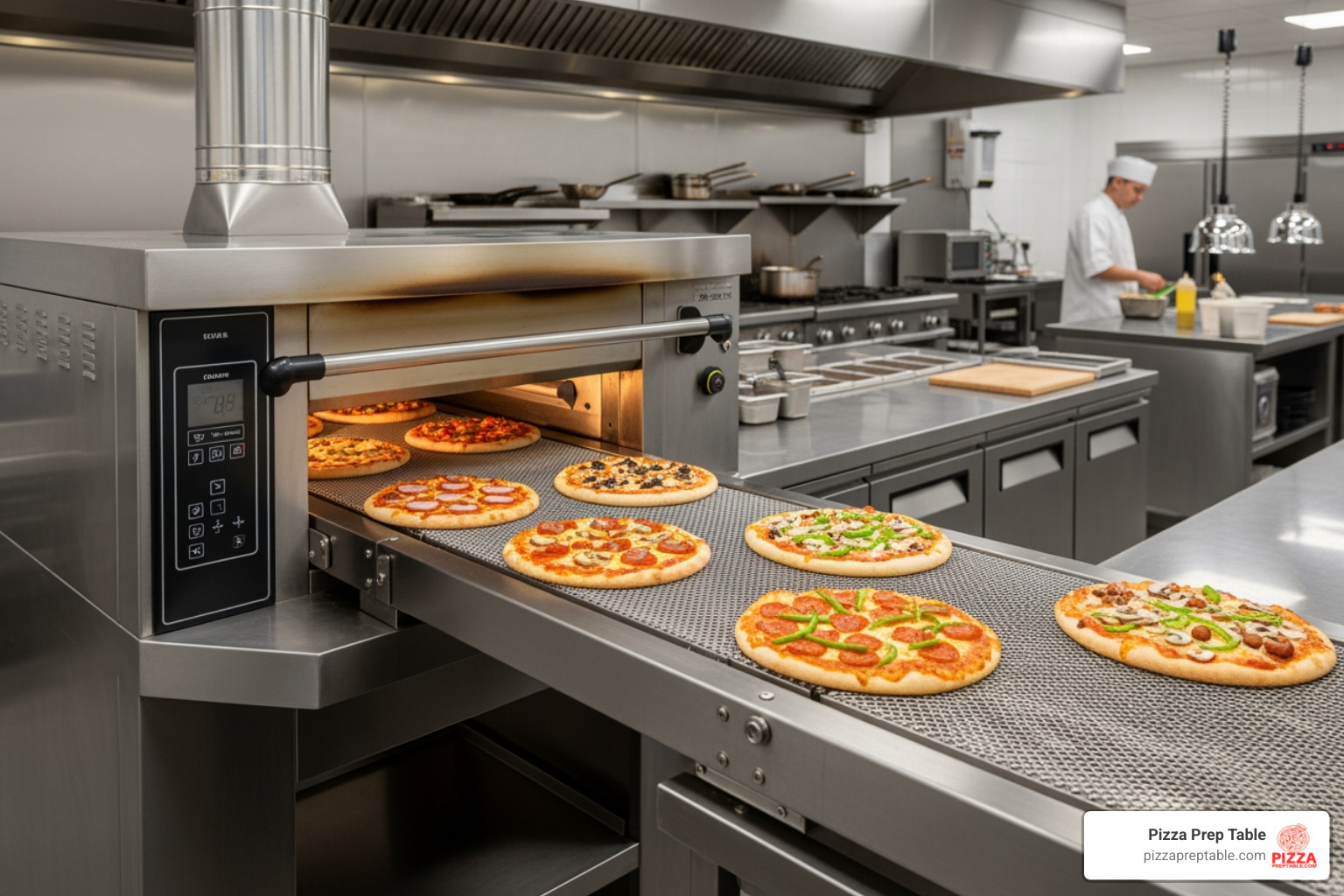
For kitchens demanding extreme speed, the TurboChef High h Conveyor 2020 is a powerhouse. Designed for the busiest establishments in cities like Chicago and Dallas, this machine can cook up to 60 12-inch pizzas in an hour.
A key feature is its ventless operation, thanks to dual catalytic converters. This often eliminates the need for a costly exhaust hood, saving on installation and offering layout flexibility. The optional split belt allows you to cook different items at different speeds simultaneously. Using advanced air impingement technology with independent top and bottom controls, it reaches up to 600°F (316°C) for a perfect crust. Plus, it's stackable up to three units high to maximize output without increasing your footprint.
If your operation is all about speed and volume, this oven is engineered to keep up. We invite you to explore our full range of conveyor pizza ovens to find the perfect fit for your high-volume needs.
Best for Medium Volume & Versatility: Versatile Conveyor Pizza Oven
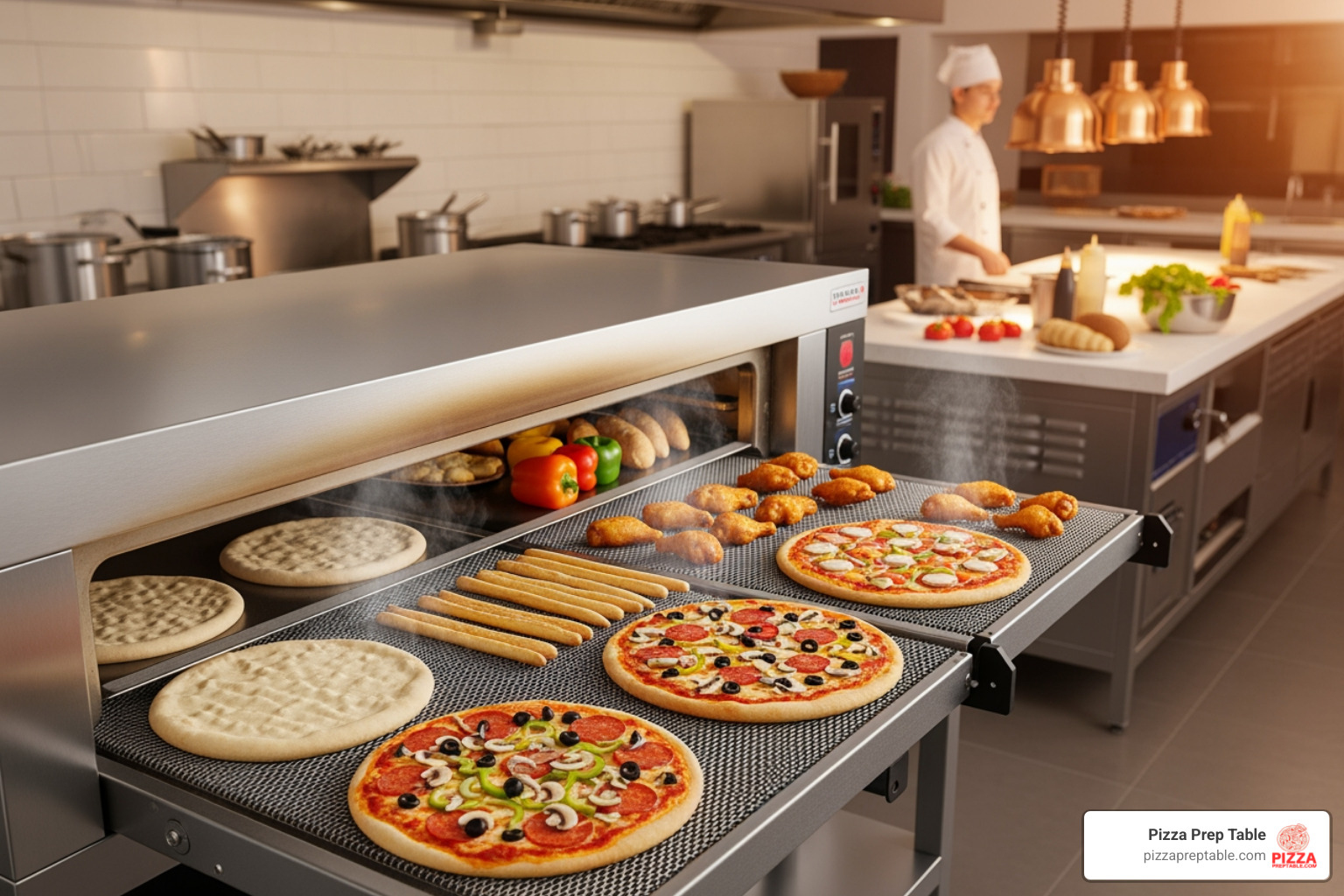
When you need a reliable workhorse that balances output with flexibility, the Lincoln 1130-000-U Impinger II Express conveyor pizza oven is a top contender. It's a favorite in cities like Denver and Charlotte for its robust performance.
This oven can produce 20 fresh dough pizzas per hour and features a wide temperature range of 250°F to 575°F, making it adaptable for various dishes. It uses Advanced Air Impingement Technology for a fast, even bake every time. Its stackable design (up to three units) is a major space-saver for growing businesses. The front removable conveyor simplifies cleaning, a detail any busy chef in San Diego or Phoenix will appreciate. Cook times are adjustable from 1 to 30 minutes, offering great control.
For a deeper dive into how different ovens perform, check out our commercial pizza oven reviews.
Best Countertop Option: Countertop Conveyor Pizza Oven
For operations where space is tight, like in Boston or Houston, a countertop conveyor pizza oven is a lifesaver. Our top pick is the Vollrath PO4-20818R-L 18-inch conveyor oven, a compact yet powerful unit.
The most compelling feature is its ventless design, which uses internal filtration to eliminate the need for an expensive exhaust hood. This lowers installation costs and provides incredible placement flexibility. Designed for medium-volume operations, this 18-inch oven excels at producing fresh or par-baked pizzas and flatbreads using powerful and consistent quartz heating elements.
The adjustable product opening (1.5 to 4 inches) adds versatility for cooking items of varying heights. This model is best for fresh or par-baked items, not frozen pizzas or raw food with heavy toppings. For businesses needing to maximize cooking capacity in a small footprint, this countertop oven is a fantastic choice. Explore all our compact options and view countertop conveyor ovens that can fit seamlessly into your existing setup.
Maintenance and Energy Efficiency
Proper care for your conveyor pizza oven ensures longevity and optimal performance, while understanding its energy use can lower operating costs. With simple routines, kitchens in Columbus and Indianapolis have extended their ovens' lives by years.
Maintenance Tips for Your Conveyor Pizza Oven
A consistent routine will keep your oven running smoothly and prevent costly downtime.
- Daily Cleaning: At the end of each day, wipe down the oven's interior and exterior. Empty and clean removable drip trays to prevent grease buildup.
- Conveyor Belt Care: Remove food debris and grease from the belt to prevent sticking and ensure even cooking.
- Drive System Check: Visually inspect the drive system for wear or obstructions. While many are maintenance-free, follow the manufacturer's lubrication guide if required.
- Proper Clearance: Ensure adequate airflow around the oven, even for ventless models. Keep required ventilation hoods and filters clean.
- Professional Servicing: Schedule professional service once or twice a year. A technician can calibrate thermostats and catch potential issues before they become major problems.
For any replacement components, visit our section on commercial pizza oven parts.
Energy Efficiency Considerations: Energy costs are a major factor in any commercial kitchen. Look for these energy-saving features:
- Energy Conservation Modes: Many advanced ovens feature an "idle mode" that reduces power consumption during slow periods, helping to lower utility bills.
- Gas vs. Electric: The right choice depends on your utility costs. Gas can be more efficient for continuous high-heat use, while electric offers precise control and may be better for intermittent use.
- Insulation: High-quality insulation reduces heat loss, making the oven more efficient and keeping your kitchen cooler.
Understanding these factors helps you make an informed decision that benefits both performance and your budget.
Frequently Asked Questions about Conveyor Ovens
We often hear similar questions from restaurant owners in cities like Atlanta, Washington, D.C., and Baltimore when they consider a conveyor pizza oven. Here are the answers to the most common ones.
What foods can you cook in a conveyor pizza oven besides pizza?
These ovens are incredibly versatile. Beyond pizza, they are perfect for a wide range of menu items:
- Sandwiches and Toasted Subs: Quickly toast bread and melt cheese for hot sandwiches.
- Flatbreads and Appetizers: Items like garlic bread, chicken wings, French fries, and quesadillas cook quickly and evenly.
- Baked Goods: With the right settings, you can also bake cookies, pastries, and other items.
The key is to experiment with temperature and belt speed to find the perfect setting for each food.
What is the typical price range for a conveyor pizza oven?
The price of a conveyor pizza oven varies significantly based on size, capacity, and features.
- Countertop Models: Smaller, compact units for limited space typically range from $3,000 to $6,000.
- Mid-Range Floor Models: Freestanding units for medium-volume pizzerias usually cost between $8,000 to $15,000.
- High-Capacity Systems: Large-scale, multi-deck, or rapid-cook models can exceed $15,000 to $30,000+. The Lincoln 1130-000-U Impinger II Express at $16,235.00 is a good example of a high-performance model.
While a significant investment, the increased efficiency and throughput often lead to a quick return. For cost-saving options, see our insights on buying used commercial pizza ovens.
Do all conveyor pizza ovens need a ventilation hood?
No, not all conveyor pizza ovens require a traditional ventilation hood. Many modern electric and countertop models feature ventless technology. These ovens use internal filtration systems with catalytic converters to remove grease and odors, meaning they don't need a direct connection to an external exhaust.
Examples include the ventless Vollrath PO4-20818R-L and the TurboChef High h Conveyor series. This feature significantly lowers installation costs and offers greater flexibility in kitchen layout.
However, always remember:
- Check Local Codes: Before purchasing, consult your local health department and building codes in your city (e.g., Los Angeles, Philadelphia). Regulations vary, and it's crucial to comply with standards like the NFPA 96 standard for commercial cooking ventilation.
- Consult Manufacturer Specs: The manufacturer's guide will clearly state whether a hood is required for the specific model you are considering.
In short, while many ovens offer ventless convenience, always do your due diligence to confirm local and manufacturer requirements.
Conclusion: Is a Conveyor Oven Right for You?
After exploring the benefits of conveyor pizza ovens, it's clear why they are the backbone of successful kitchens from New York City to Austin. The advantages are undeniable: speed to handle the busiest rush, consistency for a perfect product every time, and efficiency to streamline workflow and reduce labor costs.
At Pizza Prep Table, we know investing in a conveyor pizza oven is a major decision. It's an investment in your restaurant's future. We are committed to offering a wide selection of top-quality equipment, along with flexible financing options to help you acquire the right oven without financial stress.
Ready to take your pizza production to the next level? Explore pizza oven financing options today and let us help you find the perfect conveyor pizza oven to make your kitchen faster, more consistent, and more profitable.