

Roll with It: Everything About Commercial Dough Tables
Introduction: The Foundation of Great Dough

A commercial dough table is a specialized work surface designed for preparing, portioning, and handling dough in professional kitchens. These tables come in two main types: standard work tables (typically stainless steel or marble) and refrigerated prep tables with integrated cold storage for ingredients.
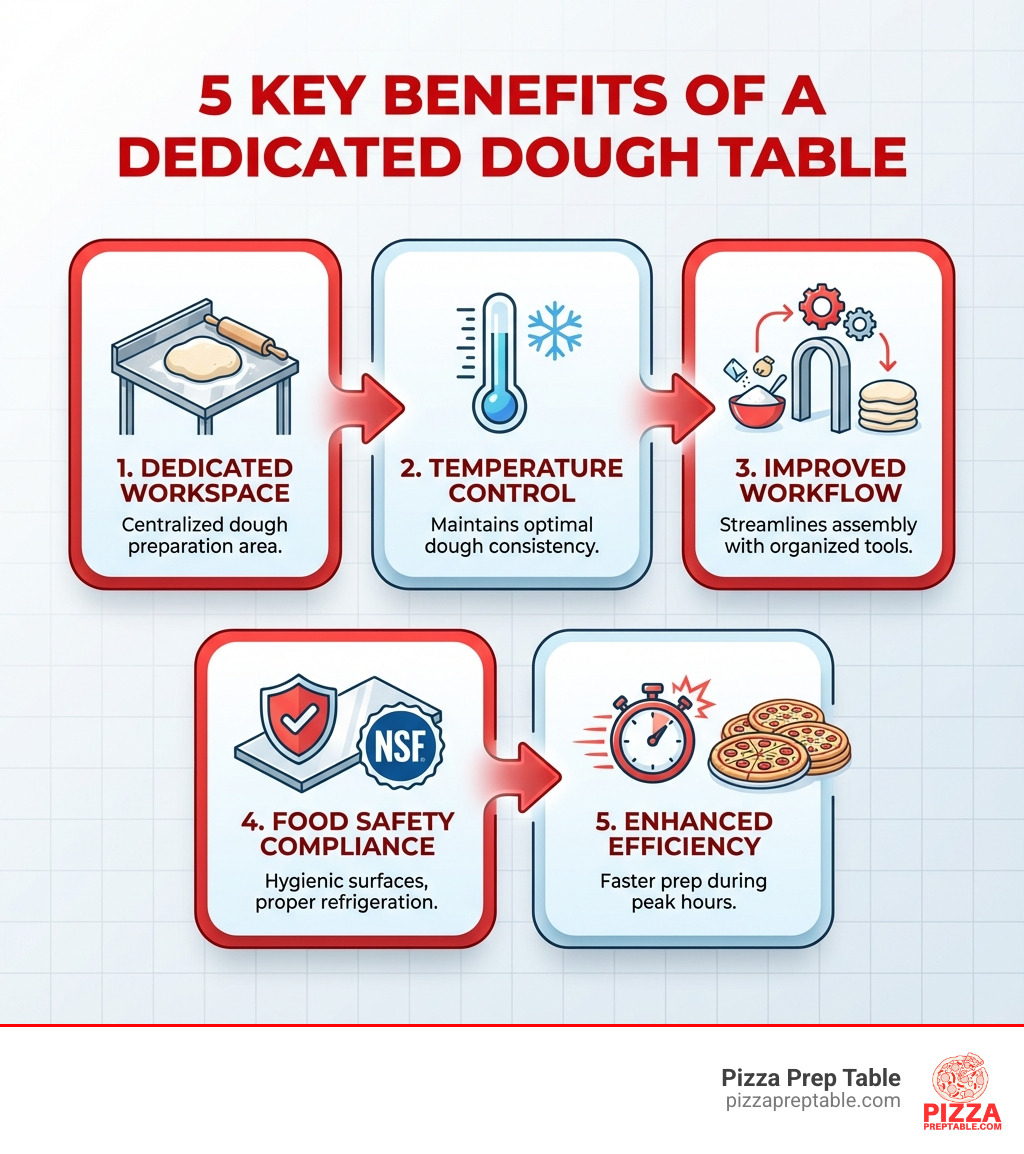
Key Benefits of Commercial Dough Tables:
- Dedicated workspace for dough preparation and pizza assembly
- Temperature control to keep dough at optimal consistency (refrigerated models maintain 33°F-38°F)
- Improved workflow by centralizing ingredients and tools in one location
- Food safety compliance through NSF-certified materials and proper refrigeration
- Improved efficiency during high-volume service periods
If you're opening a pizzeria or upgrading your kitchen, choosing the right dough table is one of your most important equipment decisions. A quality table doesn't just give you a place to work—it directly impacts your product consistency, staff efficiency, and food safety compliance. The right setup keeps ingredients fresh, dough at the perfect temperature, and your team moving smoothly through even the busiest dinner rush.
Whether you need a simple stainless steel work surface or a fully refrigerated pizza prep station with ingredient rails and understorage, understanding your options will help you make the best investment for your space and budget.
I'm Sean Kearney, and my years in restaurant equipment sales have shown me how the right commercial dough table transforms kitchen operations from chaotic to streamlined. I've helped everyone from first-time pizzeria owners to established chains find the perfect prep solution for their needs.
Commercial dough table terms explained:
Types of Dough Tables & Work Surface Materials
When we talk about a commercial dough table, we're often envisioning a few different types of equipment, each designed to optimize the dough preparation process. The choice largely depends on your specific operational needs, the volume of dough you handle, and the type of product you're creating. From simple, sturdy work surfaces to highly specialized refrigerated units, there's a dough table for every commercial kitchen.
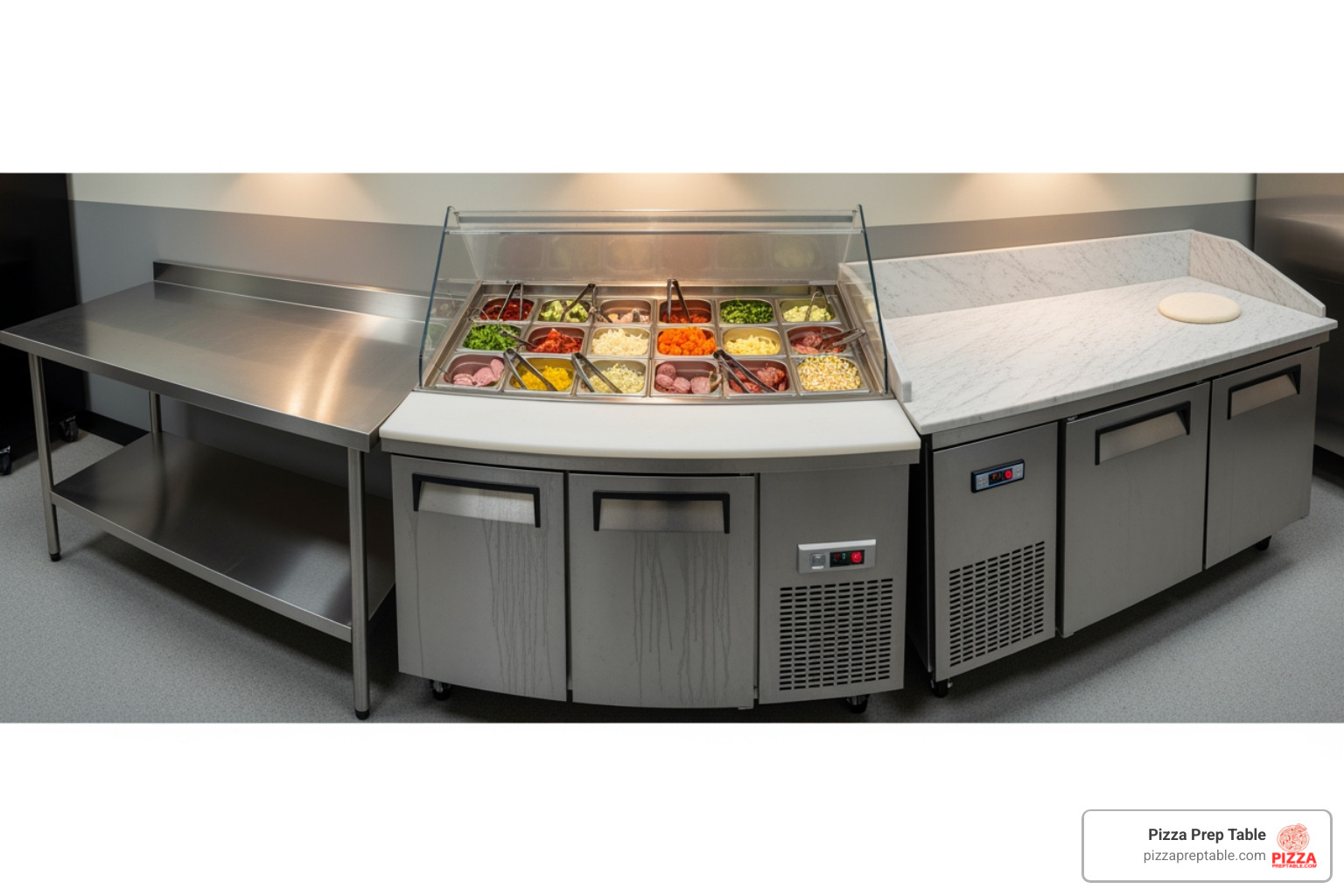
Let's break down the main types:
Standard Work Tables: These provide a simple, robust surface for kneading and prep. Made from materials like stainless steel or wood, they're a cost-effective choice if you have separate refrigeration for your dough and ingredients.
Refrigerated Prep Tables: These units combine a work surface with under-counter refrigeration. They're versatile for various food prep tasks, keeping ingredients and prepped foods cold and fresh, which is crucial for food safety and maintaining quality. Their refrigerated base is ideal for storing dough balls at a consistent temperature until they're ready to be worked.
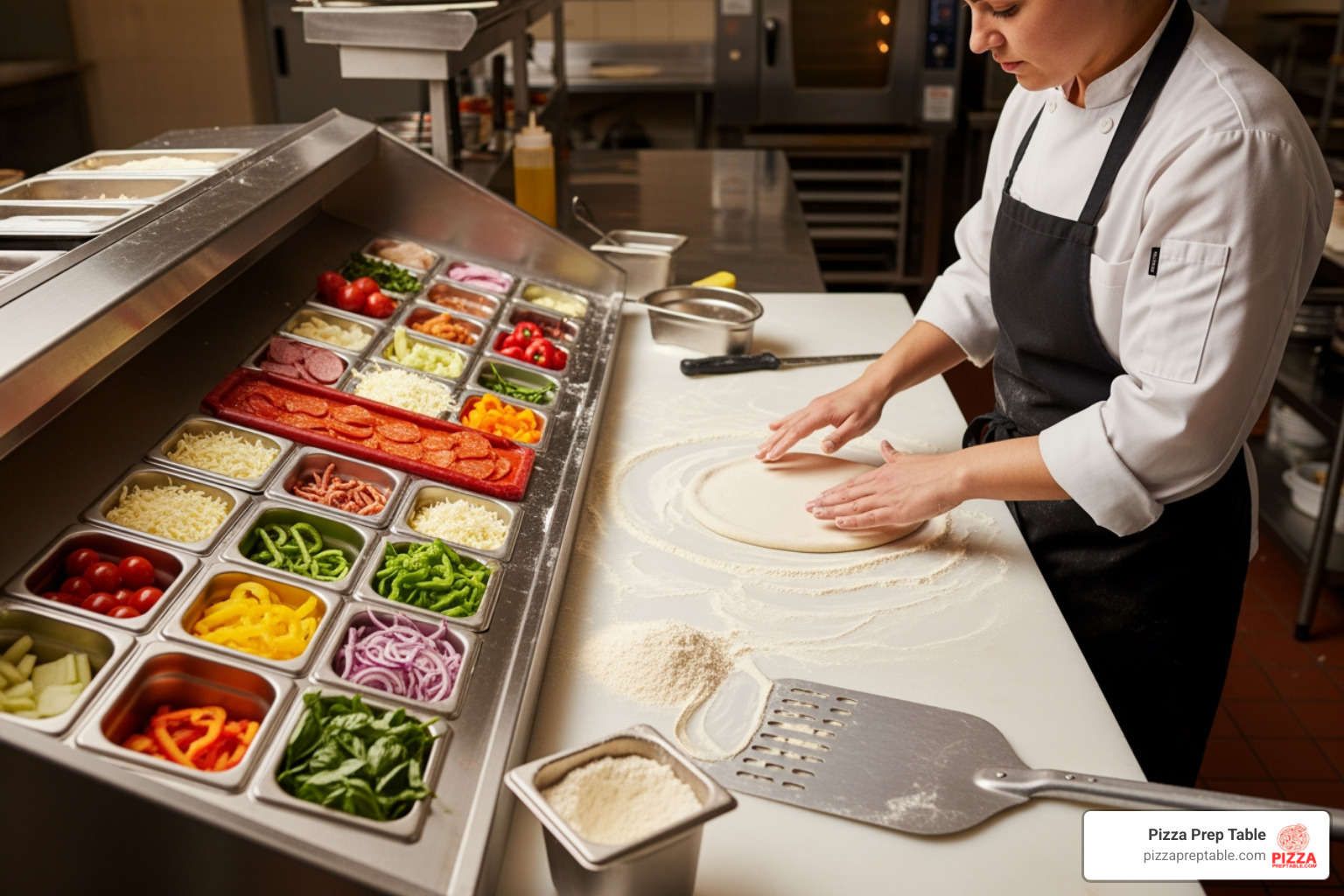
Pizza Prep Tables: A specialized version of a refrigerated prep table, these are designed for pizzerias. They feature a deep cutting board and a raised, refrigerated rail for toppings, streamlining the pizza-making process. The refrigerated base holds dough and other ingredients, maximizing efficiency. These units are indispensable for pizzerias, allowing for rapid pizza assembly during peak service hours.
The material of your dough table's work surface is just as important as its type, as it directly impacts how dough behaves and how easy the table is to maintain.
| Work Surface Material | Pros - | - | | Stainless Steel | Pros: Durable, easy to clean, non-porous, corrosion-resistant, and cost-effective. Often NSF certified. | Cons: Can be cold to the touch, potentially slowing yeast activity. Can show scratches. | | Marble/Granite | Pros: Naturally cool surface is ideal for dough, preventing sticking. Aesthetically pleasing and smooth. | Cons: More expensive, porous if not sealed, and can chip or crack. Requires more careful maintenance. |
Stainless Steel
For most commercial kitchens, stainless steel is the go-to choice. It's exceptionally durable, able to withstand the daily demands of a busy environment. Its non-porous surface is hygienic and easy to clean, a crucial factor for meeting health codes. Many of our tables are NSF certified, guaranteeing they meet public health standards. Stainless steel offers a fantastic balance of professional-grade quality and affordability, making it a smart investment for any food business. It's the reliable workhorse of the kitchen. Learn more in our guide to Stainless Steel Kitchen Work Tables.
Marble and Granite
For bakeries and pizzerias working with delicate doughs, a marble or granite surface is a game-changer. Its naturally cool temperature prevents dough from sticking and keeps fats like butter firm, which is ideal for pastries. This results in a dough that's easier to handle and produces a superior final product. While these stone surfaces add a touch of elegance, they come at a higher price point. They are also heavier and require more careful maintenance, including regular sealing, to prevent staining and chipping. For those prioritizing the perfect dough-handling experience, a marble or granite commercial dough table is an excellent investment.
Your Buying Guide: Key Features, Sizing, and Pricing
Investing in a commercial dough table is a significant decision that impacts your kitchen's efficiency and quality. It’s about finding the right table for your specific needs, space, and budget. This guide will walk you through the key considerations to make a smart investment in your business's future. For more tips, see our guide: Pizza Prep Like a Pro: Essential Tips for Choosing Your Commercial Kitchen Workstation.
Choosing the Right Size and Capacity
The size of your commercial dough table directly impacts workflow and output. Consider these factors:
- Standard Widths: Tables come in various widths, typically from 44 to 93 inches. A smaller unit suits a food truck, while a high-volume pizzeria in New York City might need a larger model.
- Kitchen Layout: Measure your space carefully, accounting for traffic flow and other equipment. A table that's too large can create bottlenecks.
- Batch Sizes: Ensure the surface area is large enough for your typical dough preparation volume.
- Weight Capacity: Check the table's weight capacity if you plan to place heavy equipment like mixers on it.
Understanding these dimensions is key to choosing a table that boosts productivity. For more details, see our guide on How to Choose a Pizza Prep Table Dimensions for Your Kitchen.
Refrigerated vs. Standard: Which Commercial Dough Table Do You Need?
A key decision is choosing between a refrigerated commercial dough table or a standard, non-refrigerated one.
Standard Tables offer a simple, affordable workspace. They are ideal if you have separate refrigeration and just need a dedicated surface for kneading and shaping.
Refrigerated Tables are an efficiency powerhouse. They combine a work surface with built-in cold storage, keeping ingredients and dough at a safe, consistent temperature (33°F-38°F). This is crucial for food safety and quality, especially in high-volume settings like pizzerias in Dallas or Houston. By centralizing your prep station, you minimize movement and keep everything within arm's reach, which is vital for controlling dough fermentation. Learn more in our guide on How to Keep Pizza Dough Fresh.
If you work with perishable ingredients on the line, a refrigerated table is the superior choice. See our Cool Picks: Best Refrigerated Prep Tables.
Essential Features and Add-ons
The right features can transform your commercial dough table from a simple surface to a complete workstation.
- Undershelves & Cabinet Bases: Add valuable open or enclosed storage for equipment and supplies.
- Drawers: Ideal for refrigerated models, drawers keep dough balls and ingredients organized and chilled.
- Casters: Wheels provide mobility for easy cleaning and kitchen reconfiguration.
- Backsplashes: Protect walls from splashes and spills, making cleanup easier.
- Integrated Cutting Boards: A must-have for prep tables, providing a durable, food-safe work surface.
- Topping Wells/Rails: Essential for pizza prep, these refrigerated compartments keep toppings cold and accessible.
These add-ons boost functionality and efficiency. For more storage ideas, see our guide on Commercial Kitchen Shelving.
Maintenance, Price, and Recommended Brands
Proper care and smart purchasing ensure your commercial dough table is a long-lasting asset.
- Cleaning & Maintenance: Daily cleaning is essential. For stainless steel, use a mild detergent and soft cloth, wiping with the grain. For marble, use pH-neutral cleaners and seal it regularly. Always use food-safe sanitizers. Avoid abrasive materials that can scratch surfaces.
- NSF Certification: Look for the NSF mark to ensure the table meets public health and safety standards.
- Price: Prices can range from around $1,500 for a basic model to over $15,000 for a large, feature-rich unit. Consider it a long-term investment in your business's efficiency. For budget-friendly options, consider Used Pizza Prep Tables.
- Recommended Brands: We carry top brands known for reliability and performance, including Atosa, True, and Dukers. Each offers unique benefits, from Atosa's value and eco-friendly refrigerants to True's renowned durability. Learn more in our guide, Atosa Pizza Prep Tables: Worth the Dough. We also offer models from Avantco, Beverage-Air, Continental, Delfield, and Hoshizaki.
The Benefits: Boosting Kitchen Workflow and Efficiency
A well-chosen commercial dough table is more than just equipment; it's a strategic asset that dramatically boosts kitchen workflow and efficiency. In the food service industry, an optimized prep station can be the difference between smooth service and chaotic rushes. For deeper insights, check out The Secret Sauce Behind Efficient Pizza Prep Stations.
Here are 5 ways a commercial dough table improves kitchen efficiency:
- Centralized Ingredient Access: All necessary toppings, sauces, and dough are within arm's reach, minimizing staff movement and search time.
- Optimized Workflow: Designed for a specific task (e.g., pizza assembly), it allows for a logical, step-by-step process, reducing errors and speeding up production.
- Consistent Temperature Control: Refrigerated models keep perishable ingredients and dough at optimal temperatures, ensuring freshness and consistent product quality.
- Dedicated Work Surface: Provides ample, appropriate space for kneading, rolling, and topping, preventing cross-contamination and freeing up other valuable counter space.
- Reduced Prep Time: By streamlining tasks and providing immediate access to ingredients, the overall time taken to prepare each item is significantly reduced, especially during peak hours.
A Centralized Workstation
Think of a commercial dough table as the command center for your dough-based creations. It creates a highly organized and centralized workstation where everything is consolidated in one ergonomic location.
- Ergonomics: A well-designed table reduces physical strain on staff by placing everything at an optimal height, leading to less fatigue and higher productivity.
- Reduced Staff Movement: With all tools and ingredients in one place, staff move less, saving time and reducing the risk of accidents in a busy kitchen.
- All-in-One Station: Refrigerated rails, under-counter storage, and a large work surface create a complete ecosystem for dough preparation. This integrated approach means less wasted time and a smoother workflow. Explore how these stations boost productivity with Prep Tables That Work As Hard As You Do.
Improved Product Consistency and Quality
A commercial dough table is key to achieving consistent, high-quality results. This is especially true for dough-based items where temperature and handling are critical.
- Controlled Environment: Refrigerated tables maintain precise temperatures for ingredients and dough. Refrigerated wells keep toppings fresh, while under-counter storage keeps dough at the optimal temperature for controlled fermentation. This reduces variables and ensures a predictable product.
- Consistent Dough Temperature: A cool work surface, like marble or refrigerated stainless steel, prevents dough from warming up too quickly during handling. This leads to better texture, flavor, and rise.
- Organized Topping Layout: An organized prep table ensures every pizza or dish is made with the same amount of ingredients, every time. This standardization is crucial for brand consistency and customer satisfaction.
By providing a stable and organized workspace, a dough table removes guesswork and lets your staff focus on their craft. Learn more in The Secret Ingredient: How a Great Pizza Prep Table Elevates Your Pies.
Frequently Asked Questions about Commercial Dough Tables
We often get asked a lot of great questions about commercial dough tables, especially as businesses look to optimize their kitchens. Here are some of the most common inquiries we receive:
What's the difference between a pizza prep table and a sandwich prep table?
While both are refrigerated prep tables, the main difference is their design. A pizza prep table has a deeper cutting board for large pizza bases and raised ingredient rails, making it easy to reach over the pizza to add toppings. A sandwich prep table typically has a shallower cutting board and recessed ingredient wells, designed for building sandwiches and salads directly on the board. Each is ergonomically designed for its specific task. For a deeper dive, check out Doughnt’t Settle: The Ultimate Pizza Make Table Guide.
Is a marble or granite top necessary for a commercial dough table?
A marble or granite top isn't strictly necessary, but it's highly recommended for delicate doughs like pastry or high-hydration pizza dough. The naturally cool surface prevents sticking and keeps the dough from warming up too quickly during handling, which improves the final product's texture. However, stainless steel is a durable, sanitary, and more affordable alternative that works well for many applications. The choice depends on your menu, budget, and workflow.
How do I clean and maintain my stainless steel dough table?
Proper cleaning is crucial for hygiene and the longevity of your stainless steel commercial dough table.
- Daily Cleaning: Wipe the surface with a soft cloth, warm water, and a mild, food-safe detergent.
- Wipe with the Grain: To avoid streaks, always wipe in the direction of the steel's grain.
- Rinse and Sanitize: Rinse with clean water and then apply a food-safe sanitizer according to its instructions.
- Avoid Abrasives: Never use steel wool or harsh scouring pads, as they can scratch the surface.
- Refrigerated Units: Regularly clean the interior, shelves, and food pans. Unplug the unit before any deep cleaning.
Following these steps will keep your table in top condition. For more information on food safety standards, you can refer to resources from organizations like NSF International.
Conclusion: The Right Table for a Perfect Rise
Choosing the right commercial dough table is a foundational decision for any bakery, pizzeria, or restaurant that relies on quality dough. We've explored the diverse types, from simple stainless steel work tables to advanced refrigerated pizza prep stations, each offering unique advantages for different operations. We've weighed the pros and cons of work surface materials like durable stainless steel and naturally cool marble, and digd into the critical features that improve functionality, from integrated cutting boards to mobility-boosting casters.
The benefits are clear: a dedicated dough table streamlines your workflow, centralizes your ingredients, and crucially, helps you achieve unparalleled product consistency and food safety. This translates directly into reduced prep times, happier staff, and, most importantly, consistently delicious products that keep your customers coming back for more.
Your commercial dough table is a long-term investment. Taking the time to match the table's size, features, and material to your specific menu, volume, and kitchen layout is paramount. It’s about creating an efficient, ergonomic, and hygienic workspace that supports your team and lifts your culinary creations.
For a comprehensive selection of commercial dough tables and expert advice custom to your needs, explore the options at Pizza Prep Table. We're here to help you find the perfect equipment to ensure every batch of dough rises to perfection.