

Restaurant Grills Your Guide to Choosing the Perfect Commercial Cooking Surface
Why Commercial Grills Are Essential Kitchen Tools
Commercial grills are the cornerstone of any successful foodservice kitchen. Whether you're searing steaks, flipping burgers, or preparing breakfast sandwiches, the right grill can transform your menu and boost your kitchen's efficiency. The global commercial grills market is projected to grow from $1.5 billion in 2022 to $2.3 billion by 2030, reflecting their critical role in the foodservice industry.
Quick Guide to Commercial Grills:
- Charbroilers - Best for steaks, burgers, and vegetables with smoky flavor and grill marks
- Griddles/Flat Tops - Ideal for breakfast items, sandwiches, and high-volume cooking
- Panini Grills - Perfect for pressed sandwiches and quesadillas
- Gas Models - Fast heating, high BTU output (60%+ market share)
- Electric Models - Consistent temperature, easier indoor installation
- Price Range - $300-$5,000 depending on size and fuel type
Key Benefits:
- Versatile cooking surface for multiple menu items
- Superior flavor through direct heat and char marks
- Efficient workflow and faster cooking times
- Durable construction for high-volume operations
I'm Sean Kearney, and I've spent years helping restaurant owners select the right commercial grills for their kitchens, from compact pizzerias to high-volume steakhouses. My experience in understanding customer needs and matching them with the right equipment has taught me that choosing the right grill is one of the most important decisions you'll make for your kitchen.
The Professional Edge: Why Commercial Grills Outperform Residential Models
When it comes to the demands of a busy restaurant kitchen, residential grills simply don't cut it. Commercial grills are a different breed entirely, built from the ground up to handle high volumes, maintain consistent performance, and withstand the rigors of daily professional use. It's not just about size; it's about a fundamental difference in design, materials, and capabilities.
Durability
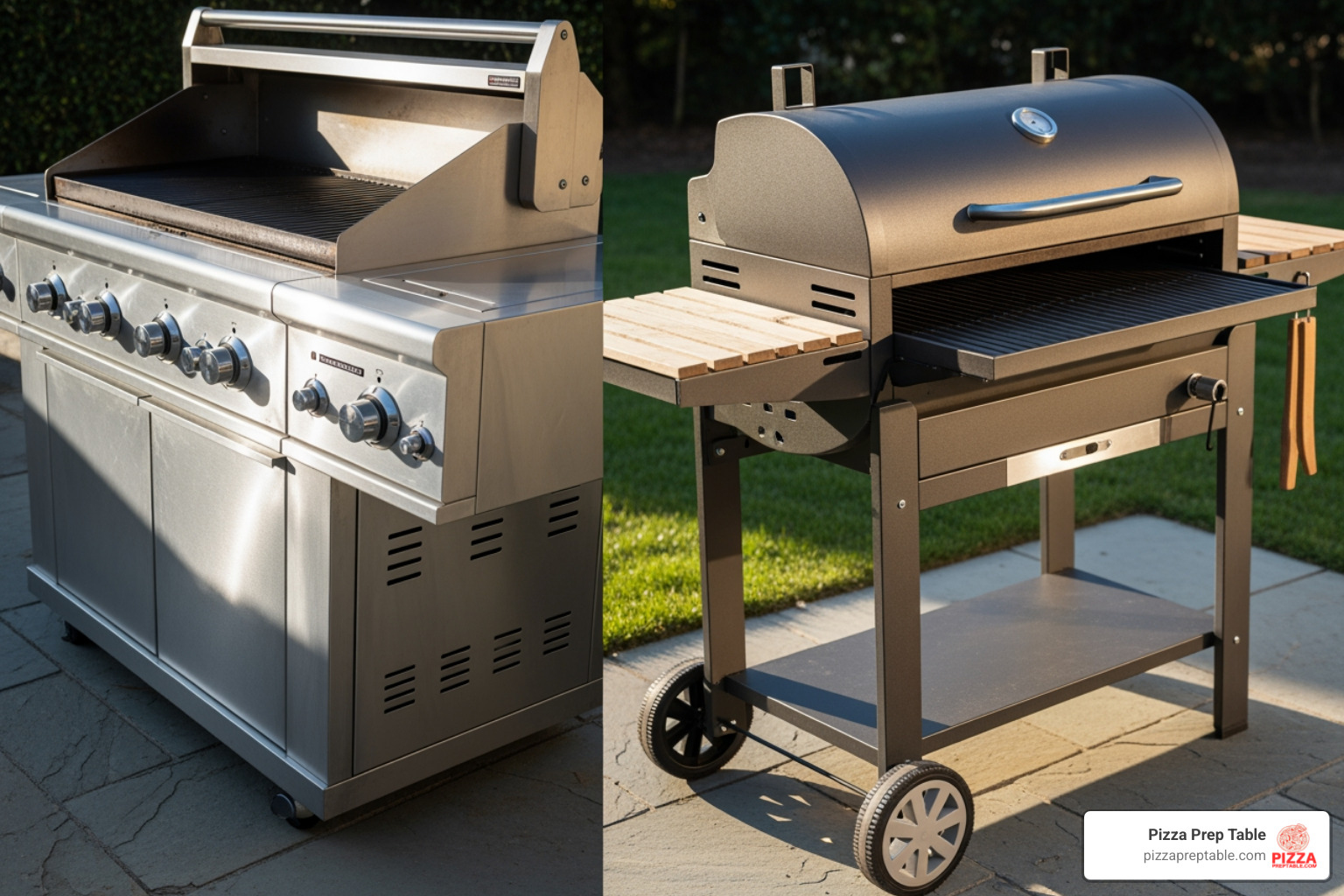
The first and most striking difference is durability. While a residential grill might be made of thin sheet metal, a commercial unit is often constructed with heavy-gauge stainless steel. This robust construction is essential for longevity in high-volume kitchens found in places like New York City or Los Angeles, where equipment operates for many hours a day. Think of the difference between a family sedan and a commercial delivery truck – both serve a purpose, but one is built for much tougher conditions. This heavy-duty build ensures our commercial grills can endure constant heat, heavy use, and frequent cleaning without warping or breaking down.
Performance
Performance is where commercial grills truly shine. They are engineered for rapid heating, consistent temperature retention, and faster recovery times, all crucial for a busy kitchen.
- High BTU Output: Commercial gas grills boast significantly higher BTU (British Thermal Unit) output than their residential counterparts. This means they heat up faster and can maintain high temperatures even when loaded with cold food. This power is vital for searing multiple steaks perfectly during a dinner rush in Chicago or Boston.
- Consistent Heat Distribution: Designed with advanced burner systems and thicker cooking surfaces, commercial units ensure even heat across the entire cooking area. This eliminates hot and cold spots, guaranteeing uniform cooking results for every burger or pancake.
- Faster Recovery Times: When cold food hits a hot grill, the surface temperature naturally drops. Commercial grills are built to quickly recover that lost heat, minimizing delays and maintaining cooking efficiency.
Features
Beyond brute strength and raw power, commercial grills come equipped with features custom for professional use, enhancing both safety and efficiency.
- Flame Failure Protection: Many commercial gas models include flame failure protection, a critical safety feature that automatically shuts off the gas supply if the flame extinguishes. This prevents dangerous gas buildup, a necessity in any commercial kitchen.
- Thermostatic Controls: While some commercial grills offer manual controls, many high-end models feature precise thermostatic controls, allowing chefs to set and maintain exact temperatures for different cooking tasks. This is invaluable for consistency, whether cooking delicate seafood or thick cuts of meat.
- NSF Certification: A hallmark of quality and safety in the foodservice industry, NSF certification indicates that equipment meets strict public health standards. Most reputable commercial grills designed for restaurants in cities like Houston or Seattle will carry this certification.
For a broader look at essential restaurant equipment, you might find our guide on Your Restaurant's Best Friend: Top Commercial Kitchen Equipment for Sale helpful. And if you're just starting out, check out our insights on How to Start a Restaurant Business.
A Grill for Every Menu: Types of Commercial Grills and Their Uses
The diverse world of commercial grills offers a specialized tool for nearly every culinary task. Understanding the different types and their primary uses allows us to choose the right equipment to improve our menu, improve cooking efficiency, and lift flavor profiles. From the classic charbroiler to the versatile griddle and specialized panini presses, each grill brings unique advantages to a professional kitchen. For more on specific models, explore our article on Sizzle and Success: Top Commercial Charbroilers for Every Restaurant.
Charbroilers: For Searing and Smoky Flavor
If your menu features steaks, burgers, chicken, or vegetables that demand that iconic smoky flavor and distinct grill marks, a commercial charbroiler is your go-to.

- Primary Use: Charbroilers excel at cooking meats and vegetables that benefit from direct flame and the intense heat of open grates. This includes juicy steaks, gourmet burgers, grilled chicken, and charred vegetables. The open grate design allows fat to drip away, creating flavorful smoke that infuses the food.
-
Heat Types: Charbroilers come with various heat sources, each offering a slightly different cooking experience:
- Radiant: Often uses metal elements or ceramic briquettes above the burners to distribute heat evenly and prevent flare-ups.
- Infrared: Provides extremely high, intense heat, perfect for rapid searing and locking in juices.
- Lava Rock: Uses porous lava rocks to absorb and radiate heat, mimicking the effects of charcoal and adding an authentic smoky flavor.
- Flavor Profile: The hallmark of charbroiled food is its smoky, chargrilled taste and the beautiful, caramelized grill marks. This distinctive flavor is often a key selling point for restaurants in San Francisco or Dallas. For a deeper dive into these powerful machines, take a look at Unlocking the Potential of the 24" Charbroiler.
Griddles & Flat Tops: The All-Day Workhorse
The commercial griddle or flat top grill is arguably the most versatile piece of cooking equipment in many kitchens, truly earning its title as the "all-day workhorse."
- Primary Use: Griddles are perfect for a vast array of items that require a consistent, flat cooking surface. This includes breakfast staples like pancakes, French toast, eggs, and bacon. Throughout the day, they handle grilled sandwiches, quesadillas, stir-fries, fajitas, and can even sear delicate fish or vegetables without losing small pieces through grates.
- Cooking Surface: The smooth, solid cooking surface ensures even heat distribution, allowing for uniform cooking and browning. This design also makes cleanup relatively easy compared to open grates.
- Menu Versatility: From the morning rush in a busy diner in Philadelphia to late-night burgers in a Las Vegas eatery, griddles seamlessly transition through various menu items, making them indispensable. For kitchens looking to maximize space and functionality, a Kitchen Stoves with Griddle combination can be an excellent choice.
Specialized Commercial Grills for Niche Menus
Beyond the workhorses, specialized commercial grills cater to unique culinary needs, allowing restaurants to diversify their offerings and improve specific dishes.
- Panini Grills: These compact yet powerful grills are essential for any establishment serving pressed sandwiches. They feature hinged top and bottom plates (either grooved for classic grill marks or smooth for a flatter finish) that cook both sides of a sandwich simultaneously. This ensures a perfectly toasted exterior and a warm, melted interior for paninis, quesadillas, and even grilled wraps. A dedicated Sandwich Prep Table can further streamline operations when using a panini grill.
- Salamander Broilers: Not strictly a grill in the traditional sense, salamanders provide intense overhead heat. They are primarily used for finishing dishes, melting cheese, toasting bread, browning gratins, or caramelizing toppings. They're excellent for adding that final touch to a dish before it goes out to the customer.
- Teppanyaki Griddles: These large, flat steel griddles are common in Japanese restaurants for theatrical cooking. They allow chefs to prepare multiple dishes simultaneously, often in front of customers, for an engaging dining experience.
- Tortilla Presses & Grills: For Mexican-inspired restaurants, these specialized units ensure freshly pressed and perfectly cooked tortillas, adding an authentic touch to tacos, burritos, and enchiladas.
The Ultimate Buyer's Guide to Commercial Grills
Choosing the right commercial grill is a significant investment that directly impacts your kitchen's workflow, menu capabilities, and ultimately, your profitability. It's not just about picking the flashiest model; it's about understanding your specific needs and matching them with the right features. For help navigating equipment purchases, consider exploring Equipment Financing Restaurant options.
Fuel Type: Gas vs. Electric Commercial Grills
The choice between gas and electric is one of the most fundamental decisions when selecting a commercial grill. Both have distinct advantages and are suited for different kitchen setups and culinary goals.
| Feature | Gas Grills | Electric Grills |
|---|---|---|
| Heat Output | High, intense heat; quick preheat | Consistent, even temperature; precise control |
| Fuel Source | Natural Gas or Liquid Propane | Electricity |
| Market Share | Over 60% of the commercial grill market | Expected to grow at 6.2% CAGR (2023-2030) |
| Installation | Requires gas line installation and ventilation | Easier indoor installation; often plug-and-play |
| Cost | Typically lower operating cost (depending on utility rates) | Often higher operating cost (depending on utility rates) |
| Flavor | Can impart smoky flavor (especially charbroilers) | Clean, consistent heat; no fuel-derived flavor |
| Versatility | Excellent for searing, charring | Great for consistent cooking, delicate items |
- Gas Grills: These are the titans of the industry, accounting for over 60% of the market share. Gas grills offer high heat and quick preheat times, making them ideal for rapid cooking and searing. They can run on either natural gas (requiring a direct line) or liquid propane (using tanks). The choice between the two often depends on infrastructure and mobility needs. For an in-depth comparison, check out our article on Natural Gas vs. Propane.
- Electric Grills: While gas has historically dominated, the demand for electric commercial grills is on the rise, projected to grow at a CAGR of 6.2% from 2023 to 2030. Electric models are celebrated for their consistent temperatures and precise control, making them excellent for delicate items or applications where exact heat is crucial. They are often easier to install indoors, as they don't require gas lines or the same level of ventilation as gas models, making them a popular choice for food trucks in Austin or smaller establishments in Denver.
Size and Material: Finding the Perfect Fit
The physical characteristics of your commercial grill—its size and the material of its cooking surface—are paramount for operational efficiency and the quality of your food.
-
Size: We offer commercial grills in a wide range of sizes, from compact countertop units to expansive freestanding models, with widths typically ranging from 12" to 72".
- Countertop Models: Ideal for smaller kitchens, food trucks, or as supplementary cooking stations.
- Freestanding Models: Designed for larger kitchens and high-volume operations, often incorporating storage or refrigerated bases underneath.
- Cooking Volume: Consider your peak hour demand. How many burgers do you need to cook simultaneously? How much flat-top space is required for your breakfast service? Matching the grill's capacity to your expected volume prevents bottlenecks.
-
Grill Surface Material: The material of the cooking surface significantly impacts heat retention, cooking results, and maintenance.
- Cast Iron: Known for its excellent heat retention and even heat distribution, cast iron provides a superior sear and creates beautiful grill marks. However, it requires careful seasoning and maintenance to prevent rust.
- Stainless Steel: Durable, corrosion-resistant, and relatively easy to clean. Stainless steel surfaces are a popular choice for their longevity and hygienic properties. For other stainless steel kitchen solutions, see our Kitchen Stainless Steel Work Tables.
- Chrome-Plated Steel: Offers a non-stick surface, quick heat recovery, and easier cleanup. Chrome-plated griddles are often chosen for high-volume, quick-service environments because food slides off easily, and they reduce heat radiation into the kitchen.
Controls and Outdoor Considerations
Beyond fuel and size, the type of controls and suitability for outdoor use are important factors in our selection process.
-
Controls:
- Manual Controls: Simple, durable, and often more cost-effective. Manual controls allow chefs to adjust flame or heat output directly.
- Thermostatic Controls: Provide precise temperature control, allowing you to set an exact temperature that the grill will maintain. This is excellent for consistency and for cooking delicate items that require specific heat levels.
- Outdoor Grills: For establishments with outdoor dining areas or catering businesses in sunny San Diego or busy New York City, outdoor commercial grills are a fantastic option. These units are specifically designed for durability and weather resistance, built to withstand rain, UV rays, and fluctuating temperatures. They often feature robust construction and protective covers. If you're planning an outdoor cooking setup, our Outdoor Pizza Party Essentials: Top Pizza Prep Tables Reviewed offers great complementary ideas.
Maintaining Your Investment: Cleaning and Care
A commercial grill is a significant investment for any foodservice establishment, and proper maintenance and cleaning are crucial to ensure its longevity, optimal performance, and adherence to food safety standards. Neglecting your grill can lead to inefficient cooking, compromised food quality, and costly repairs.
-
Daily Cleaning: At the end of each shift or day, a thorough cleaning is essential.
- Scraping Grates/Surface: Use a grill brush or griddle scraper to remove all food debris and grease from the cooking surface while it's still warm.
- Emptying Grease Trays: Regularly empty and clean the grease trays and drip pans to prevent overflow and fire hazards.
- Wiping Down Exterior: Clean the exterior of the grill with a damp cloth and mild detergent to remove splatters and maintain a professional appearance.
-
Deep Cleaning: Periodically, depending on usage, a more intensive deep clean is necessary.
- Seasoning Cast Iron: If you have cast iron grates or a griddle, proper seasoning is vital. This involves applying a thin layer of cooking oil and heating it to create a non-stick, protective layer.
- Using Degreasers: Commercial-grade degreasers can cut through tough, baked-on grease on grates, cooking surfaces, and the interior of charbroilers. Always follow manufacturer instructions and ensure proper ventilation.
- Checking Connections: For gas grills, regularly inspect gas lines and connections for leaks. For electric models, check power cords for any signs of wear or damage.
- Ventilation Hoods: Don't forget that effective ventilation is critical for indoor commercial grills. Ensure your hood filters are cleaned regularly to maintain airflow and prevent grease buildup.
For a comprehensive approach to kitchen hygiene, our Commercial Kitchen Cleaning Checklist offers valuable guidance. And if you're battling rust on other stainless steel equipment, you might find tips in How to Get Rust Off Stainless Steel Fridge useful.
Frequently Asked Questions about Commercial Grills
We often get asked a lot of questions about commercial grills, and it's our pleasure to help you steer these important decisions. Here are some of the most common inquiries we receive:
How much does a commercial grill cost?
The average price of a commercial gas grill ranges from $500 to $5,000, while electric grills typically range from $300 to $4,000. However, these are broad averages, and the actual cost can vary significantly based on several factors:
- Type of Grill: A basic countertop griddle will be far less expensive than a large, freestanding charbroiler with advanced features.
- Size: Larger grills with more cooking surface naturally command higher prices.
- Brand: Premium brands with a reputation for durability and performance will often be more expensive than entry-level models.
- Features: Special features like thermostatic controls, integrated refrigerated bases, high BTU output, or unique cooking surfaces (e.g., chrome-plated) will increase the price.
- Material: Heavy-duty construction and specialized materials can also impact cost.
A commercial grill is an investment in your business's efficiency and food quality. Sometimes, spending a bit more upfront for a durable, high-performance unit can save you money in the long run through reduced maintenance and better operational flow. We also offer advice on Affordable Restaurant Equipment if you're looking to balance quality with budget.
What's the difference between a charbroiler and a griddle?
This is a classic question! While both are types of commercial grills, they serve different purposes due to their distinct cooking surfaces and heat application:
-
Charbroiler:
- Surface: Features open grates (often cast iron or stainless steel bars).
- Heat: Uses direct flame or radiant heat from below, often with lava rocks or radiant elements.
- Cooking Style: Best for searing, charring, and creating grill marks. Food cooks with direct exposure to heat, allowing fat to drip away.
- Flavor: Imparts a smoky, chargrilled flavor to food, creating a distinct outdoor BBQ taste.
- Ideal for: Steaks, burgers, chicken breasts, kebabs, and large-cut vegetables.
-
Griddle (Flat Top Grill):
- Surface: A solid, flat metal plate (steel, stainless steel, or chrome-plated).
- Heat: Provides indirect, even heat across the entire surface.
- Cooking Style: Excellent for cooking items that need a consistent, flat surface, or that might fall through grates. Food cooks by conduction with the hot surface.
- Flavor: Offers a clean, consistent cooking environment without direct flame influence, promoting even browning and caramelization.
- Ideal for: Breakfast items (pancakes, eggs, bacon), grilled sandwiches, fajitas, stir-fries, and delicate seafood.
If you want grill marks and smoky flavor, go charbroiler. If you need a smooth, even cooking surface for a wide variety of items, a griddle is your champion. Many kitchens benefit from having both!
How do I choose the right size grill for my restaurant?
Choosing the right size commercial grill involves a careful assessment of your operational needs and physical space. Here's how we approach it:
- Analyze Your Menu Items: What types of food will you be cooking on the grill? If it's mostly small items like eggs and bacon, you might need more surface area for spreading them out. If it's large steaks, you'll need enough space per item.
- Estimate Peak Hour Volume: This is critical. How many customers do you serve during your busiest times? How many portions of grilled items do you expect to sell? Overestimating slightly is safer than underestimating, as a grill that's too small will slow down service and frustrate your kitchen staff.
- Assess Available Kitchen Space: Measure your kitchen footprint. Do you have room for a freestanding 72-inch griddle, or will a 24-inch countertop charbroiler fit better? Consider workflow around the grill.
- Consider Future Growth: While it's tempting to buy for today's needs, think about where you want your restaurant to be in 3-5 years. Can your chosen grill accommodate an increase in business or a menu expansion?
- Installation Type: Will a countertop unit suffice, or do you need a floor model? Some grills can be modular, allowing for expansion later.
Understanding your kitchen layout is key to this decision. Our guide on Commercial Kitchen Layout Design can provide further insights into optimizing your space.
Conclusion: Fire Up Your Kitchen's Potential
Choosing the perfect commercial grill is one of the most impactful decisions you'll make for your foodservice establishment. It's an investment that directly influences the quality of your menu, the efficiency of your kitchen, and ultimately, your bottom line. We've explored the myriad types, from charbroilers that deliver smoky perfection to griddles that are the versatile workhorses of any kitchen, and specialized units like panini presses that cater to unique culinary niches.
Remember to consider crucial factors such as fuel type (gas for power, electric for consistency), size (matching your volume and space), material (cast iron for sear, chrome for easy cleaning), and controls (manual for simplicity, thermostatic for precision). And don't forget the importance of diligent maintenance to protect your investment and ensure years of optimal performance.
At PizzaPrepTable.com, we understand the demands of the foodservice industry, whether you're running a pizzeria in Phoenix or a busy diner in Atlanta. That's why we offer a wide selection of top-tier commercial grills and other essential restaurant equipment, backed by flexible financing options to help your business thrive.
Ready to lift your cooking? Explore our complete range of kitchen stoves and griddles to find the perfect match for your business!