

Essential Commercial Refrigeration for Every Foodservice Venue
Why a Restaurant Kitchen Fridge is the Heart of Your Operation

A restaurant kitchen fridge is more than just a storage box—it's the foundation of food safety, operational efficiency, and profitability in any foodservice venue. Whether you're opening your first pizzeria or upgrading a small cafe, choosing the right commercial refrigeration directly impacts your bottom line.
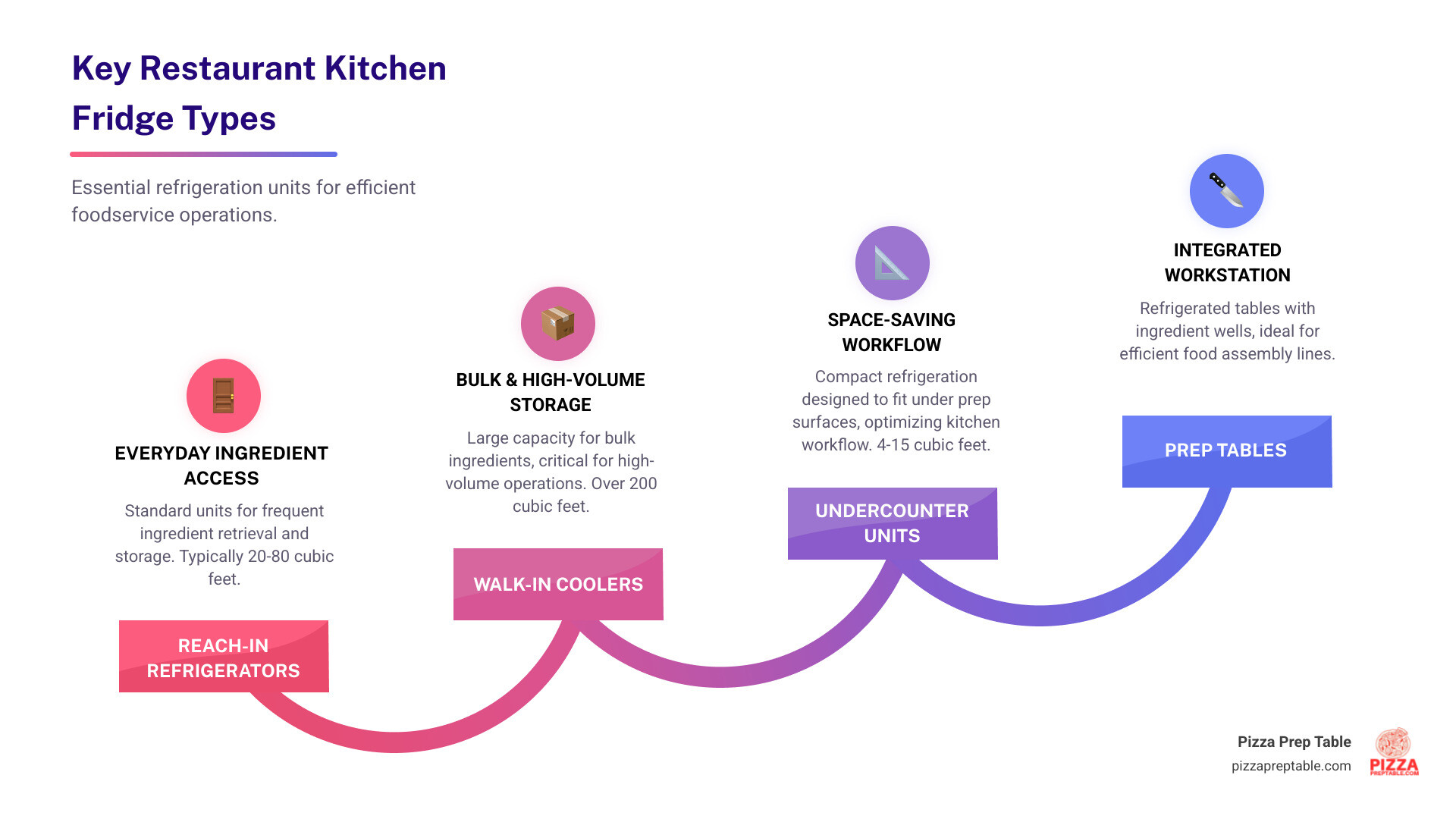
Key Types of Restaurant Kitchen Fridges:
- Reach-In Refrigerators: Everyday workhorse units for general ingredient storage (20-80 cubic feet)
- Walk-In Coolers: Bulk storage for high-volume operations (200+ cubic feet)
- Undercounter Units: Space-saving refrigeration that fits beneath prep surfaces (4-15 cubic feet)
- Prep Tables: Refrigerated workstations with ingredient wells for assembly lines
- Specialty Units: Bar coolers, merchandisers, chef bases, and blast chillers
Why Commercial Beats Residential:
Commercial refrigerators are built for constant operation with heavy-duty compressors, superior insulation, and precise temperature control. They last 2-3 times longer than domestic models and can handle the frequent door openings and high ambient temperatures of a busy kitchen. Most importantly, they meet NSF certification standards required by health departments.
The Financial Impact:
Quality commercial refrigeration can reduce utility costs by 20-40% annually while extending product shelf life by 25-50%. That translates to $3,000-$12,000 in reduced spoilage each year. Walk-ins and reach-ins account for 12.2% of all restaurant equipment repairs, with average repair costs of $1,000 for walk-ins and $519 for reach-ins—making the right choice upfront critical.
I'm Sean Kearney, and I've spent years helping restaurant owners select the perfect restaurant kitchen fridge for their operations, from compact pizzerias to high-volume kitchens. My background in sales and deep understanding of the foodservice industry means I know exactly what equipment will deliver the best ROI for your specific needs.
A Guide to Commercial Refrigerator Types
When outfitting a professional kitchen in New York City, Los Angeles, Chicago, or any of our vibrant foodservice communities, understanding the diverse world of commercial refrigeration is paramount. Each type of restaurant kitchen fridge serves a unique purpose, designed to meet the rigorous demands of a busy environment. Let’s dive into the essential categories that keep kitchens cool and operations running smoothly. For a comprehensive overview, you can always refer to The Complete Guide to Commercial Kitchen Refrigeration.
Reach-In Refrigerators & Freezers
These are the workhorses of almost every commercial kitchen, from a busy downtown Boston eatery to a cozy neighborhood spot in Philadelphia. Reach-in refrigerators and freezers provide convenient, eye-level storage for ingredients that need to be accessed frequently throughout the day. They typically range from 20 to 80 cubic feet in capacity, making them versatile for various kitchen sizes and workflows.
You’ll find these units in single, double, or even triple door configurations. Many models feature either top-mount or bottom-mount compressors. Top-mount compressors generally perform well in kitchens with high ambient temperatures and dusty floors, as they draw in air from above. Bottom-mount compressors, on the other hand, often operate more efficiently because they draw in cooler air closer to the floor, and their placement can make them easier to service. For kitchens with demanding workflows, pass-thru models are a game-changer, allowing ingredients to be loaded from one side and retrieved from another, ideal for separating prep and cooking lines.
Despite their robust construction, even these essential units require maintenance. Statistics show that reach-ins are among the most common pieces of restaurant equipment in need of repair, with an average vendor invoice for repair costing around $519.09. Investing in quality units and proper maintenance can help mitigate these costs. Explore our offerings for Reach-in Coolers and Reach-in Freezer to find the perfect fit for your kitchen.
Walk-In Coolers & Freezers
For restaurants in Houston, Dallas, or any high-volume market that deal with bulk ingredients, a walk-in cooler or freezer is indispensable. These room-sized units offer vast storage capacity, ranging from 200 to over 2,000 cubic feet, and are designed for storing large quantities of perishable goods. They are truly the "heart" of a commercial kitchen, ensuring you have enough fresh ingredients to meet customer demand.
Walk-ins are crucial for operations that receive large deliveries or need to store prepared foods for extended periods. They maintain consistent temperatures, typically between 32-40°F for coolers and -10° to 10°F for freezers, which is vital for food safety and quality preservation.
However, their complexity means they can be costly to maintain. Walk-ins and reach-ins together accounted for 12.2% of all repair and maintenance requests last year. When a walk-in goes down, it's not just an inconvenience; it can lead to significant inventory loss and operational disruption. The average vendor invoice for walk-in repair was a hefty $1,000.42. Proper planning for Commercial Walk-In Refrigerators and understanding Walk-in Cooler Sizing can prevent headaches down the line.
Undercounter & Worktop Refrigerators
Space is a premium in many commercial kitchens, especially in dense urban areas like New York City or San Francisco. This is where undercounter and worktop refrigerators shine. These compact units are designed to fit seamlessly beneath existing countertops or prep stations, maximizing your refrigerated storage without sacrificing valuable floor space. They are perfect for keeping frequently used ingredients close at hand, enhancing workflow and efficiency.
Undercounter units typically range from 4 to 15 cubic feet and are available in various heights, including standard (around 36 inches tall), ADA-compliant (34 inches tall), and low-profile (32 inches or less). They come with solid doors, glass doors for easy visibility, or drawers for organized storage. Worktop models take this a step further by providing a durable, integrated work surface, often with a backsplash, ideal for small prep tasks.
When selecting an undercounter restaurant kitchen fridge, consider models with front-breathing compressors if space is particularly tight, as these units require less side or rear clearance. We offer a wide range of options, from a basic Undercounter Refrigerator to understanding specific Undercounter Refrigerator Dimensions and even Under Counter Glass Door Refrigerator models for easy viewing.
Refrigerated Prep Tables
Imagine the organized chaos of a busy pizza parlor in Las Vegas or a sandwich shop in Seattle. Refrigerated prep tables are the unsung heroes, integrating a cold storage unit with a practical workspace. These units feature a refrigerated base and a top rail with ingredient pans, keeping toppings, cheeses, and sauces perfectly chilled and ready for assembly.
For pizzerias, pizza prep tables are essential, often featuring a deeper top rail for larger pizza toppings and a cutting board surface. Sandwich prep tables are similar but typically have shallower pans for deli meats, cheeses, and vegetables. Mega-top units offer even more pan capacity, ideal for high-volume operations. These specialized restaurant kitchen fridge units significantly boost efficiency, allowing staff to quickly assemble orders while maintaining food safety. We even have 3 Door Pizza Prep Fridges That'll Make You Say Cheese for maximum efficiency.

Specialty Refrigeration
Beyond the core types, several specialty refrigeration units cater to specific needs within a foodservice operation:
- Bar Coolers: Also known as back bar coolers, these units are designed to store bottled and canned beverages at optimal serving temperatures. They often feature glass doors for attractive display and easy inventory management. Check out our range of Back Bar Cooler options.
- Glass Door Merchandisers: Perfect for cafes in Austin or convenience stores in Phoenix, these upright units showcase products like drinks, grab-and-go meals, or desserts, encouraging impulse purchases. While less energy-efficient than solid door units, their display power is undeniable.
- Chef Bases: These low-profile, heavy-duty refrigerated drawers are designed to sit directly under cooking equipment like griddles or charbroilers. They keep ingredients cool and within arm's reach of the cook, streamlining the cooking line. Learn more with The Complete Guide to Chef Base Options.
- Blast Chillers: A critical food safety tool, especially in catering or high-volume production. A Commercial Blast Chiller rapidly cools hot food through the temperature danger zone (140°F to 40°F in under 6 hours) to prevent bacterial growth and extend shelf life.
Choosing the Right Restaurant Kitchen Fridge: A Buyer's Checklist
Selecting the ideal restaurant kitchen fridge is a strategic decision that impacts everything from food quality to utility bills. It's not just about finding something that chills; it's about finding the right fit for your unique operation. We've simplified the process with our guide to Commercial Fridge Shopping Made Easy and Cool.
Sizing and Capacity: How Much Space Do You Need?
One of the first questions we ask our clients in Charlotte or Denver is, "How much space do you really need?" This isn't just about physical dimensions; it's about cubic footage, which directly relates to your daily meal volume and menu complexity.
- Quick-Service Restaurants (100-200 meals/day): Typically need 20-40 cubic feet of refrigeration.
- Casual Dining (200-400 meals/day): Often require 40-80 cubic feet.
- Fine Dining (200-400 meals/day): Can range from 60-100 cubic feet due to varied ingredients.
- High-Volume Operations (400+ meals/day): Will likely need 100+ cubic feet.
Consider not just your current needs but also future growth. It's often more cost-effective to invest in slightly larger equipment now than to replace it prematurely. For specific unit types, dig into Walk-in Cooler Sizing and Undercounter Refrigerator Size to ensure a perfect fit.
Key Features to Look for in a Restaurant Kitchen Fridge
When you're running a busy kitchen in Indianapolis or Baltimore, durability and functionality are non-negotiable.
- Construction Materials: Stainless steel is the industry standard for commercial refrigeration due to its durability, ease of cleaning, and resistance to corrosion. Look for seamless, one-piece construction, especially on worktop surfaces, for improved hygiene and easier sanitization.
- Insulation: Superior insulation is critical for maintaining consistent temperatures, reducing energy consumption, and prolonging the life of your unit. Commercial units boast much thicker and more effective insulation than residential models.
- Ventilation: All refrigeration units need to "breathe." Proper ventilation is crucial to prevent components from overheating and breaking down. Ensure there's adequate clearance around the unit, especially if it's side/rear breathing.
- Self-Closing Doors: A lifesaver in a busy kitchen, self-closing doors prevent accidental temperature fluctuations and wasted energy.
- Casters: Mobility is a huge advantage for cleaning and reconfiguring your kitchen layout. Casters (lockable wheels) make it easy to move heavy units.
- NSF Certification: This is paramount. NSF International certification ensures that the equipment meets strict public health standards for design, materials, and construction, making it safe for food contact and easy to clean.
Energy Efficiency and Cost Savings
In today's competitive landscape, every penny counts. An energy-efficient restaurant kitchen fridge can significantly impact your operational budget.
- ENERGY STAR Certification: Look for the ENERGY STAR label. These certified units are independently verified to be 10-30% more energy-efficient than standard models. This translates to substantial savings on your utility bills—potentially $105 annually per unit, with a payback period of just 2-4 years.
- ROI Calculation: Investing in quality, energy-efficient refrigeration offers a fantastic return on investment. Commercial refrigeration can reduce utility costs by 20-40% annually. Beyond energy, it extends product shelf life by 25-50%, saving $3,000-$12,000 annually in reduced spoilage and preventing costly violations that can range from $5,000-$25,000.
- Key Features: High-efficiency compressors, LED interior lighting (which can reduce energy consumption by 70%), and improved insulation all contribute to lower energy consumption.
- Utility Rebates: Many local utilities offer rebates or incentives for businesses that purchase ENERGY STAR certified equipment. It’s worth checking with your local provider in places like Chicago, Philadelphia, or Washington, D.C. for potential savings.
Dive deeper into the benefits with our guide on Energy Efficient Commercial Refrigeration.
Placement, Installation, and Warranty
The best restaurant kitchen fridge in the world won't perform optimally if it's not correctly placed and installed.
- Proper Ventilation: Refrigeration units generate heat. They need space to dissipate this heat efficiently. Always ensure a minimum of a 6-inch air gap around the back and sides (or as per manufacturer specifications) for proper airflow. Placing a unit too close to a wall or heat source like an oven will force it to work harder, increasing energy consumption and shortening its lifespan.
- Professional Installation: While some smaller units might seem straightforward, professional installation is strongly recommended for all commercial refrigeration. Licensed technicians ensure proper electrical connections, correct refrigerant charging, and that the unit is perfectly level. Improper installation can void warranties, create safety hazards, and drastically reduce the equipment's lifespan. For more insights on professional setups, see Commercial Range Installation: What You Need to Know.
- Warranty Considerations: A robust warranty is your peace of mind. Commercial warranties typically range from 1-2 years for parts and labor, with some manufacturers offering longer compressor warranties. Brands like True® Refrigeration stand out, offering an impressive 7-year labor, 7-year parts, and 7-year compressor warranty on all their Hydrocarbon Units. Always scrutinize the warranty details before purchase.
Operational Excellence: Food Safety, Maintenance, and Troubleshooting
Food safety is non-negotiable in any commercial kitchen. Your restaurant kitchen fridge plays a starring role in this, demanding meticulous attention to temperature, organization, and upkeep. Adhering to strict standards, as outlined in Food Safety Guidelines for Restaurants, is crucial for the health of your customers and your business.
Recommended Temperature Settings for Your Restaurant Kitchen Fridge
Maintaining precise temperatures is the golden rule of food safety.
- Refrigerator: The ideal temperature for a commercial refrigerator is 40°F (4°C) or below. Anything above this enters the "danger zone," where harmful bacteria can multiply rapidly. Health departments in cities like Los Angeles, Houston, and New York City strictly enforce this.
- Freezer: Your commercial freezer should be set at 0°F (-18°C) or below. This ensures proper freezing and inhibits microbial growth.
Regularly monitor and log temperatures using a reliable thermometer inside each unit. Many health departments require continuous temperature logging, so it's a good practice to implement in your kitchen. For a deeper understanding of these critical settings, refer to What Temperature Refrigerator and Freezer and Temperature Control for Food Safety.
Best Practices for Food Organization & Storage
An organized fridge is a safe fridge. Proper storage prevents cross-contamination and minimizes spoilage, saving you money and headaches.
- FIFO Method: Always implement "First In, First Out." Use food labeling stickers to clearly mark items with their date of receipt or preparation. This ensures older products are used before newer ones.
-
Shelf Organization: Follow a strict top-to-bottom hierarchy to prevent cross-contamination from raw foods:
- Top Shelf: Ready-to-eat foods (cooked meats, salads, dairy).
- Second Shelf: Raw seafood.
- Third Shelf: Whole cuts of raw meat.
- Fourth Shelf: Ground meat and fish.
- Bottom Shelf: Raw poultry.
- Containers: Store all food in clean, covered, food-grade containers. Use color-coded bins for different food categories if it helps your team.
- Airflow: Do not overpack your restaurant kitchen fridge. Leave space between items for proper air circulation, which is essential for maintaining consistent temperatures.
For detailed guidelines, check out Proper Cold Food Storage and our own Restaurant Food Storage Guidelines.
Routine Maintenance and Troubleshooting
A well-maintained restaurant kitchen fridge is less likely to break down, saving you from costly repairs and spoiled inventory.
-
Daily Checks:
- Verify internal temperatures.
- Wipe down door gaskets and handles.
- Ensure doors seal properly.
-
Weekly Cleaning:
- Thoroughly clean interior walls and shelves with mild, food-safe detergent.
- Clean condenser coils (see below).
- Check and clear drain lines to prevent clogs and leaks.
-
Scheduled Professional Servicing: We recommend professional servicing every 6 months. A refrigeration expert can inspect the condensing unit, compressor, refrigerant levels, and electrical connections. This preventative maintenance is critical for longevity and efficiency.
- Walk-ins, in particular, require specialized care. As noted by 86 Repairs, a preventative maintenance program for a walk-in fridge should always be handled by a refrigeration technician due to their complexity.
Common Troubleshooting Tips:
-
Temperature Fluctuations (Unit Too Warm):
- First, check if the unit is overloaded or if doors are left open frequently.
- Clean condenser coils: This is one of the most common culprits. Dirty coils restrict airflow, making the unit work harder. Use a brush or vacuum to remove dust and debris.
- Check door gaskets: Worn or dirty gaskets allow cold air to escape. Clean or replace them if necessary.
- Power cycle: For a unit that's too warm, toggle the breakers off for at least 30 seconds, then back on. If it doesn't cool down within minutes, it's time to call a technician.
-
Frost Buildup:
- Excessive frost on evaporator coils can indicate a problem. This often means humid air is getting into the unit, possibly due to a faulty door seal or frequent door openings.
- For walk-ins, you can often run a defrost cycle on the digital thermostat. Continue running cycles until all frost melts. If it persists, a professional is needed.
-
Leaks:
- Most leaks originate from clogged drain lines, especially in walk-ins. Trace the drain line to the floor drain and use a wet vac to clear any buildup.
- If the leak is severe or you can't identify the source, contact a service provider.
For more in-depth troubleshooting specifically for walk-ins, consult The 86 Repairs Guide to Walk-In Fridges. And don't forget the importance of cleaning for all related equipment, including Ice Machine Cleaners and Sanitizers.
Frequently Asked Questions
We often hear similar questions from restaurant owners across our service areas, from Atlanta to San Antonio. Here are some of the most common ones:
What's the main difference between a commercial and a residential fridge?
The difference is night and day! A commercial restaurant kitchen fridge is built for the battlefield of a busy kitchen, while a residential one is for your quiet home.
- Durability & Construction: Commercial units are constructed with heavy-duty components and higher-grade materials (like stainless steel) to withstand constant use, frequent door openings, and the demanding environment of a professional kitchen. They're designed to last 2-3 times longer than domestic models.
- Cooling Power & Recovery: Commercial refrigerators have more powerful compressors and cooling systems that can quickly recover temperature after frequent door openings, ensuring food safety. Residential fridges struggle under such demands.
- Capacity: Commercial units offer significantly more storage capacity, often designed to hold standard gastronorm pans or large bulk ingredients.
- Temperature Control: They provide more precise and consistent temperature control, critical for meeting health department regulations.
- NSF Certification: Commercial units are typically NSF-certified, meaning they meet stringent public health and safety standards for materials, design, and construction, making them easy to clean and sanitize. Residential units do not require this.
- Energy Efficiency: While they consume more power overall due to their size and demands, commercial units are often designed with energy efficiency in mind (e.g., ENERGY STAR ratings) to minimize operating costs over time.
How often should I get my commercial refrigerator professionally serviced?
To ensure optimal performance, longevity, and compliance, we recommend professional servicing for your commercial restaurant kitchen fridge every six months. This semi-annual check-up by a qualified technician can catch minor issues before they become major breakdowns.
In addition to professional servicing, your team should perform:
- Daily checks: Monitor temperatures, wipe down door gaskets and handles.
- Weekly cleaning: Deep clean interiors, clean condenser coils, and check/clear drain lines.
This comprehensive approach, often referred to as a preventative maintenance program, is key to extending the life of your equipment and maintaining food safety standards.
Can I finance a commercial refrigerator?
Absolutely! We understand that investing in quality commercial refrigeration can be a significant upfront cost for any business, especially for startups in places like San Diego or Columbus. That's why we at Pizza Prep Table offer flexible financing options to help manage your cash flow.
Financing allows you to acquire the essential equipment you need without depleting your working capital. We can discuss options like equipment loans or leasing arrangements. Leasing can be particularly attractive as it often requires lower upfront payments and can offer tax benefits. Whether you're a new business looking into Restaurant Equipment Financing for Startups or an established venue, we can help you find solutions to Finance Restaurant Equipment that fit your budget.
Conclusion: Find Your Perfect Commercial Fridge
Choosing the right restaurant kitchen fridge is one of the most critical decisions you'll make for your foodservice business. It impacts food safety, operational efficiency, and your bottom line. We've explored the diverse types, essential features, critical sizing considerations, and the importance of energy efficiency, proper installation, and diligent maintenance.
Investing in quality commercial refrigeration isn't just an expense; it's a strategic investment that offers significant long-term savings through reduced energy costs, minimized spoilage, and fewer costly repairs. Don't compromise on the heart of your kitchen.
At Pizza Prep Table, we offer a wide selection of commercial kitchen equipment and flexible financing to fit your needs, whether you're in New York City, Los Angeles, or anywhere in between. Explore our full range of pizza prep tables to find the perfect heart for your kitchen.